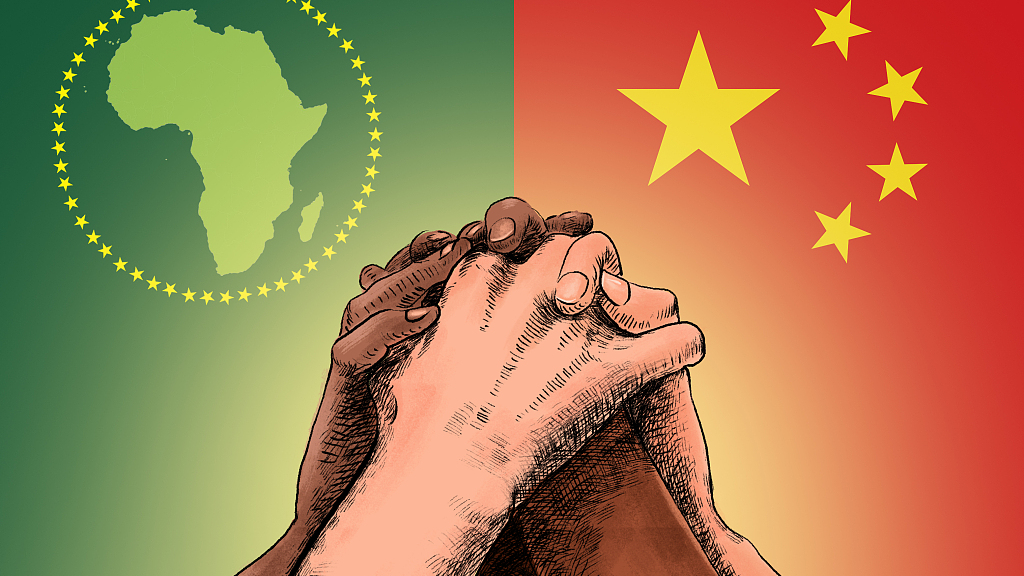
The first phase of China-Africa cooperation is widely marked by tangible infrastructure achievements: highways, airports, power stations, dams, industrial parks and telecommunication networks across the African continent.
With China’s financial support and technical expertise, Africa has effectively addressed long-standing infrastructure shortages that have held back economic growth for decades. From railway corridors in East Africa to power projects in Southern Africa, mutually beneficial cooperation has become a prominent part of Africa’s development journey.
As China enters the implementation period of its 15th Five-Year Plan (2026-2030), a new opportunity emerges for both sides: to elevate the partnership beyond traditional infrastructure and commodity trade, and jointly advance comprehensive structural economic transformation. This is a core development proposition for Zimbabwe and the whole of Africa in the coming decade.
The success of this new chapter lies not merely in the scale of mutual investment, but in how both sides leverage their respective strengths to integrate into the evolving global development landscape.
Policies released by senior Chinese officials show that China is accelerating the development of future industries, including artificial intelligence, biotechnology, advanced manufacturing, green energy, quantum technology, hydrogen economy and digital infrastructure.
China aims to grow from a major manufacturing base into a global hub for scientific research, technological innovation and industrial leadership. This strategic shift creates tremendous two-way opportunities for China and Africa.
For a long time, most African economies relied heavily on exporting raw materials and importing finished goods, a model that limited local value creation. Zimbabwe’s National Development Strategy 2 clearly targets this structural issue. By prioritizing resource beneficiation, industrialization, innovation, value-added processing and human capital development, it reflects a universal consensus across Africa: true economic independence is built on robust local productive capacity, rather than resource endowments alone.
The ongoing global industrial chain restructuring, coupled with China’s pursuit of future industries, offers African nations a rare window to participate in emerging global value chains. China’s own development experience provides valuable reference for Africa.
- Mavhunga puts DeMbare into Chibuku quarterfinals
- Bulls to charge into Zimbabwe gold stocks
- Ndiraya concerned as goals dry up
- Letters: How solar power is transforming African farms
Keep Reading
China achieved steady development not only by attracting foreign investment, but more importantly, by turning external capital and technologies into domestic industrial capabilities. It absorbed, localized and upgraded introduced technologies, and made sustained investments in education, engineering, research institutions and complete industrial ecosystems. Infrastructure has always been a solid foundation for economic progress, rather than an ultimate goal.
Africa can draw lessons from this experience in its cooperation with China. Instead of focusing only on how much external investment can be attracted, African countries should prioritize building independent and sustainable domestic capabilities.
Africa is endowed with abundant strategic resources essential to global future industries. Zimbabwe holds rich reserves of lithium, platinum and chrome; the Democratic Republic of the Congo boasts massive cobalt deposits; Zambia is a key copper producer; South Africa supplies large volumes of platinum group metals. West and North Africa are rich in oil and gas, while East Africa is developing into an emerging natural gas hub.
These resources are vital raw materials for China’s high-end and future industries. It should be noted that raw material exports have played an important role in accumulating development capital for African economies at the initial stage of industrialization. Nevertheless, over-reliance on primary commodity exports cannot drive long-term economic upgrading.
The sustainable path forward is to take advantage of resource strengths to extend industrial chains. Every mining project can be matched with deep processing industries, which will drive skills transfer, and further connect with scientific research and innovation. The ultimate goal is to foster full-fledged industrial ecosystems that create jobs, improve technological proficiency and diversify export products.
This development philosophy also applies to digital transformation. Africa is projected to have the world’s largest labor force and one of the biggest consumer markets within two decades. However, demographic dividends can only be realized with solid digital infrastructure, professional talents and indigenous innovation. Otherwise, digital facilities will remain mere imported hardware, and the digital economy will become a market for foreign technologies.
Under the framework of the Forum on China-Africa Cooperation (Focac), China has been promoting digital education centers, technological collaboration and digital infrastructure construction. These initiatives help Africa cultivate technical talents and integrate into the knowledge-based economy. For countries like Zimbabwe, cooperation on digital technologies is an ideal way to train local engineers, software developers, researchers and entrepreneurs. Infrastructure supports development, while talents define its future.
As professor Zhang Jun pointed out, we should look beyond visible projects and focus on the underlying scientific and intellectual foundations for sustainable development. Africa must avoid the pitfall of introducing finished industrial products while neglecting indigenous innovation capacity.
African universities and research institutions need to play a bigger role in China-Africa cooperation. Academic exchanges should go beyond scholarships and personnel visits, and expand to joint research centers, co-developed technologies, industrial laboratories and long-term scientific partnerships tailored to Africa’s development needs.
Joint research between Chinese and African experts can deliver practical solutions in water management, agricultural modernization, climate resilience, mineral processing, renewable energy, public health and artificial intelligence.
Agriculture is a typical area for deep collaboration. Africa holds around 60% of the world’s uncultivated arable land, yet it remains a net food importer. This contradiction stems from low productivity, insufficient value-added processing, backward irrigation systems, poor logistics and outdated agricultural technologies. China’s achievements in biotechnology, precision farming and agricultural modernization open new space for bilateral cooperation. The joint goal is not only to raise crop yields, but also to build modern agro-industrial chains and upgrade agriculture into a competitive industrial sector.
Energy cooperation shares similar potential. Unstable power supply has long hindered Africa’s industrialization, while the continent possesses enormous renewable energy resources. As a global leader in solar power, battery manufacturing and renewable energy application, China can cooperate with Africa to solve power shortages and boost industrial growth.
A win-win development model can be formed: Africa provides critical minerals and takes part in component manufacturing; both sides deploy renewable energy systems across Africa, and jointly cultivate localized industrial capabilities along the whole value chain. This represents genuine and inclusive structural transformation.
Opportunities always come with challenges. To seize the new round of cooperation dividends, African countries need to set clear strategic plans. First, technology transfer shall be highlighted as a core part of investment negotiations. Second, human capital development shall be prioritized equally with physical infrastructure. Third, industrial policies shall target complete industrial chains instead of isolated single projects. Fourth, governments shall guide external funds to flow into productive sectors that generate long-term economic benefits. Fifth, African nations shall strengthen coordination via the African Continental Free Trade Area and regional economic communities. Individual African markets are relatively small, but a united Africa forms one of the most promising emerging economic blocs worldwide.
China fully recognises the power of scale and regional collaboration, as demonstrated by Focac and the Belt and Road Initiative. Africa can also unlock greater development potential through closer regional integration.
The next decade will witness profound changes in the global economic landscape, with new technologies, industries and supply chains taking shape. Nations that seize current opportunities will shape the future global economic order.
The partnership between China and Africa brings mutually accessible capital, advanced technologies, vast markets and practical experience, creating win-win results for both sides. The value of cooperation shall never be judged merely by the number of completed projects or total trade volume. Its true success lies in how it helps Africa build local factories, laboratories, patents, independent technologies and competitive industries, and enables China to expand its future industrial layout with richer resources and broader markets.
China and Africa, as important members of the Global South, stand side by side to pursue common development. By combining traditional infrastructure cooperation with future industrial innovation, the two sides will jointly realize economic structural upgrading, set an example for solidarity and development among Global South countries, and march toward a more prosperous and sustainable future together.
*Mabasa Sasa is a veteran journalist and independent commentator in Harare, Zimbabwe.