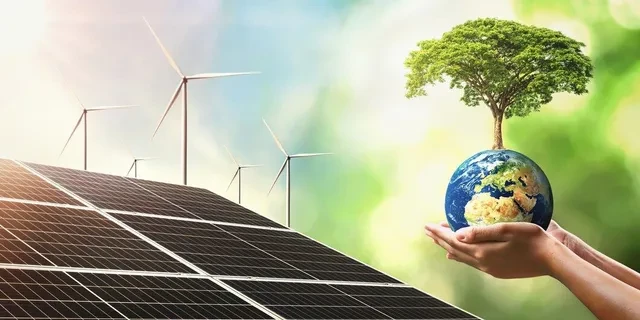
AFRICA has substantial solar potential with high irradiance levels, particularly in the Sahara and East Africa regions, though exact percentages of global optimal resources vary by methodology.
Yet it accounts for just 1% of globally-installed solar capacity.
This gap defines the Africa solar investment landscape.
Nigeria’s official NDC 3.0 submission to United Nations Framework Convention on Climate Change should be verified for exact investment requirements and timeframe.
It targets 29%-32% emission cuts by 2030.
Distributed solar offers the fastest path to electrification. It bypasses slow grid builds.
Solarisation drives economic shift, manufacturing growth and energy security.
Solar cuts volatile energy costs for firms.
- COP26 a washout? Don’t lose hope – here’s why
- Out & about: Bright sheds light on Vic Falls Carnival
- COP26 a washout? Don’t lose hope – here’s why
- Out & about: Bright sheds light on Vic Falls Carnival
Keep Reading
Diesel generators expose businesses to fuel swings and supply risks.
Firms switch to stable capital costs.
This boosts margins and competitiveness.
Small and medium enterprises gain the most. Reliable power aids human capital.
Solar clinics store vaccines and run diagnostics round the clock.
Schools extend hours with digital tools.
Outcomes improve. Social productivity rises. Long-term growth follows.
Africa skips legacy grids. Mini-grids and distributed solar scale fast.
They build local resilience. Nigeria leads with over 200 mini-grids.
It replaces diesel in public buildings.
However, solar fosters green industry.
Local assembly of panels, batteries and inverters creates jobs.
Export chains emerge. Policy incentives speed this.
Falling battery costs make solar the cheapest new power source.
Power purchase agreements ensure steady cash flows.
Blended finance lowers barriers.
The African Development Bank and Africa Finance Corporation lead.
They offer guarantees and first-loss capital.
Meanwhile, global shifts draw capital.
Gulf States’ investment figures should be verified against Bloomberg NEF, IRENA or official Gulf State investment reports, distinguishing between announced commitments and actual investments by 2024.
The exact commitment amount and participating organisations should be verified through official Mission 300 documentation.
This accelerates electrification in dozens of countries.
Sub-Saharan Africa suits decentralised models.
Population without reliable power should be verified against latest IEA World Energy Outlook or World Bank energy access reports for 2025-26.
For the Kenya, Nigeria and Ghana hub innovation, private deals grow.
Rio Tinto’s South African solar installations require verification of exact capacity and operational status for mining power via wheeling.
It dodges grid woes. As a result, investors see predictable returns.
Solarisation positions Africa as a clean energy powerhouse.
Investors tap scalable projects with resilient yields.
Africa solar investment delivers climate action and growth.
Private capital will flow to mini-grids, C&I installs and manufacturing.
Energy security follows. Economies transform.