SOUTH Africa’s migration crisis is no longer merely a social irritant or a border control problem; it has evolved into a complex test of State capacity, regional diplomacy and governance integrity.
The persistent inflow of undocumented migrants from across the Southern African Development Community, driven by economic collapse, conflict, climate stress and institutional failure in several neighbouring States, has intensified public frustration over unemployment, crime and the strain on public services, particularly healthcare.
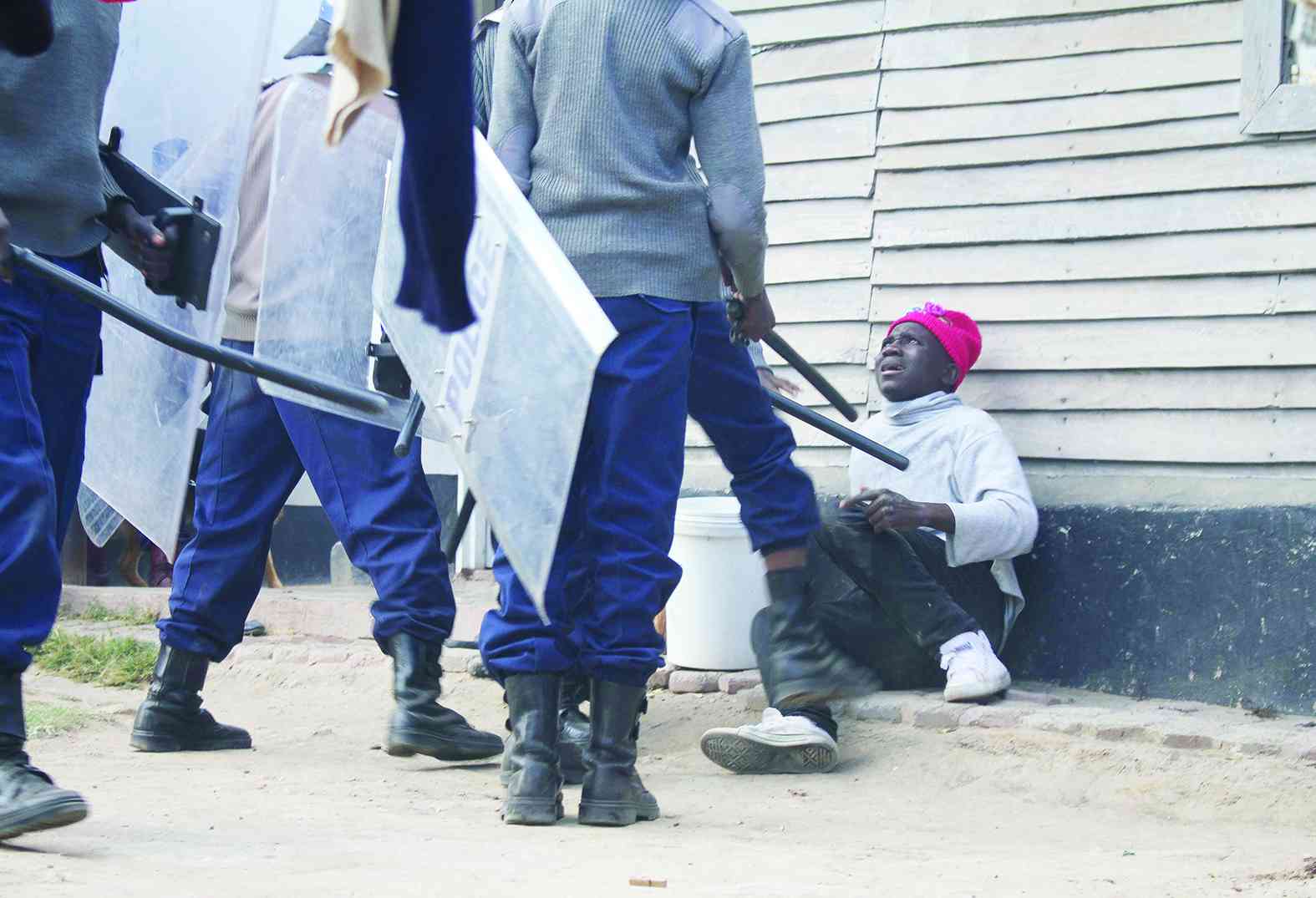
While xenophobic violence is indefensible and incompatible with constitutional values, it is also a warning signal that migration governance failures have reached a critical point.
A central weakness remains South Africa’s porous land borders, which stretch across vast and often inaccessible terrain.
The challenge, however, is not geography alone, but governance.
International experience demonstrates that borders are most vulnerable, where corruption thrives.
The establishment of the Border Management Authority was a necessary reform, yet it has not delivered the decisive shift required.
Without robust anti-corruption enforcement, advanced surveillance technology and institutional accountability, the authority risks reproducing the very dysfunction it was meant to resolve.
- Zim headed for a political dead heat in 2023
- Record breaker Mpofu revisits difficult upbringing
- Tendo Electronics eyes Africa after TelOne deal
- Record breaker Mpofu revisits difficult upbringing
Keep Reading
Countries such as the United States and members of the European Union have shown that border control becomes effective only when biometric entry-exit systems, automated visa monitoring and intelligence-led patrols reduce reliance on human discretion and limit opportunities for bribery.
Corruption at borders and within immigration systems must be treated as a national security threat.
Officials who facilitate illegal entry or sell visitor visas in exchange for bribes undermine sovereignty as directly as organised crime networks.
Successful jurisdictions have relied on aggressive consequence management: routine lifestyle audits, compulsory rotation of border personnel, independent oversight units and swift prosecution.
South Africa cannot credibly speak of migration control while border corruption remains largely cost-free.
Yet enforcement alone will not resolve undocumented migration.
Europe’s migration experience after 2015 illustrates that sealing borders without legal migration pathways merely diverts flows into more dangerous and irregular channels.
South Africa’s economy is structurally dependent on migrant labour in agriculture, construction, mining services, domestic work and the informal economy.
The absence of realistic, regulated labour mobility options has pushed both migrants and employers into illegality.
A strategic response requires demand-driven, time-bound work permit systems aligned with labour shortages, coupled with strict penalties for employers who exploit undocumented labour.
Regularisation mechanisms, carefully designed and limited in scope, can also reduce the size of the undocumented population and restore State oversight.
Crucially, South Africa cannot manage migration as a unilateral project.
Undocumented migration is a regional phenomenon rooted in structural inequality across Sadc, not a bilateral problem confined to one or two neighbouring States.
Pretoria must, therefore, initiate frank, structured engagements with Sadc member States as a bloc, while also pursuing targeted bilateral arrangements where migration pressures are most acute.
These engagements should focus on co-ordinated border management, interoperable migration databases, joint enforcement operations and regionally harmonised labour mobility frameworks.
The European Union’s gradual move towards shared migration governance demonstrates that regional co-ordination, though politically difficult, is more sustainable than isolated national responses.
Such diplomacy must extend beyond security to development.
Migration pressures will persist as long as economic collapse, political instability and environmental stress continue to push people across borders.
South Africa should leverage on Sadc and African Union platforms to link migration management to regional industrialisation, infrastructural development and job creation, particularly in border regions.
Migration policy divorced from regional economic strategy is ultimately self-defeating.
Domestically, the role of internal enablers of undocumented migration must also be confronted.
The presence of undocumented migrants in formal housing markets points to complicity beyond the State.
Landlords, who knowingly rent properties to undocumented occupants are, in effect, facilitating unlawful residence.
Several European countries have introduced legal obligations on property owners to verify tenants’ residency status, with heavy fines for non-compliance.
South Africa could adopt such measures, ensuring due process and safeguards against abuse, while signalling that migration governance is a shared societal responsibility.
Carefully enforced penalties would deter profiteering without criminalising poverty.
The challenge of informal settlements and squatter camps, however, requires a different approach.
These spaces reflect broader failures in housing, urban planning and service delivery rather than deliberate facilitation.
Heavy-handed enforcement in such contexts risks humanitarian crises and social instability.
Instead, government should prioritise registration drives, mobile documentation units and service-linked regularisation assessments to bring residents into administrative visibility.
The objective must be to govern informality, not to deepen it.
Equally important is political leadership and public communication.
Migration has become an easy scapegoat for deeper governance failures.
The European experience shows that when political leaders legitimise exclusionary narratives, policy coherence collapses and violence follows.
South Africa’s leadership must communicate honestly: undocumented migration is a serious governance challenge, but it is not the primary cause of unemployment, crime or failing healthcare systems.
Transparent data, consistent messaging and visible enforcement against corruption are essential to restoring public trust.
Ultimately, South Africa faces a strategic choice.
It can continue oscillating between denial, securitised rhetoric and episodic enforcement or it can adopt an integrated migration governance model that combines border integrity, anti-corruption action, regulated labour mobility, regional diplomacy and internal accountability.
Developed countries have learnt that migration cannot be eliminated; it can only be managed.
For South Africa, managing migration effectively is inseparable from restoring confidence in the State, strengthening regional stability and preserving social cohesion.
- John Laisani is a research fellow at the University of South Africa, managing director of Laisani Consulting and Advisory and an advocate of the High Court of South Africa. He is an inter-disciplinary researcher with a background in Law and a PhD in Mining and Environmental Geology, with research interest on mineral beneficiation and value addition, economic geology, mineral resource governance, environmental sustainability, renewable energy and sustainable development. He writes here in his personal capacity as a researcher. He can be contacted at [email protected].