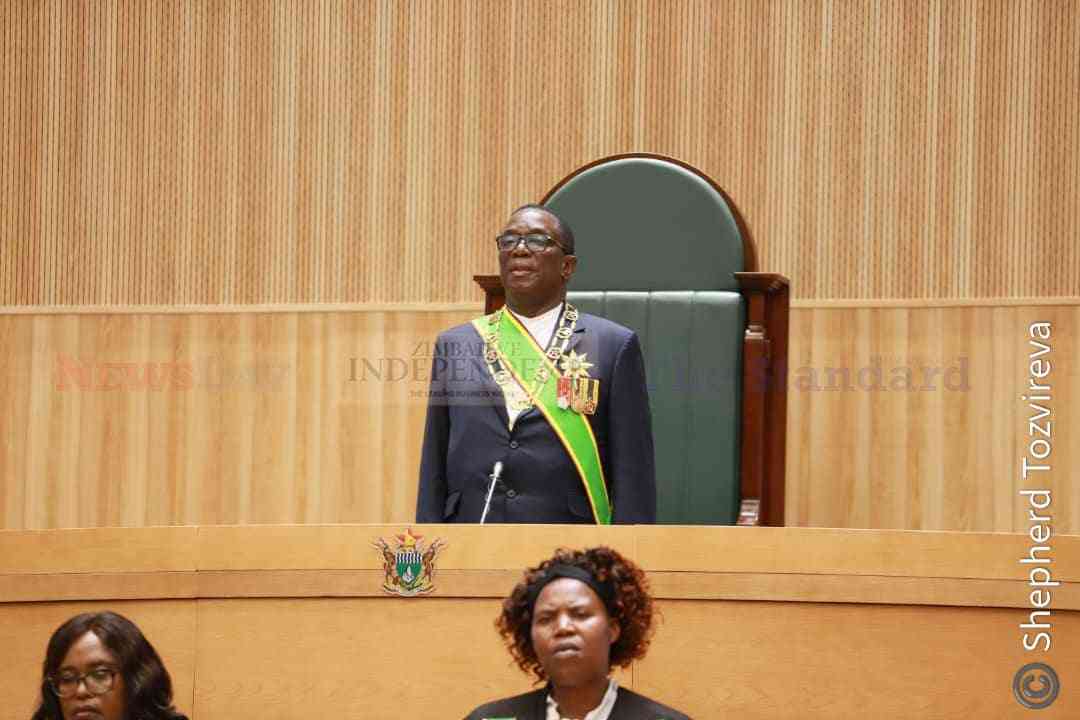
THE President’s State of the Nation Address is always a significant moment.
It is our nation’s report card and its plan for the future, all in one. This year’s speech painted a picture of a nation hard at work.
We heard about a growing economy, record-breaking harvests of maize and tobacco, and new roads being built.
The government’s plan, Vision 2030, was presented as being firmly on track, powered by our collective "unity, peace, and resilience".
There is value in celebrating progress. The expansion of irrigation schemes and the installation of new community boreholes are real achievements that improve lives.
President Emmerson Mnangagwa’s acknowledgement of the devastating "scourge of drug and substance abuse" is also a crucial, if not long overdue, admission of a crisis that is tearing apart our families and communities.
However, a true assessment requires us to look beyond the list of projects and bills.
We must ask a simple question: Does this address fully capture the daily struggles of the average Zimbabwean and offer convincing, long-term solutions? On this front, the speech fell short.
- Commodity price boom buoys GB
- Lobby group bemoans impact of graft on women
- New perspectives: Building capacity of agricultural players in Zim
- Corruption watch: Rogue cops: Blame it on the bosses
Keep Reading
Let’s start with the economy. The President spoke of a 6,6% growth rate and a stable new currency, the ZiG.
But for the teacher who spends most of their salary on transport, the parent who cannot afford a bag of mealie-meal or the young graduate who has never had a formal job, these numbers feel distant. The address did not clearly explain how this economic growth will translate to more jobs, higher wages and lower prices in the shops.
The "current economic stability" he described is not the lived experience of millions who navigate a constant financial crisis. The fear that the ZiG could lose its value, as previous currencies have, is a ghost that was not properly addressed.
Then there is the issue of corruption. This is perhaps the most glaring gap in the address. Corruption is not a minor problem; it is a deep wound that drains billions from State coffers. It makes everything more expensive, from building a road to getting a simple permit. When public money is stolen, there is less for hospitals, schools and social support. To speak of "building our motherland, brick by brick" without declaring a specific, ruthless and new war on corruption feels like planning to build a house on a foundation of sand. Public trust is broken by this silence.
On the crisis of drug abuse among our youth, the President’s words, while welcome, lacked a concrete battle plan. Commending charities and community groups is not enough. Where is the large-scale government investment in rehabilitation centres? Where are the programmes that create real alternatives — jobs, training, and hope — for the young people who see drugs as their only escape from unemployment and despair? The speech identified the symptom but was shallow on the cure.
This leads to the central question: why do these same problems of poverty, unemployment and corruption keep haunting us year after year? It is not that we lack smart policies or good ideas on paper.
The problem often lies in implementation and lack of unwavering political will. Laws are passed, but enforcement is weak. Projects are announced, but their benefits are lost to inefficiency or greed. The President himself expressed frustration at the "unacceptable" backlog of bills in Parliament, which shows that even the government’s own plans get stuck.
So, what is the path forward? It requires more than a yearly speech. It demands a new national compact, a promise between the government and its people. First, the government must move from announcing plans to delivering visible, tangible results that change lives.
This means not just passing anti-corruption laws, but visibly jailing the powerful who steal, and recovering stolen funds. It means not just talking about youth empowerment, but launching a national, well-funded programme that creates jobs and skills for the millions of young Zimbabweans who feel left behind.
Second, as citizens, we must also hold up our end of the bargain. The President ended with a powerful proverb: "Nyika inovakwa, igotongwa, igonamatirwa nevene vayo" — a country is built, governed and prayed for by its owners. We are the owners. This means we must be active, engaged and hold our leaders accountable. We must reject corruption in our daily dealings and demand better from those in power.
The vision in the President’s speech can only become reality through a collective, sustained and honest effort. We have the roadmap. Now, we need the unwavering will from everyone to follow it. The future of Zimbabwe depends not on words, but on the actions that must follow.