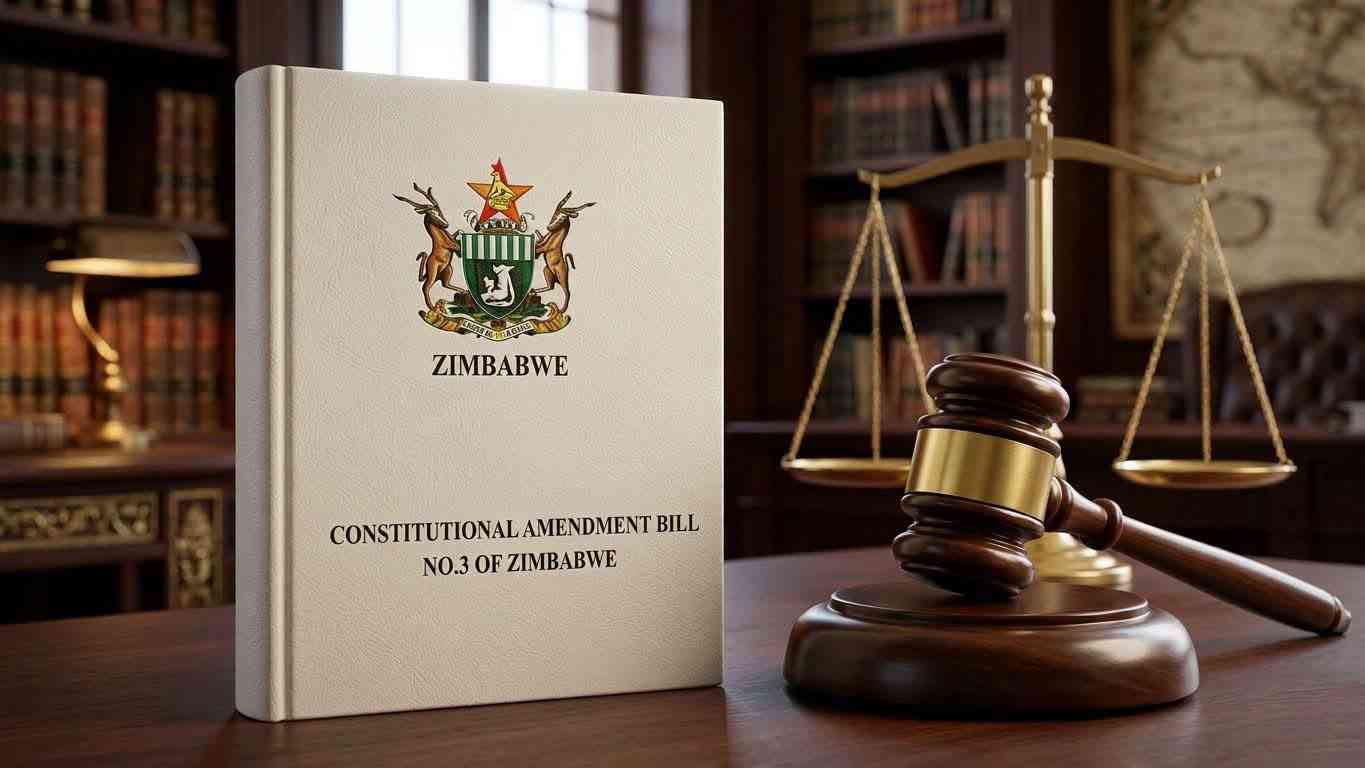
A MATABELELAND South Senator said he voted against Constitution Amendment No 3 Bill (CAB 3) because of his unwavering principle and commitment to his constituents who are against President Emmerson Mnangagwa’s term extension.
A total of 75 senators voted in favour of the Bill on Wednesday, while four voted against it, securing the two-thirds majority required for constitutional amendments.
Opposition Citizens Coalition for Change senators that voted against CAB 3 are Sessel Zvidzai (Midlands), Solani Moyo (Matabeleland South), Meliwe Phuthi (Matabeleland South) and Nonhlanhla Mlotshwa (Matabeleland South).
Their stance has attracted widespread praise on social media in defence of constitutionalism, accountability and democratic governance.
The Bill seeks to extend Mnangagwa’s term from 2028 to 2030, scrap direct presidential elections among other changes to the country’s charter adopted in 2013.
Moyo said he voted against the Bill because he chose “country over comfort” and remained loyal to the people rather than political interests.
The Matabeleland South senator said his decision was inspired by ordinary Zimbabweans struggling with poverty, unemployment and poor public services.
“I did not take an oath to a party or to a career. I took an oath to the people of Matabeleland South and through them, to all 10 provinces and the 16 languages that make up this nation,” Moyo said.
- Mr President, you missed the opportunity to be the veritable voice of conscience
- ED to commission new-look border post
- Zanu PF ready for congress
- Zanu PF ready for congress
Keep Reading
“While I stood in that chamber, I carried the woman in Bulilima who walks for water, the nurse without medicine, the graduate without a job, the elder who remembers what independence promised.
“I could not betray them for two more years of comfort.”
Moyo also highlighted the decisive role opposition legislators played in passing the Bill, noting that the ruling party alone lacked the required two-thirds majority.
“In the National Assembly, 216 voted yes and 42 voted no.
“Zanu PF alone did not have the two-thirds majority; it was opposition MPs who delivered it.”
Addressing recent legal challenges against the Bill, Moyo pointed out that the Constitutional Court did not dismiss the cases on their merits.
“The Constitutional Court did not rule on whether it was lawful for Mnangagwa to take part in Cabinet deliberations on a Bill that directly extends his own term; it simply said the matter must first go to the High Court,” he said.
“That door is not closed. It is deferred. The legal struggle continues.”
Moyo urged lawyers, civil society organisations, churches and ordinary citizens to continue opposing the Bill through lawful means before it receives presidential assent.
“Constitutionally, the Bill now needs only the President’s signature. But a nation’s conscience is not signed away by a single pen stroke,” he said.
Moyo said future generations should know that some lawmakers resisted what he described as an unjust extension of power.
“The struggle our forefathers bled for was never for one man’s extension of power. It was for inkululeko — freedom and the right of every citizen to choose, to change, and to hold power accountable,” he said.
During debate proceedings, Mlotshwa argued that constitutional amendments go beyond ordinary legislation because they directly affect balance of power within the State.
She warned lawmakers against weakening constitutional safeguards, citing section 328(7) of the Constitution as a critical protection against self-serving amendments.
“The Constitution anticipated the temptation of power,” she said.
“It, therefore, created guardrails against that temptation.
“As legislators, we should be strengthening those guardrails, not weakening them.”
Mlotshwa also questioned the government’s justification that some constitutional changes were necessary to reduce the cost of elections.
She further stressed the importance of protecting democratic institutions and maintaining public confidence in electoral processes.
Mlotshwa opposed proposals to transfer voter registration responsibilities to the Registrar-General without what she described as strong parliamentary oversight.