THE Treasury has availed funds to recruit a paltry 2 000 teachers, a figure that falls significantly short of the estimated 20 000 to 30 000 vacancies crippling the country's public schools, legislators heard this week.
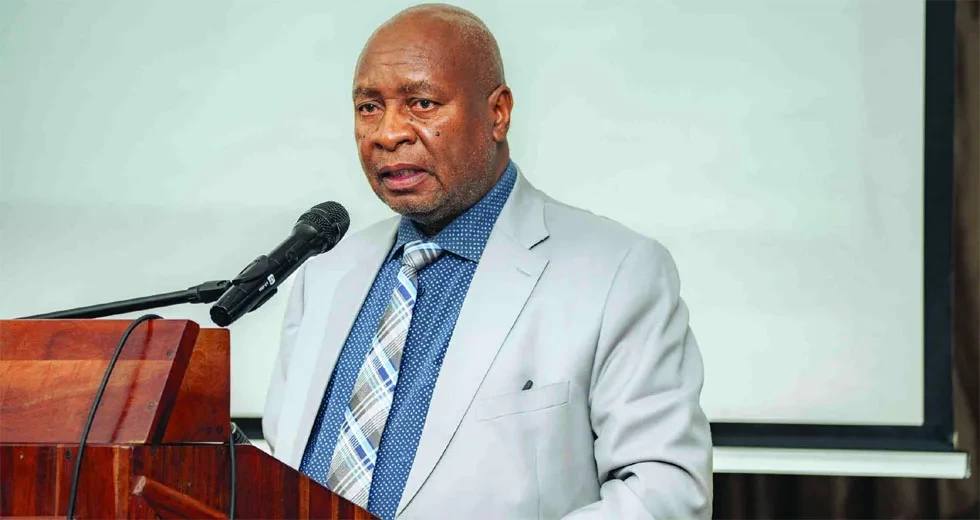
Public Service minister Edgar Moyo disclosed the constrained recruitment drive during a recent Parliament question-and-answer session, acknowledging that while government aims to fully staff schools, fiscal limitations remain the major constraint.
The shortage comes amid a deepening education crisis marked by teacher shortages, declining morale and an exodus of educators, with some schools reportedly recording zero pass rates.
The recruitment of 2 000 teachers highlights the widening gap between staffing needs and available fiscal resources, as Zimbabwe’s education sector continues to grapple with severe teacher shortages, rising attrition, and deteriorating learning outcomes.
Moyo said recruitment of civil servants was tied to fiscal space and budget allocations from the Finance ministry.
"The government desires to have all schools adequately staffed. However, I know that many vacant posts have not been filled," he said.
"Basically, our wish is that we could fill all of them. Now, the issue here is that every post that must be filled must receive adequate concurrence and funding from the Ministry of Finance."
Moyo noted that annual allocations for teacher recruitment depend on fiscal space to cater for staff increases.
- Govt must restore dignity to civil service
- Women’s hockey team in impressive start
- Scrap IMTT to save industry, govt urged
- AfDB cuts Zim’s growth projections to 3.5%
Keep Reading
"This year, the Ministry of Primary and Secondary Education was to employ about 2 000 additional teachers.
“I am sure the recruitment is currently ongoing and that may not be enough, but that is what Treasury has provided for," he told the House.
Teacher unions said the recruitment of only 2 000 teachers was particularly stark, given the severe haemorrhaging of talent the sector has suffered in recent years.
Unions have long warned that low salaries and poor working conditions have driven a massive brain drain, with experienced educators leaving for neighbouring South Africa, Botswana or careers outside the classroom.
According to the Progressive Teachers Union of Zimbabwe, as many as 15 000 teachers quit the profession in 2023 and 2024.
The government disputed the figure, claiming the number is closer to 5 000 for 2023.
However, observers said the situation had deteriorated to crisis levels, affecting the quality of learning and examination results.
Parliament also heard that there are thousands of teachers who have remained unemployed since they finished training as far back as 2019.
This emerged after Moyo was asked about the government's strategy to fill vacant teaching posts with student teachers.
“Yes, admittedly, some teachers completed around 2018/19 who still have not been employed and the question of when one is employed is a question of demand and supply,” he said.
“We find that teachers in mathematics, sciences and so on do not stay as long as some teachers do, because their skills are required and they are in short supply.”
Amalgamated Rural Teachers Union of Zimbabwe leader, Obert Masarure, told NewsDay that the 2 000 teachers to recruited are insufficient relative to thousands of vacant posts across the country.
“2 000 teachers do not even cater for the thousands who left the profession in 2025 alone. Our schools are seriously understaffed and our underpaid teachers are carrying unbearable workloads,” he said.
Masarure questioned the recommendation to declare positions that remain vacant for a long period redundant made following a job evaluation exercise.
“However, the neoliberal policies of the government push education and other social services to the periphery of government’s priorities,” he said.
“The education sector is being sustained on the back of underpaid teachers, but very soon the system will collapse.”
Teachers are earning a fraction of the US$540 they were earning before 2018, adjusted for inflation and currency devaluation.
The erosion of value has left many unable to afford transport or rent, resulting in a talent drain that the recruitment of 2 000 teachers cannot offset, Masaraure added.
Moyo, however, maintained that Treasury is responsible for ensuring the capacity to pay.
“The actual funding must be secured first before you employ, because you want to pay those teachers as soon as they have been employed.”