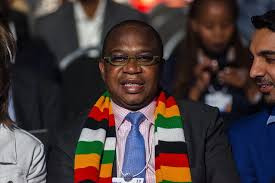
FINANCE minister, Mthuli Ncube, faces intense criticism for linking the controversial plan to extend President Emmerson Mnangagwa’s term to economic stability and investor confidence.
Ncube made the remarks in support of the Constitutional Amendment No 3 Bill (CAB3), which seeks to extend the presidential term from five to seven years. The Bill is before Parliament.
Mnangagwa’s second five-year term is scheduled to end in 2028 and if the Bill is passed, his tenure will be extended to 2030.
The Bill also proposes scrapping direct presidential elections and shift that responsibility to lawmakers. Legislators’ terms will also be extended by two years to 2030.
The Bill has sparked intense debate, with critics viewing it as a ploy to consolidate power.
Ncube’s comments come at a time of growing dissent within Zanu PF over the amendment which has been linked to Mnangagwa’s succession.
Critics accused him of trying to substitute institutional authority with a personalised form of governance.
The debate has been further inflamed by Attorney-General Virginia Mabhiza, who recently warned that all Cabinet ministers are obliged to publicly support government’s decisions.
- NoViolet Bulawayo’s new novel is an instant Zimbabwean classic
- Jah Prayzah, Zanu PF rekindles ‘lost love’
- Bank workers appeal to Ncube for tax relief
- Indosakusa marks 21-year anniversary milestone
Keep Reading
Mabhiza indicated that those who cannot support official policy should resign, citing section 104 of the Constitution, which grants the President the power to appoint or dismiss ministers.
Political observers have interpreted Mabhiza’s remarks as a direct threat, suggesting a potential crackdown on dissenting voices within Cabinet.
The warning is widely seen as targeting those who privately oppose the Bill, signalling that a minister who fails to adhere to the party line will face dismissal.
The amendment, known as CAB3, has drawn criticism from economists who say it undermines the predictability essential for long-term investment.
While the government argues that the change provides political stability, observers see the Attorney-General’s forceful stance as a precursor to a political purge.
Australia-based commentator Reason Wafawarova said the Attorney-General’s statement raised important constitutional and institutional considerations.
“Against that backdrop, any communication that appears to prescribe a uniform position for all ministers may invite questions about the balance between Cabinet solidarity and the expectation of independent legislative judgement,” Wafawarova noted.
“It is important that parliamentary processes are seen to be open, deliberative and not unduly constrained, particularly on matters of constitutional significance.”
Wafawarova said it would be difficult to draw conclusions of a potential witch-hunt against perceived fence sitters or those opposed to CAB3.
For the integrity of the process, he noted, participants — whether in Cabinet or Parliament — are able to engage freely, without fear of reprisal, and in a manner that upholds both constitutional principles and public confidence in the legislative process.
Analyst Vivid Gwede echoed similar sentiments.
“For outsiders, it inadvertently exposes the fact that there may not be agreement within Zanu-PF about the amendments. This is despite the proposals being presented as a unanimous party resolution.”