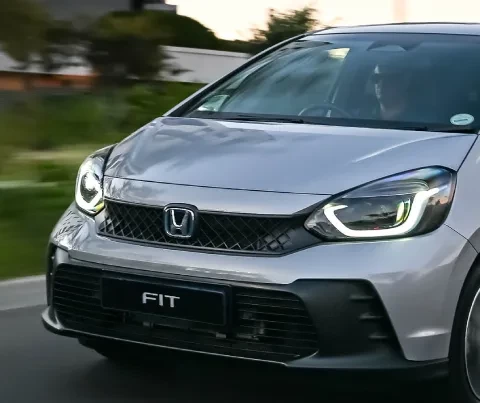
IN the world of Zimbabwean motoring, the Honda Fit isn’t just a car, it’s a go-to vehicle for most people.
It’s the vehicle that fuelled the mushikashika revolution, the reliable companion for the school run, and the resilient workhorse that refuses to quit even when faced with the most ambitious of potholes.
As the fourth-generation 2021 model floods our market, a new rift has formed among enthusiasts and practical buyers alike.
On one side stands the 1.5 Comfort CVT, costing around
US$23 500, the traditionalist’s choice, powered by a pure petrol en
gine.
On the other hand, the high-tech Hybrid eHEV (e-CVT), costing around US$35 000, is a silent assassin in the war against fuel prices.
To decide which one truly deserves a spot in your driveway, we must look beyond the badge and into the mechanical soul of these two machines.
- 1.5 Comfort CVT vs Hybrid eHEV: Which Fits Zimbabwe?
Keep Reading
The mechanical soul: Two very different hearts
To the untrained eye, these two cars look identical.
They share the same minimalist aesthetic, the same panoramic visibility, and the same legendary Magic Seats.
However, the way they move is fundamentally different.
The 1.5 Comfort CVT (Continuously Variable Transmission) is powered by a 1.5-litre i-VTEC petrol engine producing approximately 120hp.
It uses a traditional CVT that uses a belt and pulley system.
When you step on the gas, the engine revs rise, the pulleys adjust, and the car accelerates with a familiar, linear hum.
It is predictable, mechanical and simple.
The Hybrid eHEV is a different beast entirely.
It uses a dual-motor system where the 1.5-litre engine spends most of its life acting as a mobile generator.
The wheels are primarily driven by a powerful electric motor.
Because it uses an e-CVT, there are no belts or pulleys, it’s a direct-drive system.
This provides a shove of torque that the petrol version simply cannot match, making it feel significantly punchier in city traffic.
The efficiency equation
In Zimbabwe, we live and die by the litre per kilometre metric.
The 1.5 Comfort is no slouch.
It’s an efficient petrol car, easily achieving 15–18 km/l on the open road.
For many, this is more than enough to justify its lower purchase price.
However, the Hybrid exists in another dimension of the economy.
Because it harvests energy and charges the battery during braking (regenerative braking) and shuts the engine off entirely during slow speeds, it can push toward 25–27 km/l.
In a year where fuel prices remain volatile, the Hybrid can save a high-mileage driver hundreds, if not thousands, of dollars annually.
For the urban commuter who spends two hours a day in “stop-and-go” traffic, the Hybrid pays for itself within eighteen months.
The maintenance minefield: Simplicity vs complexity
This is where the debate gets heated at the local garage.
The 1.5 Comfort is the mechanic’s darling.
There is no high-voltage battery to worry about, no complex inverter and the parts are largely interchangeable with previous generations of Honda engines.
If something goes wrong in a remote part of Zimbabwe, a local technician with a decent toolkit can likely get you back on the road.
It is the safe bet for those who plan on keeping the car for 10 or 15 years.
The Hybrid brings the fear of the unknown.
While Honda’s hybrid systems are globally renowned for their reliability, Zimbabwe’s heat and dust can be hard on batteries.
However, there is a hidden advantage: the Hybrid has fewer wear items.
There is no starter motor, no alternator, and no traditional belt-driven CVT to snap.
Even the brake pads last twice as long because the electric motor does most of the slowing down during regenerative braking.
The trade-off is that when the hybrid battery eventually nears the end of its life (usually after 8–10 years), the replacement cost is significantly higher.
The verdict: Which one should you buy?
A clear winner emerges, but it depends entirely on where you drive.
Buy the 1.5 Comfort CVT if:
You live in a smaller town or travel long distances between cities (e.g, Harare to Bulawayo) frequently.
On the highway, the Hybrid’s advantage shrinks and the simplicity of the petrol engine becomes your greatest asset.
It is the car for the driver who wants zero stress and easy repairs in any corner of the country.
Buy the Hybrid e:HEV if:
You are mostly in one city, with no intercity commutes.
If 90% of your driving is within the city, the Hybrid is the undisputed king.
The silence, the instant torque, and the fuel savings are addictive.
The Final Choice:
For the modern motoring journalist or the professional editor who needs to be everywhere at once without breaking the bank at the pump, the 2021 Honda Fit Hybrid eHEV is the superior machine.
It is the perfect marriage of Honda’s legendary reliability and the future of mobility.
Yes, the 1.5 Comfort is the “safer” financial choice upfront, but the Hybrid is the one that makes you smile every time you pass a long fuel queue, knowing you still have half a tank left.