DELTA Corporation continues to deepen its commitment to local sourcing through a robust contract farming model that provides farmers with inputs, agronomic support and long-term financing for critical agricultural infrastructure.
The strategy has enabled the beverages giant to secure 100% of its barley requirements and half of its maize demand locally, reducing import dependence while strengthening Zimbabwe’s agricultural value chains and rural livelihoods.
Under the model, Delta advances seed, fertiliser, chemicals and technical extension services, with recoveries made upon delivery of the crop at harvest.
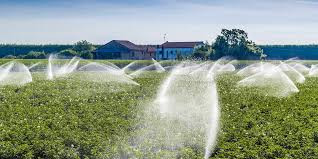
Beyond seasonal inputs, the company — particularly through its barley scheme — has consistently invested in durable capital equipment, including combine harvesters, irrigation systems, dams and other production-enhancing assets.
This approach has strengthened on-farm productivity and enabled farmers to reliably and sustainably deliver industrial-grade grain.
In a statement, Delta said its commercial barley and maize programme currently engages about 50 farmers cultivating between 6 000 and 8 000 hectares annually.
“This supply base guarantees 100% of Delta’s barley malt requirements and approximately 50% of its maize demand. Annual purchasing values amount to approximately US$20 million for barley and US$15 million for maize,” the company said.
Complementing this is the sorghum contract scheme, which anchors Delta’s traditional beer value chain.
- Currency crisis hits capital markets
- We are climbing out of hard lockdowns, says Delta boss
- Currency crisis hits capital markets
- We are climbing out of hard lockdowns, says Delta boss
Keep Reading
The programme works with nearly 9 000 communal farmers across the country, generating annual grain deliveries worth between US$4 million and US$5 million.
The scheme provides a stable and predictable market for smallholder farmers, supporting rural livelihoods while securing essential raw materials for the company.
“Across all crops, Delta’s initiatives promote the adoption of modern agronomic practices such as conservation farming, efficient irrigation, mechanisation, and climate smart techniques,” the statement said.
This “synthetic vertical integration” secures raw material supply, reduces reliance on foreign currency for imports and strengthens the national agricultural sector.
The model also mitigates supply chain risk by stabilising input availability, smoothing price volatility and reducing exposure to external shocks such as import disruptions and foreign currency constraints.
In addition to boosting agricultural productivity, the programmes contribute directly to the national fiscus through VAT, income taxes and downstream economic activity across farming, logistics and processing value chains.
Over the past 15 years, infrastructure funding under the schemes has totalled approximately US$20 million, underscoring Delta’s long-term commitment to building a resilient, locally anchored supply chain capable of supporting national food security and industrial competitiveness.