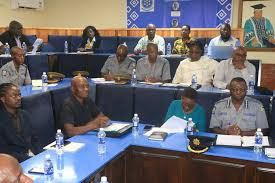
SOME police officers, who attended a public hearing on the Police Amendment Bill in Chinhoyi, Mashonaland West province, strongly criticised the proposed law, arguing that it gives excessive powers to the Commissioner-General of Police.
The officers, who identified themselves during the hearing at Cooksey Hall, said the Bill sought to empower the Commissioner-General to make standing orders in consultation with the Police Service Commission, a move they described as concentrating too much authority in one office.
“Allowing one individual to make standing orders is not good governance,” said one of the police officers.
“It puts too much power in the hands of one person and is not healthy for democracy.”
Another participant described the Bill as repressive, arguing that it is designed to give top police leadership sweeping powers to run the organisation without sufficient checks and balances.
“The Bill is a monster. It is not aligned with the Constitution of Zimbabwe and gives the Commissioner-General powers to set up a commission of inquiry to deal with officers, instead of officers accessing fair hearings through the courts of law,” one of the police officers said.
The Bill also allows the Commissioner-General to delegate statutory functions, such as convening boards of inquiry, to his deputies.
Participants said this provision, particularly section 5(3), was of great concern as it further entrenched power at the top.
- MRP petitions prison services over jailed members
- State withdraws charges against crocodile farmers
- Family demands closure to 19-year-old murder case
- 34 anti-govt vapostori fined US$18 each
Keep Reading
Police welfare issues also took centre stage, with participants lamenting the neglect of officers’ working conditions.
A police officer from Mhangura said the Bill violated officers’ rights as workers.
“The Bill talks about discharging a police officer who falls sick for six months without pay,” the officer said.
“That is a violation of human rights as enshrined in the Constitution.”
The law enforcement agents also raised concern over punitive
transfers, which they said were often used to punish those who act professionally.
“There is a need to justify transfers because they are being used by senior officers to settle grudges with junior officers, especially when officers arrest criminal cartels that allegedly pay [bribes to] senior officers to operate,” another officer said.
The Police Amendment Bill seeks to introduce major changes to the policing framework, which authorities say are intended to enhance administration and effectiveness within the Zimbabwe Republic Police (ZRP).
However, participants at the Chinhoyi hearing argued that the proposed reforms risk undermining accountability, constitutional rights and democratic policing.
The proposed Bill is aimed at amending the Police Act and redefine the powers, functions and administration of ZRP.
Key provisions of the Bill include giving the Police Commissioner-General the power to temporarily suspend officers charged with criminal offences, not just those convicted or facing serious disciplinary charges as previously required.
It also aims to formally establish the police ranks in legislation, aligning them with constitutional requirements.
It introduces new codes of conduct for police officers and provides a legal framework for the regulation of police operations, including the use of force and firearms.
It also seeks to address various administrative and operational procedures within the police force to modernise and streamline its functions.