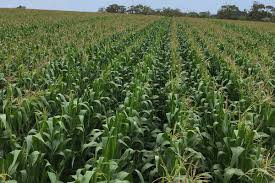
A POSSIBLE upsurge in pest infestation particularly in the southern parts of Zimbabwe is threatening an expected bumper harvest that was inspired by favourable rains during the 2025-26 agricultural season.
According to reports, farmers across Zimbabwe have exceeded the maize planting target for the summer agricultural season, reaching 105% of the planned area.
Farmers have planted 1 885 833 hectares of maize, above the initial target of 1,8 million hectares, according to the Agricultural and Rural Development Advisory Services (ARDAS).
ARDAS has indicated that the area dedicated to maize this season is higher than last year’s 1 728 897 hectares.
The government has reported that crop conditions are generally positive nationwide, with several provinces surpassing their planned planting targets.
Zimbabwe, like most parts of the southern Africa region, is experiencing a weak La Niña weather phenomenon, bringing normal to above-normal rainfall between October 2025 and March 2026, according to the Famine Early Warning System Network.
The Meteorological Services Department and the Department of Civil Protection issued a joint weather alert this week, warning of heavy rainfall exceeding 50mm countrywide.
Addressing the media during a question and answer session in Harare yesterday, Lands, Agriculture, Fisheries, Water and Rural Development secretary Obert Jiri said while the overall outlook for crops remained positive, particularly for early-planted crops which are performing well across most farming regions, low-lying areas are beginning to be affected by the rains while an upsurge of pests is anticipated as rains subside at the end of the week.
- Kanye West, Kim Kardashian finalize divorce
- 'Africa should define its own beauty standards'
- Twitter starts removing blue tick mark from non-paying users
- All the world’s a stage
Keep Reading
“We are forecasting that when the rains slow down, there might be an upsurge of pests like African armyworm, locusts and fall armyworm, particularly in the southern parts of the country,” he said.
“There are a lot of rains around the country, but the most affected areas currently are the lower parts of Chipinge, Chisumbanje and Gokwe, which has very poor soils.
“We are now starting to see nitrogen deficiency effects.
“Besides that, the early planted crop is looking good. We think that if the rains continue, farmers must, of course, employ good agronomic practises, split application of nitrogen fertiliser, opening up of drainage on water logged areas and foliar application of fertiliser.”
Jiri called on farmers to make use of liquid fertilisers that can be applied even when fields are wet.
“There are fertilisers that can be applied on the leaves. Farmers should employ foliar fertilisers to save the crop should the situation require that.
“Foliar fertilisers can be applied as long as there’s a sunbreak, so farmers should approach the agricultural business advisory officers in their localities to assess the crop and ensure that it remains in good condition.”
He acknowledged a nationwide shortage of nitrogen fertiliser, adding that the government was availing fertiliser under the Presidential Input Programme to support farmers affected by nitrogen deficiency.
“We are availing fertilisers to ensure that support application can be done for the areas that are hit by nitrogen deficiency,” Jiri said.
“For the greater part of the farming sector, we are aware of the shortage of nitrogen fertilisers across the country.
“It’s trickling in as the statutory instrument, which allowed the importation of duty-free fertiliser is now bearing fruit.”