HARARE residents are set for a clash with the City Fathers after the latter proposed a 2026 budget of US$690,8 million arguing that the proposal is meant to restore infrastructure and improve service delivery.
Residents associations have spoken strongly against the Harare City Council (HCC) proposed 2026 budget which is set to increase water tariffs in the capital’s high- and low-density suburbs.
Water charges in high-density areas were pegged at US$2 from US$1,24 per kilolitre which translate to a 61% increase and low-density suburbs from US$1,70 to US$4 per kilolitre which translates to 188%.
The budget, which was presented on October 30, has been flagged for failing to address Harare residents’ plights.
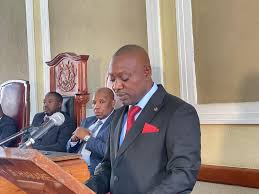
Presenting the budget on Friday last week, finance committee chairperson councillor Costa Mande said the 2026 financial plan for the City of Harare was built on two strategic pillars of revenue mobilisation and accelerated capital investment.
“Enhanced revenue mobilisation and fiscal discipline, ensuring predictable cash flows to sustain service delivery and on accelerated capital investment anchored on infrastructure renewal, digital modernisation and community resilience,” Mande said.
“The consolidated estimates present a total resource envelope of US$690,8 million, of which approximately US$234,8 million is directed towards capital expenditure programmes, while US$455,3 million is meant to support recurrent operations and service maintenance.”
Mande said the budget focused on bringing water back to residents’ taps, fixing our roads and reviving essential services.
- Harare cancels Pomona waste deal
- Devolution gains remain a mirage
- Harare cancels Pomona waste deal
- Pomona saga: Harare handed shock US$750k ‘garbage’ bill
Keep Reading
“The US$234 million, about a third of the total plan will fund capital projects, including rehabilitation of key water treatment plants, sewer networks and 200 kilometres of the city’s roads,” he said.
Mande indicated that US$127,4 million would be used to refurbish Morton Jaffray and Prince Edward water treatment plants, replace ageing water and sewer mains and instal prepaid water meters.
“This allocation demonstrates our commitment to ending years of water shortages and leakages. Every dollar spent on water infrastructure directly impacts public health and household dignity,” he said.
Mande said the 60% remitted in fee collection, amounting to US$4,036 million for the period January-mid-October this year demonstrated commitment to supporting the city’s revenue streams.
“City Parking (Private) Limited is taking several important steps to improve parking services and support our community,” he said.
“We are proud that our Strategic Business Unit has achieved ISO certification, reflecting commitment to quality and customer satisfaction.
“In addition, City Parking (Private) Limited will continue offering exemptions to the elderly and war veterans as part of our social responsibility.”
However, Harare Residents’ Trust director Precious Shumba said more than 60% of households in the capital were not receiving council water.
“The proposed rates are unjustified, illogical and inconsistent with the spirit of collaboration that the City of Harare always talk about. The Harare City Council has, by this unreasonable hike, demonstrated that it is not interested in listening to residents’ concerns,” he said.
“For a very long time now, the City of Harare has been failing to provide water to the residents, only managing to connect on average 40% of households to the water distribution system.”
He said that left 60% of households relying on community and private boreholes.
Shumba said as long as the opaque financial management system exists in council, hiking water rates would have an insignificant impact on the availability of financial resources to aid service delivery.
The Combined Harare Residents Association (CHRA) this week called on the City Fathers to prioritise service delivery improvement to rebuild trust and payment compliance.
“While the association acknowledges council’s efforts towards a consultative process, the budget fails to reflect the lived realities of residents and overestimates the city’s capacity to deliver on its promises.
“The local authority cannot continue to demand more from residents while failing to provide basic services such as clean water, waste collection and sewer.”
CHRA said the water tariff hike was a threat to household water security.
The association said the proposed tariff hikes were unjustified in the absence of visible improvement in water supply, and considering that in South Africa, Johannesburg, the same amount of water cost US$1,24.
The Harare City Council financial statements were last audited in 2021.
“The audit backlog is worrying, noting that the City of Harare’s financial statements are only updated to 2021, a situation that undermines public confidence and trust, and accountability,” CHRA said.
“We caution that the city’s over-reliance on public-private partnerships and external funding, create dependence risks turning the city’s 2026 budget into a “wishlist” rather than a practical financial framework,” CHRA added.
Zimbabwe National Organisation of Associations and Residents Trust national chairperson Shalvar Chikomba said council presented a budget which contrasted what it agreed with the residents.
“This came as a shock to us as residents. This is quite opposite to what we had agreed on during budget consultations. This shows that HCC does not care for its residents, considering that it is failing to provide services to ratepayers.
“This is unacceptable and as an association we are going to make sure that council will readdress this issue. Water must cost at least US$0,70 per kilolitre.
“Very soon we will meet with the residents, to make sure that they also notice this unfair water tariff hike. Water is a basic right and it must not be charged to that level.”