GOVERNMENT has revised the economic growth rate upwards by 0,6 percentage points to 6,6% for the year 2025, owing to better than anticipated output from the agriculture, mining and manufacturing sectors.
Heading into the year, the government had projected the gross domestic product (GDP) to grow by 6% this year owing to a recovery in agriculture due to better rains and firmer commodity prices, especially for gold.
This 6% growth rate was maintained in the 2025 Mid-Term Budget and Economic Review Statement released in July, with Treasury projecting growth of 9% for the agricultural sector as well as 14,5% and 15,3% for mining and manufacturing, respectively.
However, with gold deliveries set to exceed the 40-tonne target to 43,39 tonnes, supported by stronger small-scale miner incentives and firmer prices, as well as higher commercial crop output and improved manufacturing performance, the GDP growth rate is expected at 6,6%.
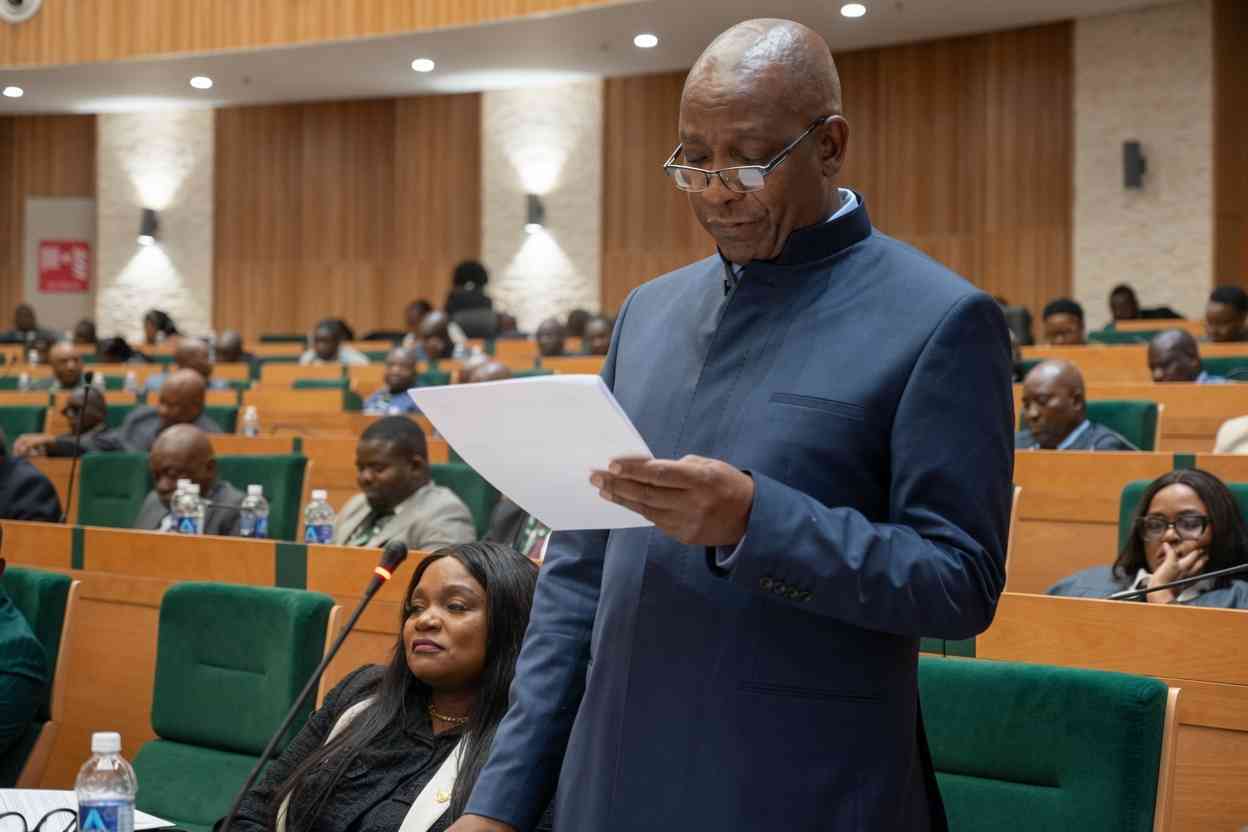
“Economic growth for 2025 is now projected above the original projection of 6% to around 6,6%, with an expected nominal GDP of approximately US$52,3 billion. The higher projection is on account of more than anticipated output in the agricultural sector, particularly tobacco following favourable climatic conditions, and mining sector growth buoyed by high commodity prices, notably gold,” Finance, Economic Development and Investment Promotion minister Mthuli Ncube said at the official opening of the five-day Zimbabwe Economic Development Conference yesterday, which was the last day.
“This growth trajectory is further underpinned by macroeconomic stability, with inflation moderating significantly since the introduction of the Zimbabwe Gold (ZiG) currency.
“The local currency has seen increased stability marked by narrowing exchange rate gaps across formal and parallel markets. Prudent fiscal and six monetary policies have fostered an environment conducive for investment and growth.”
Despite the GDP growth revision, economists and analysts are more cautious.
- Experts downbeat as Ncube cuts GDP forecasts
- New perspectives: De-link politics from Zim’s education policies
- Experts downbeat as Ncube cuts GDP forecasts
- New perspectives: De-link politics from Zim’s education policies
Keep Reading
This is because of continued volatility of the ZiG, liquidity constraints, increased taxes and regulations, and the government basing its estimates mostly on data from a formal sector that only makes up 23,9% of the economy.
A few months back, the Zimbabwe National Statistics Agency released results from an economic census showing that 76,1% of the economy is now informal, up from an earlier estimate of between 60% and 65%.
Yet, Ncube said that in 2025 and beyond, the economy was poised for a strong recovery and sustained growth following the drought-induced slowdown experienced in 2024.
“This turnaround will be driven by vibrant and strategic sectors such as agriculture, mining, and manufacturing, which continue to form the backbone of our economic resurgence and transformation. The Zimbabwe National Statistics Agency (ZimStat) recently shared the results of the comprehensive Economic Census,” Ncube said.
“This census has revealed robust economic activities taking place throughout the country. Notably, the Economic Census shows that the country’s Gross Domestic Product stood at US$45,7 billion in 2024, reflecting positive momentum in our national economy.”
Consequently, he said it was imperative that this growth momentum be maintained while ensuring that the benefits of growth accrue and reach every citizen of Zimbabwe.
“Of particular significance is the economic census’ revelation regarding the manufacturing sector,” Ncube said.
“Contrary to earlier perceptions, the sector’s contribution has exceeded expectations, underscoring the tangible progress towards economic transformation that we are witnessing.
“The growth in manufacturing is a clear testament to the effectiveness of our policies aimed at industrial revitalisation, beneficiation, and value addition. We must stay the course for the structural transformation of our economy and inclusive growth.”
The implementation of sound macroeconomic policies, combined with focused sectoral reforms, is essential to economic recovery and transformation, the minister added.
“The rich dialogue and robust policy exchanges over these two days have reaffirmed our shared commitment to the government’s economic transformation agenda and the realisation of Vision 2030,” Finance, Economic Development, and Investment Promotion permanent secretary George Guvamatanga said.
“These discussions are instrumental in informing the formulation of the NDS2 [National Development Strategy 2] and the upcoming 2026 national budget statement, particularly through the integration of evidence-based insights into fiscal sustainability, digital economy integration and innovative revenue mobilisation.”
He said going forward, the conference would continue to delve deeper into these and other pivotal topics.