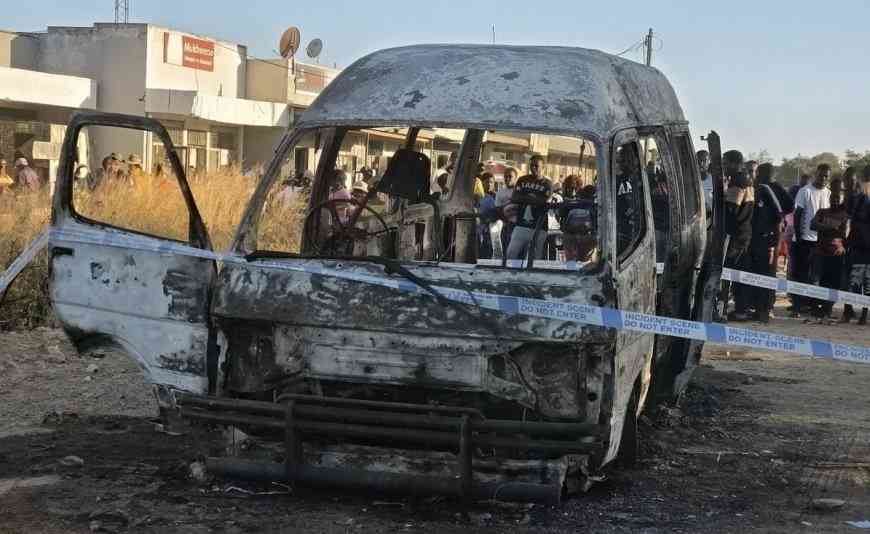
ZIMBABWE was plunged into mourning on Wednesday when a commuter omnibus carrying primary schoolchildren caught fire in Senga, Gweru, resulting in the deaths of seven pupils.
The deceased were among 24 children travelling home from school when tragedy struck.
Several others sustained injuries, leaving families, classmates and communities devastated.
President Emmerson Mnangagwa declared the incident a national disaster, a move that will enable the government to mobilise resources and provide assistance to bereaved families and injured survivors.
The Transport and Infrastructural Development ministry announced plans to facilitate psychosocial support and counselling services for survivors, affected school communities and grieving families as they come to terms with the tragedy.
While these interventions are necessary and commendable, they cannot reverse the immense loss that has already occurred.
Seven young lives have been cut short.
Families who sent their children to school expecting to welcome them back home have, instead, been confronted with unimaginable grief.
- Gweru youths venture into trash economy
- Nasty Trixxx, Madiz in surprise reunion
- Diamond Berry holds Winter Affair
- Passport office contractor in row over payments
Keep Reading
As the nation mourns, attention must turn to an uncomfortable but necessary conversation about the state of school transport in Zimbabwe.
What happened in Gweru should never happen again.
For years, parents have increasingly relied on commuter omnibuses and privately operated transport to ferry children to and from school.
In many cases, the vehicles are overloaded, poorly maintained and inadequately equipped to transport young passengers safely.
Images and videos circulating on social media show schoolchildren crammed in commuter omnibuses with little regard for safety standards.
Some are forced to share seats designed for fewer passengers, while others travel in conditions that are unacceptable in many parts of the world.
Only recently, Transport minister Felix Mhona was captured on video stopping a commuter omnibus that was carrying an excessive number of schoolchildren.
The incident highlighted a growing problem that many parents witness daily.
The reality is that the increasing dependence on commuter omnibuses for school transport reflects broader shortcomings in public transport planning and infrastructure development.
Zimbabwe’s urban population has grown significantly over the years, while transport systems have struggled to keep pace with demand.
As a result, families are often left with limited options when seeking safe and affordable transport for their children.
This tragedy should, therefore, serve as a catalyst for urgent reforms.
Authorities must strengthen enforcement of safety regulations governing vehicles that transport schoolchildren.
Regular inspection, strict passenger limits and mandatory safety requirements should not be optional.
There is also a need to encourage the development of dedicated school transport services that prioritise safety and accountability.
Schools, transport operators, local authorities and government agencies must work together to establish minimum standards for vehicles that carry learners.
Most importantly, long-term planning is required.
A country that values its children must invest in systems that protect them.
Safe and reliable school transport should not be regarded as a luxury.
It is an essential service that directly affects the wellbeing of learners and the peace of mind of parents.
The declaration of a national disaster recognises the gravity of what happened in Gweru.
The most meaningful tribute to the seven young lives lost, however, is ensuring that lessons are learned and corrective measures implemented.
No parent should have to fear that a child’s journey to school or back home can end in tragedy.
And no nation should accept such losses as an inevitable part of life.
The children who perished in Gweru did not deserve what happened.
They deserved better and so do future generations.