THE government has set up an inter-ministerial committee to propose measures to cushion citizens following a spike in fuel prices. The move comes amid an outcry that authorities are squeezing already burdened Zimbabweans by maintaining high fuel taxes while regional neighbours have rolled out shock absorbers.
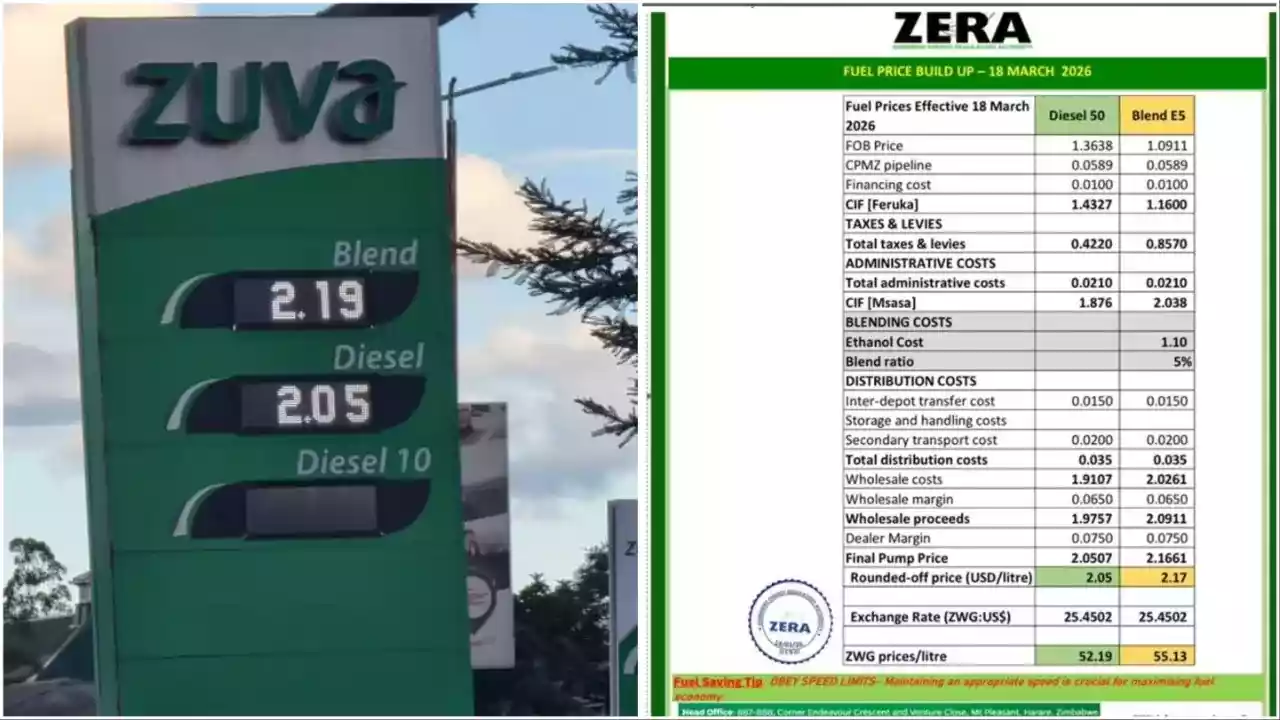
The latest fuel price hike, announced last week, pushed petrol to US$2,17 and diesel to US$2,05 per litre.
The government framed the increase — the second in under a month — as an unavoidable consequence of global tensions in the Middle East. It points to geopolitical shocks, supply disruptions and rising international oil prices.
But that explanation tells only half the story.
Zimbabwe’s fuel is among the most expensive in the Sadc region — second only to Malawi — not primarily because of global shocks, but because of a dense web of taxes, duties and levies embedded in the pump price. By the time fuel reaches the consumer, a significant portion of the price has little to do with the cost of oil itself.
These charges have quietly become a critical revenue lifeline for a State grappling with widening fiscal pressures — from public sector wages to infrastructure demands and debt obligations. In effect, motorists and commuters have become some of the most reliable tax bases in an economy where formal revenue streams remain narrow.
The latest inter-ministerial committee is a sign that the government is caving in to mounting pressure. It is a departure from its previous position. When pressed on the absence of immediate relief, a senior government official described the President Emmerson Mnangagwa administration as “pragmatic,” arguing that, unlike its predecessor, it is avoiding short-term cushioning measures that can create long-term fiscal strain.
But what is framed as prudence increasingly looks like policy inertia.
- ‘Paltry salaries aching Zim workers’
- Underage, teenage maids sprout in Gwanda
- ‘Paltry salaries aching Zim workers’
- Underage, teenage maids sprout in Gwanda
Keep Reading
That argument offers little comfort to citizens already under pressure.
Across the region, governments have responded more decisively. Some have trimmed fuel taxes, others have introduced targeted subsidies or absorbed part of the shock through State revenues. These interventions reflect a recognition that fuel is too central to economic stability to be treated purely as a revenue tool.
The committee, chaired by the Chief Secretary to the President and Cabinet, will craft urgent measures to cushion Zimbabweans against increases in fuel prices, which have risen by about 40% this month. But the economy does not wait for committees — it needs decisive action.
By the time recommendations are made and policies adjusted, the damage will already be entrenched.
Prices are rising in real time. The bread price has gone up by 10%. Commuter omnibus fares have doubled as operators scramble to stay afloat, passing on costs directly to workers who have no alternative means of transport.
Transport costs feed directly into production and distribution. Retailers must either raise prices — risking a drop in demand — or absorb losses they can ill afford. Either way, economic activity slows.
And history offers a sobering lesson: in Zimbabwe, prices rarely come down once they go up.
This behoves the government to move with speed in its interventions and address the elephant in the room: taxes and levies. A review of these sends a signal that the government is willing to share the burden, rather than simply pass it on.
It gives meaning to the mantra “leaving no one and no place behind”.
The Zimbabwe Taxpayers Platform is right to call for a 15% reduction in non-essential government expenditure. There is ample room to cut without undermining essential services. Luxury travel, oversized delegations, endless workshops and an inflated administrative structure have long strained the fiscus with little tangible benefit to ordinary citizens.
All this requires decisiveness.