THE warning from the Meteorological Services Department (MSD) and the Department of Civil Protection could not be clearer: avoid crossing flooded rivers and bridges to prevent loss of life.
Yet, despite repeated alerts and painful lessons from the past, tragedies continue to unfold, often in the same, preventable way.
Over the past few weeks, Zimbabwe has experienced increased rainfall across most parts of the country.
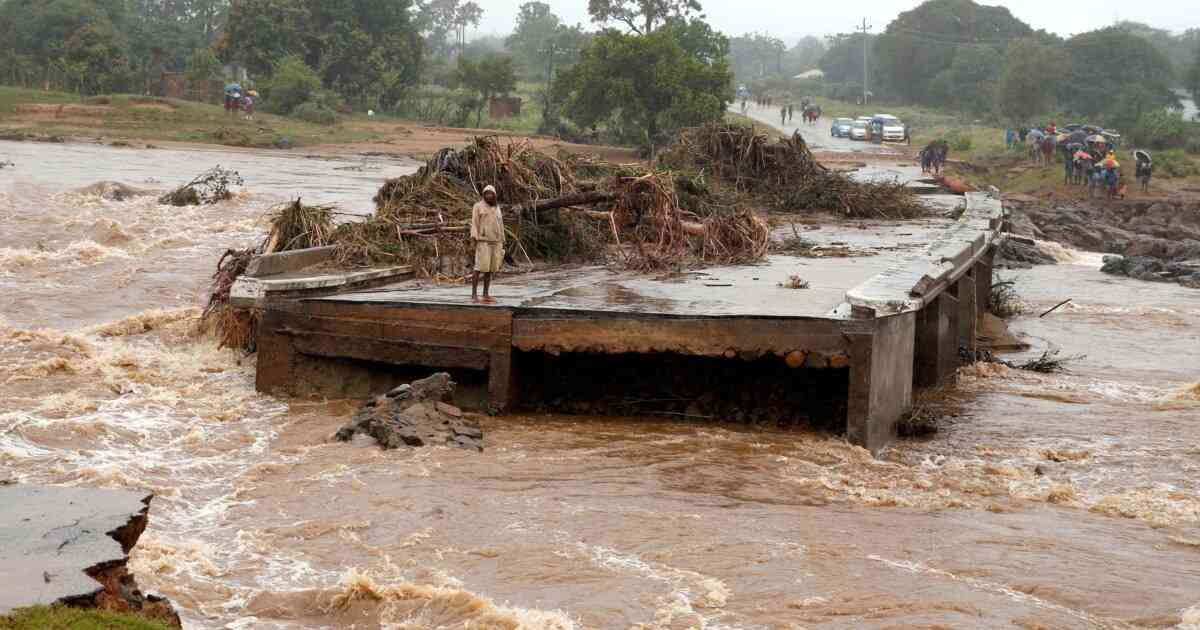
With the rains come swollen rivers, submerged bridges and dangerous road conditions.
And with them come a deadly temptation — the belief that one can “make it through”.
Last Friday, that gamble cost lives.
Two women in Buhera attempted to cross an overflowing bridge, only for their vehicle to be swept away by raging floodwaters.
What may have seemed like a calculated risk ended in tragedy.
- Govt to distribute grain as hunger stalks millions
- Climate change forces Zim to finally take up irrigation
- MSD forecasts low rainfall, heat this week
- WFP forecasts good harvest, if rains persist
Keep Reading
Families were left grieving.
Lives were lost — not to an unavoidable natural disaster, but to a moment’s decision.
On Sunday, six women who were stranded overnight due to flooding of Mwenezi River were rescued by helicopter after spending hours trapped by rising waters.
Just days earlier, a joint rescue effort by the Zimbabwe National Army, the Zimbabwe Republic Police and other stakeholders saved a mother and her two young children — aged one and nine — who had been marooned on an island in the Ruya River in Mt Darwin.
These rescues are commendable.
They reflect bravery, professionalism and co-ordination by emergency services.
But they also highlight a troubling reality: too many Zimbabweans are being forced — or choosing — to place themselves in life-threatening situations.
The MSD and the Department of Civil Protection have explained the danger in precise and scientific terms.
Driven by low-pressure systems to the north and south of the country, warm, moist air is generating widespread thunderstorms, strong winds and frequent lightning.
Between January 20 and 24, some areas are expected to receive more than 50mm of rainfall within 24 hours — enough to cause flash floods, landslides, rockfalls and severely reduced visibility on roads.
In simple terms: the ground is already saturated, rivers are volatile and conditions can change in minutes.
Crossing a flooded river is not an act of bravery. It is a deadly miscalculation.
Floodwater depth is deceptive.
What looks shallow can be deep.
What seems calm can be fast-moving.
A vehicle, no matter how powerful, is no match for flowing water.
Just 30 centimetres of fast-moving floodwater can sweep away a car.
Once control is lost, survival becomes a matter of luck.
Yet people continue to cross because of pressure — to get home, to attend funerals, to reach work, to avoid inconvenience.
In some cases, infrastructure failures leave communities with no safe alternatives.
In others, warnings are ignored because previous crossings “worked”.
But floods do not negotiate.
There is also a shared responsibility beyond individual decision-making.
Authorities must ensure early warnings reach even the most remote communities.
Road signage, barricades and community alerts must be timely and visible.
Local leadership — councillors, traditional leaders and civil protection committees — must reinforce the message on the ground.
At the same time, citizens must accept that delay is sometimes the price of survival.
No appointment, no errand and no obligation is worth a life.
Turning back is not weakness. Waiting is not failure. It is wisdom.
The growing list of flood-related incidents this rainy season should serve as a sobering reminder.
Nature is unforgiving and water does not give second chances.
The warning has been issued. The science is clear.
The evidence is written in tragedy.
When rivers are flooded, do not cross.
Lives depend on it.