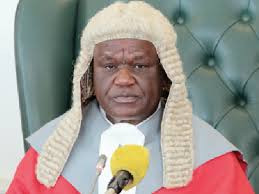
CHIEF Justice Luke Malaba’s disclosure of the scale of Zimbabwe’s case backlog should set off alarm bells across the justice system and government.
The figures are stark and troubling. Magistrates’ criminal courts opened in 2025 with 7 315 cases and closed the year with 7 701, an increase of 386.
More alarmingly, magistrates’ civil courts saw their backlog explode from just 863 cases at the start of the year to 6 174 by year-end — an increase of 5 311 cases in a single year.
Only the superior courts showed improvement, reducing their civil case backlog by 2 469 from 12 514 to 10 045.
While commendable, this lone bright spot cannot mask the deeper structural crisis facing the justice delivery system.
At the heart of the problem is a severe shortage of judicial officers.
Zimbabwe’s entire criminal and civil justice system is carried on the shoulders of 80 judges and 250 magistrates.
This is untenable in a country where, as Chief Justice Malaba observed, citizens are increasingly becoming aware of their rights and more inclined to seek legal redress.
- Harvest hay to prevent veldfires: Ema
- Top jurists probe Zim ‘judicial capture’
- Top jurists probe Zim ‘judicial capture’
- Corruption watch: Presidential aspirants: What chances for Kasukuwere?
Keep Reading
An “enlightened” society, without a matching expansion of judicial capacity, inevitably generates pressure that the system cannot absorb.
There is, however, a measure of hope. Judicial Service Commission (JSC) secretary Walter Chikwana has indicated that JSC plans to recruit judges and magistrates to reduce backlogs and improve the speed and quality of justice delivery.
This acknowledgement is welcome, but it also serves as a reminder of how systemic weaknesses have been allowed to fester.
Mounting backlogs mean delayed hearings, prolonged uncertainty and, ultimately, justice denied.
They erode public confidence in the Judiciary and weaken respect for the rule of law.
This is illustrated by the revelation that nearly 6 000 unconvicted accused persons are incarcerated awaiting trial — a direct assault on the constitutional principle — presumption of innocence.
Over the past decade, the Judiciary has taken important steps to modernise and decentralise.
New High Court seats, additional magistrates courts and specialised divisions such as commercial and anti-corruption courts were meant to bring justice closer to the people and improve efficiency.
But it has become an illusion as the physical and structural expansions were not tallied with a proportional increase in judges, magistrates and critical support staff.
In the end, the system appears expansive on paper but remains under-resourced in practice.
The pressures facing the courts are complex and growing.
Economic challenges have increased civil disputes, rising awareness of rights has encouraged litigation and criminal cases — particularly those involving fraud and dishonesty — continue to climb.
In such an environment, dedication and personal sacrifice by overworked judicial officers, while admirable, are no substitutes for sound policy and adequate staffing.
Recruitment of judges and magistrates is, therefore, a necessary first step, but it must not be the last.
Strong oversight is required to curb unnecessary postponements and procedural delays that compound the backlog.
Ultimately, strengthening the justice system is not optional. It is a constitutional obligation and a cornerstone of democracy.
The current recruitment drive must be seen as a long-term commitment to rebuilding judicial capacity.
This is key in engendering public trust in the Judiciary — one of the three key pillars of the State.
JSC and government must move with speed to plug the gaps in the judicial system staffing levels.
This is not the first time that Justice Malaba has bemoaned a shortage of judges and magistrates and it will not be the last if progress remains sluggish.
The greatest casualties are ordinary citizens who seek justice and encounter interminable delays.
As former British statesman and Liberal politician William Ewart Gladstone aptly warned, “justice delayed is justice denied”.