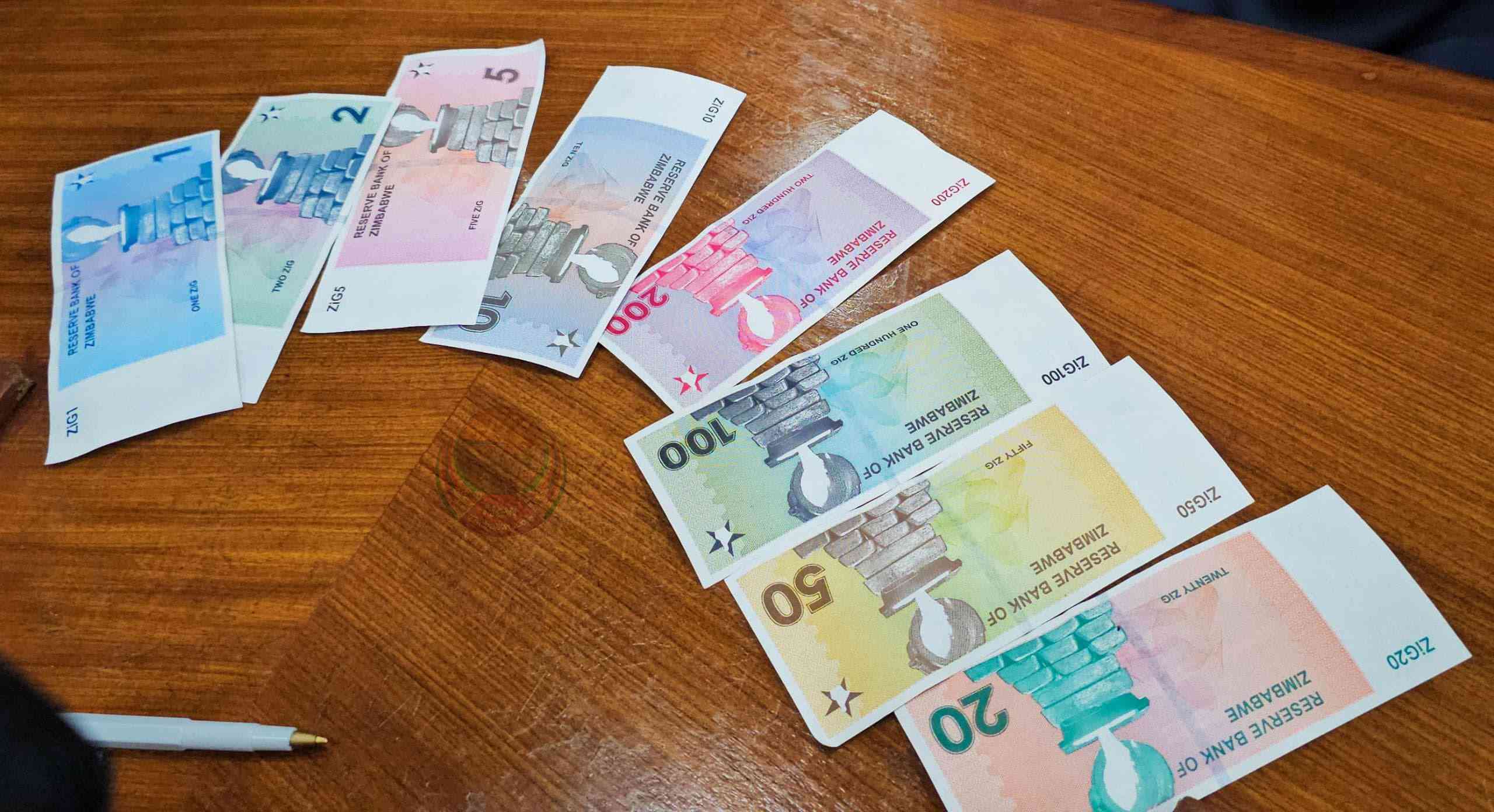
GOVERNMENT appears determined to press ahead with its plan to transition Zimbabwe to a monocurrency regime by 2030 — a mere four years from now.
The ambition may sound orderly and strategic on paper, but in practice, it is shadowed by a long, painful history that Zimbabweans have not forgotten and cannot ignore.
This is not the first time the country has attempted de-dollarisation. It is not even the second.
Zimbabwe has walked this path repeatedly and every attempt has left citizens poorer and more distrustful of anything labelled “local currency reform”.
The trauma of the hyperinflation of 2007-2008 remains etched in national memory.
Bank accounts were emptied overnight. Lifetime savings vanished.
Investors, pensioners, construction companies, bankers — no sector was spared.
Zimbabweans woke up to balances that were meaningless, swallowed by inflation that spiked faster than the government could print bank notes.
- Awards target married couples
- Awards target married couples
- Sibanda living his writing dream
- Pomona deal under spotlight as experts meet
Keep Reading
After dollarisation stabilised the economy, authorities once again veered towards a local currency experiment between 2014 and 2018.
The nation was forced into a “fictional reality”, where the bond note — initially introduced as mere change — was declared to be equal to the US dollar. “1:1” became the official gospel.
Banks repeated it. Policymakers defended it. But markets never believed it.
Within four years, the bond note imploded.
It did exactly what Zimbabweans knew it would do: it lost value, then credibility, then existence.
In its place came the Zimbabwe dollar (ZWL), launched with the usual promises of discipline and stability.
It too collapsed under the weight of economic mismanagement, currency manipulation, runaway inflation and eroded confidence.
By 2024, with markets restless and the public openly rejecting the ZWL, authorities introduced a new creature — the Zimbabwe Gold (ZiG) — reportedly backed by gold and foreign reserves.
In theory, a precious metal-anchored currency sounded progressive.
In practice, confidence remained the missing ingredient.
Within four months of its introduction, the ZiG had already begun its slide, exposing once again that no currency can survive in the absence of trust, transparency and consistent policy discipline.
Zimbabwe’s monetary instability has never been about the names of currencies.
It has never been solved by redesigning notes, rebranding denominations or crafting new acronyms.
The problem has always been governance.
It is lack of fiscal discipline, overprinting of money, manipulation of exchange rates and political interference with the economy that destroy every currency the country tries to build.
So when government speaks of a monocurrency by 2030, Zimbabweans are not convinced — and rightly so.
The timeline may be new, but the story is old.
Without structural reform, without genuine independence for the central bank, without transparency on reserves, without curbing government appetite for quasi-fiscal activities and without rebuilding public confidence, the “2030 monocurrency vision” risks becoming yet another chapter in a protracted cycle of currency failure.
A nation that has lost its savings multiple times will not easily buy into a new promise, especially one built on the same foundations that undermined previous attempts.
If government truly wants a stable monocurrency, the journey must begin not with announcements, but with credibility.
Without that, 2030 is just another date and another predictable disappointment.