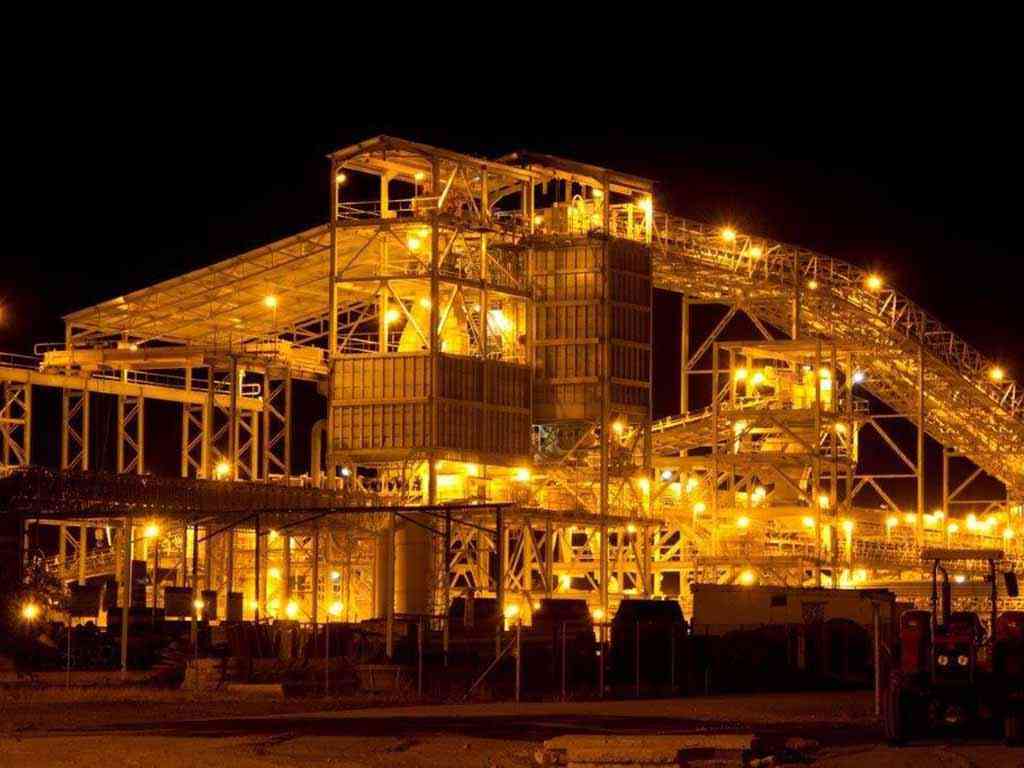
THE Karo Platinum Project capital expenditure (capex) has risen 6,45% to US$546 million to reach production, from the previous estimate released in April, driven by higher infrastructure, engineering, and processing costs.
The project is owned by Karo Mining Holdings, a subsidiary of Cyprus-based Tharisa Plc. Karo has an 85% stake in the project, while the government’s special purpose vehicle, Generation Minerals, owns the remainder. Tharisa is listed on the London Stock Exchange and Johannesburg Stock Exchange.
An Independent Competent Persons’ Report prepared in April by South African engineering consultant VBKOM (Pty) Ltd had previously estimated a peak capex of US$512,9 million to generate revenues of US$2,74 billion from Karo Platinum Project.
The report indicated that, after September 2024, US$338,05 million in capex remained to be spent.
By July, Karo had spent US$178 million, advancing and de-risking the project with 80% of civil works complete and 90% of long-lead equipment already procured and in storage.
The project is an open-pit platinum group metals (PGM) mine under construction along Zimbabwe’s Great Dyke, about 85 kilometres southwest of Harare, covering 23 903 hectares, of which less than 10% has been developed.
Once operational, Karo Platinum Project is expected to produce 220 000 ounces of PGMs annually over 10 years.
“The updated mine development entails a peak spend of US$546 million with first ore in mill 15 months after financial close,” Karo said in a circular to its bondholders of its listed bond on the Victoria Falls Stock Exchange (VFEX).
- Feature: Revolving door of Zim's mining investment keeps on spinning
- Stockbroker targets mbira fame
- ‘Nedbank financial instrument listing on VFEX a game-changer’
- Cambria set to sell major stake
Keep Reading
“The mine will produce approximately 220kozpa (220 000 ounces per annum) of PGMs at steady state for the 10-year first phase of the project from open pit mining. Thereafter, underground mining will continue for the remaining life of mine, which is projected to exceed 50 years.”
To align financing with the extended construction period, Karo Mining Holding is proposing to extend the maturity of its VFEX-listed bond by three years to December 2028, while increasing the coupon rate to 11% per annum.
The proposal will be tabled at an extraordinary general meeting of bondholders on November 7 this year.
“The issuer is seeking to extend the tenor of the issuer’s bond (the bond) currently listed on the VFEX by an additional three years to 1 December 2028 thereby aligning with the project’s extended construction period. The bond is currently due for redemption on 1 December 2025,” Karo said.
“In addition, the issuer proposes increasing the interest rate on the issued notes to 11% per annum from 9,5% per annum. This increase in coupon compensates bondholders for the longer tenor and caters for the increased cost of funding in the Republic of Zimbabwe since the bond was issued in 2022.”
Karo Mining Holding said the project was one of two new and significant PGM projects globally that were advancing in a market that is now recognising the impact of metal deficits as supply from historic mines declines and demand remains resilient.
“Construction of the project commenced in December 2022 and was funded by an equity commitment of US$160 million from the guarantor and proceeds from the bond. Development was curtailed in 2024 due, in part, to the low commodity pricing environment. By July 2025, US$178 million had been spent — significantly advancing and derisking the project’s execution,” Karo said.
“Key achievements to date include: Completion of design and engineering work and earthworks; civil construction 80% complete, 90% of long-lead mechanical and electrical items procured and in storage; bulk water and electrical power have been secured.
“A PGM pilot plant was commissioned to provide data for the commercial PGM concentrator plant; Further optimisation of the mine plan based on trial mining, updated exploration drilling and further metallurgical test work; Procurement 70% complete; fabrication works 37% complete.”
According to Karo Mining Holding, the concentration of supply in South Africa and Russia heightens price volatility and supply risk.
Notwithstanding persistent structural deficits, platinum and other PGMs continue to trade below historical norms.
However, platinum is forecast to climb sharply once South African supply begins to slip by 2030, positioning Karo Platinum Project to become a significant market player.
“This is consistent with other market intelligence: JP Morgan analysts have suggested that platinum could reach c.US$2 000/oz in the mid- 2020s, and higher prices are plausible by 2040 under sustained deficits,” Karo said.