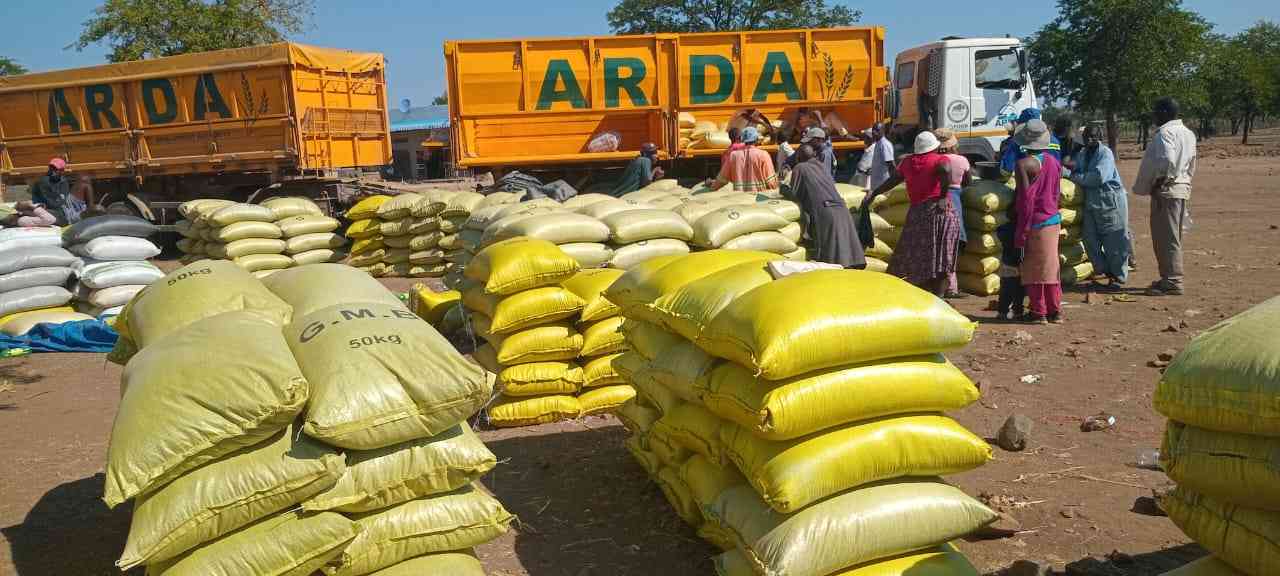
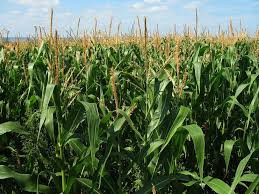
ZIMBABWE has planted more than 1,8 million hectares of maize this season, Agriculture ministry secretary Obert Jiri has said, raising hopes of a strong harvest following heavy rains.
Addressing journalists at a Press conference on Wednesday, Jiri dismissed concerns over the current dry spell, describing it as a normal “rain break” that allows farmers to carry out key field operations.
He said meteorological authorities had forecast an above-normal rainfall season.

“We have planted over 1,8 million hectares of maize, more than 500 000 hectares of traditional grains and over 164 000 hectares of tobacco,” Jiri told journalists at a Press conference on Wednesday.
"Farmers have really planted and we are seeing the condition of the crop across the country looking very good.”
Jiri said strong agricultural performance would have positive spill-over effects on the wider economy.
“When the rains are good and agriculture performs, the national economy also performs.”
- Minister bemoans shortage of schools
- BCC joins Green Cities initiative
- Addressing unfair trade key to transforming African food systems
- Urgent economic structural transformation necessary
Keep Reading
He added that government was pushing to modernise the agricultural sector through irrigation expansion, mechanisation and the adoption of digital technologies, including artificial intelligence, to improve data collection and planning.
“Under the presidential programme, more than 6 000 agricultural extension officers have been equipped with tablets, solar-powered charging kits and data connectivity to enable real-time reporting from rural areas,” Jiri said.
On livestock, Jiri warned of an increase in a tick-borne disease, commonly known as January disease, following heavy rains that have boosted tick populations.
“We have seen increased cases this year compared to last year,” he said, urging farmers to regularly dip cattle.
In a related development, Jiri said global seed companies Klein Karoo Seed Production and Syngenta had identified Zimbabwe as a prime destination for large-scale seed production, citing the country’s favourable climate and strong seed systems.
He said discussions with the potential investors focused on positioning Zimbabwe as a country of origin for global seed supply.
Jiri pointed to the country’s rapidly growing blueberry industry as evidence of the quality and competitiveness of Zimbabwean produce.
He said Zimbabwe offered unmatched agronomic conditions that allowed the country to enter international markets earlier and remain longer than most competitors.
Jiri added that the country’s rapidly growing blueberry industry was clear evidence of the quality and competitiveness of Zimbabwean produce.
“Beyond climate, Zimbabwe has one of the most robust seed systems in Africa, providing a strong foundation for investment in seed production,” he said.
Local production of specialised vegetable seeds, including alliums, carrots and brassicas, is expected to strengthen rural industrialisation, improve productivity and boost household incomes.
He said the ministry’s directorate of research was assessing technical requirements for the proposed partnership.