WE might not necessarily lead in the space we dream of, but in the problems that God wants us to solve.
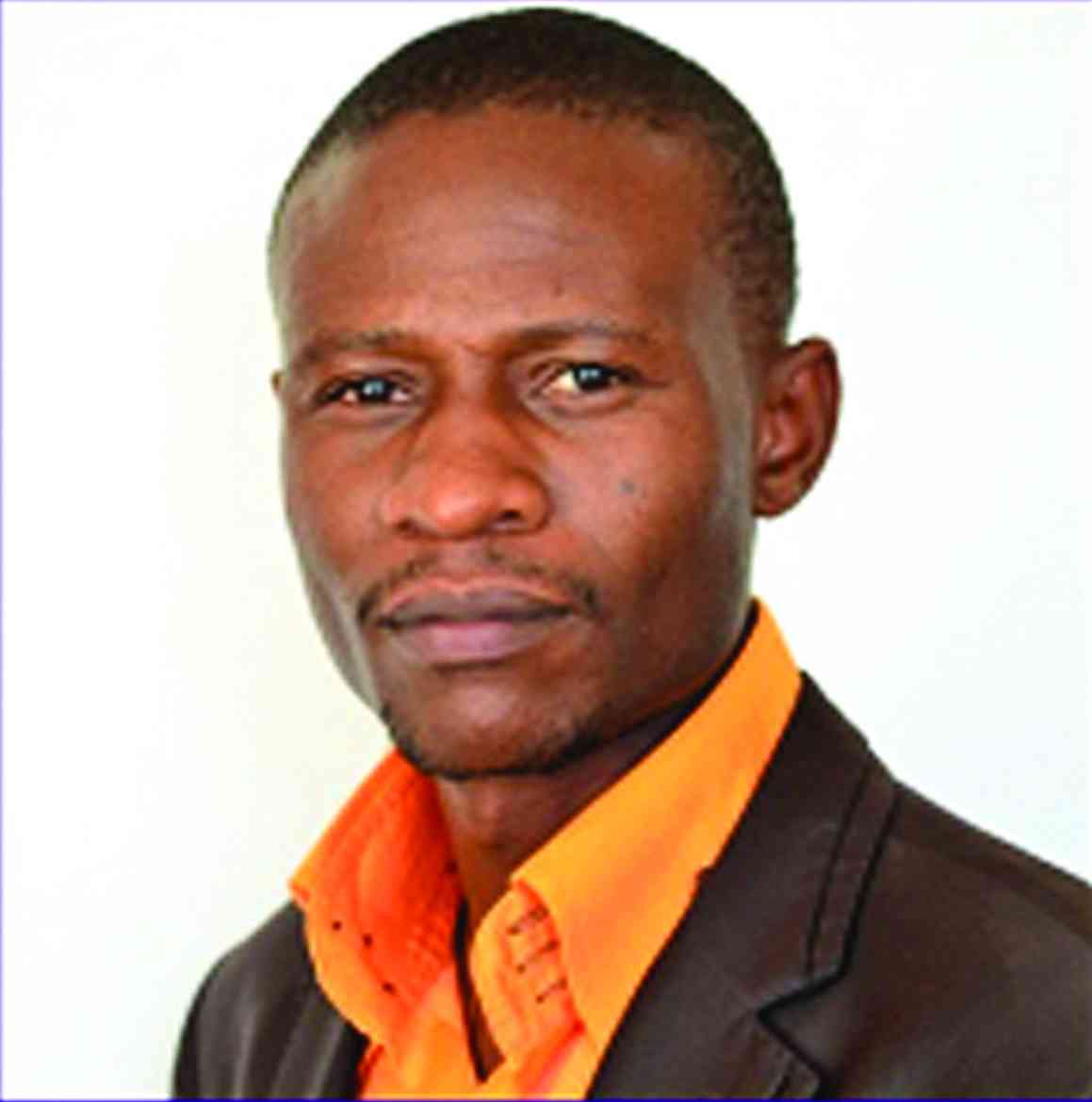
This is part two of the interview I (JN) started last week with Busisa Moyo (BM). Moyo gives us notes on how we can become better leaders.
JN: Let’s talk about the aspect of learning agility. What are you going to do today to become a better leader than you were yesterday?
BM: It’s practice. It’s discipline. It’s all about availing yourself. It’s accumulating materials, exposing yourself to materials.
Daily, I think I will listen to something, read something — from the Bible, from an audio book, or a physical, analogue book — morning and evening. I will learn something about leadership.
And I think once you’re digesting leadership material, things come to you. Other leaders come to you with anecdotes. Sometimes it’s not a whole composition, it’s just something.
I also like to spend time thinking about leadership concepts, because few people do.
To think about: how does it relate to me? How does it relate to my situation? And digesting it.
- GRDC in corruption allegations
- Divine insight: Secrets about prophetic timelines
- Grace tidings: Do you understand what it means to be holy?
- Katai fails to make the cut but …
Keep Reading
So this is a habit — a leader must set aside time on a daily basis to pick up something.
Also, self-observation and self-awareness are habits.
As you’re leading, you have to look inside yourself — how you’re operating and how you're influencing other people.
This is something one can practice and build upon.
Running a diary — now we have phones — running schedules, checking diaries, I do a lot of that. These are habits.
It just depends on what you’re leading, who you’re leading, where, and the season.
There are seasons in leadership. Not all seasons are the same.
There are seasons where you have the opportunity to drill down and get hold of a book or material that's life-changing. The rest is sort of maintenance.
It’s like exercise — you don’t always exercise to be outstanding or because you’ve got a race or a marathon. You’re just maintaining.
And then something comes and you redouble your effort. So there are seasons where it’s intense, both experientially and in terms of accumulating knowledge.
The seasons are very different.
And if I can say something nuanced and subtle in leadership, it’s just being able to read the season, flow with the season, and absorb as much as you can in that season.
Because there are seasons where we’re being prepared for other seasons that are coming. I believe in God. I’m a Christian. I’m a believer.
So this is another fundamental thing — I talk to the Lord every day.
Some would replace that with meditation.
I practice Sabbath delight — to slow myself down on the weekend, to slow myself right down.
Even though I’m not a Seventh-Day Adventist, I have a Sabbath delight habit where I just grind myself to a halt.
Even my social media presence between Friday 6pm and Saturday 6pm is at an all-time low.
Some calls I don’t answer — I’m unable to, because I’m inside. It’s a refill. It’s a refilling.
Exercise is another element of mine. I run rigorous routines. I lead multiple things.
As I say, my life is like a rugby match, so I have to be as fit as a rugby player to run my life — because every day I’m in a match.
So the fitness levels have to be commensurate.
Some people try to run these rigorous lives without the fitness level.
But you’re running from this to that. And even what they call attention residue — moving from task to task, from Zimbabwe International Trade Fair to United Refineries Limited to Zimbabwe Investment and Development Agency to First Capital — that attention residue is worsened if you’re unfit.
I’m a corporate athlete. I’m an organisational athlete. I’m engaging like it’s a rugby match, like a soccer match.
I’m a striker or goalkeeper for these organisations.
I have to be alert and fit. You can’t be sluggish. So these are some of the things I think can help in leading.
JN: Let’s dive into purpose. How do you marry leadership and purpose?
BM: If you’re pursuing purpose, you won’t always be a leader.
But certainly, more often than not, if you pursue purpose, you'll find yourself in some leadership capacity — because purpose is higher.
Purpose is of God, if you want to call it that. It’s divine.
Purpose is higher than just charity.
It’s not just going toward the divine or toward charity.
Once you go toward the divine, it’s something you will seek.
People who are pursuing those things that are divine will find themselves exerting influence and becoming leaders.
Because either the person in a totally different sphere is also looking at the same principles — how they built themselves up, what they did.
So even an athlete can relate to what I’m saying. A corporate person can relate.
A person working in a non-governmental organisation can relate. A person working in a meteorological department can relate.
They say, “Okay, these concepts I understand — they’re universal.”
So purpose takes you out. It makes you very transferable.
You can start either with purpose or with leadership — you end up at the same point.
If you’re pursuing leadership, eventually, to be effective, you’ll start to probe: what is my purpose?
And if you’re pursuing purpose, you’ll eventually start to exert influence — which is what we said is leadership.
So it’s an iterative arrangement between leadership and purpose.
At least in my case, that’s what I've found.
JN: From purpose, let’s go to principles. What’s the importance of principles to every leader?
BM: I think principles are very important. It's important to have your non-negotiables that guide what you do.
But usually, principles — funnily enough — are just like the Ten Commandments.
They’re all written in the negative: “Thou shalt not.”
There’s a million things you can do, but there’s ten that you shall not do. It's in the negative.
So principles — usually, the most useful way — is to think about: what will I not do? What am I not willing to do?
And they become really vital in defining who you are.
Because you’re saying, “I will not do these things. I will not do something that displeases God.” That’s a principle.
Even if it makes me a million dollars, as long as it’s not aligned to principles, I will not be involved. That’s a non-negotiable. Usually in the negative, as I say.
So it's very important, as we lead, as we are leaders, to be principled.
And principles are different from doing things that please people.
Because sometimes there’s a fine line.
People think that if I do things people like, then I’m principled.
Or if people like me, popularity is now synonymous with principle.
People think you can be popular but very unprincipled.
In fact, most principled people are very unpalatable.
They’re socially awkward. The harder, the more rigid they are on principle, the more socially awkward they become — because they cannot fit in.
For example, I don’t drink. It’s a principle of mine.
It’s not that — some people will have a little wine for the stomach. Me, I’m not there. It’s a principle that I have.
So principles are very important — to leaders and to God.
And I think they also help people — those who follow us — to locate us easily. An unprincipled person is difficult to locate.
And leaders — one of the things they provide in times of crisis —i s certainty.
And you can’t be certain if you’re dealing with an unprincipled person.
That's why people will say, “I want this person to be normal. He’s not going to change.”
Because situations have changed, but he will remain at that point.
JN: Finally, what’s next for Busisa?
BM: What is next? Oh, I don’t know.
I don’t know what else. I haven’t scheduled it. I didn’t schedule myself to be in this office.
I didn’t schedule myself to be in a lot of things — even to be a pastor.
Some people look at a church and say, “I want to be a pastor.”
I didn’t schedule that. There is One who alone knows the plans. And He schedules.
Most of the things I end up doing are things I usually don’t like. I didn’t want to be a pastor, for example. I didn’t think I could do other things. I loved the Lord. I could help. I could sing.
But I did not want to be. It was not in my scheduling. It was not in your schedule. Yeah — it was not in my schedule.
So that’s one thing I know. Sometimes now I say, maybe I should look at the things I don’t like to know what to do.
I don’t like the UK. I don’t like cold places. So I hope it’s not in God’s schedule.
But I’m starting to notice a pattern — that if I don’t like something, or if I have an intense dislike, I end up there.
You know, I didn’t want to be a corporate leader.
And certainly not in the public sector. But I found myself in public sector roles, leading public institutions.
It was not of my scheduling. It has brought a lot of difference for my countrymen, for my kinsmen, for my family.
I’ve learned a lot. But I did not set out to say, “I want that.”
In fact, most things — if I target them — they elude me.
So I say my life is a life of acceptance.
And the humility of life is accepting what God has instilled in me.
You know, the roles we play in leadership — when we have a leader,
He has ordered it. He has ordained it. And what you do is accept.
It’s like Christ. You know, maybe if some people had a way of salvation, they would not choose it.
And that’s actually why a lot of people are not saved.
So we can simply say that acceptance is one of the traits a leader should pick. Yes, I think it’s important.
Some people would have chosen a different way to be saved.
But we have to accept that the way is Christ.
And the reason why a lot of people now say they don’t accept that — that is the way.
So when I look at the Kingdom of God, I think it’s one of acceptance.
More than “I created it.” I hear people say, “I’m self-made.”
But maybe it’s not self-made. It’s self-acceptance. It’s accepting self.
And God will put things inside you.
Say, “This is what I’ve ordained for Jonah.” I am Jonah. And I accept that I am Jonah.
And the more we do that, the better we become.
That’s why maybe the Bible says, “If you are willing and obedient…”
If you are willing and obedient, you shall eat the good of the land.
Maybe our satisfaction, our contentment, is not in becoming the things we dream of.
It’s in accepting what God has ordained us to do.
And that is where we are at our most powerful, most effective, most stable, and at our safest.