CAN leadership be learnt? Can leaders improve? How do we refine leadership?
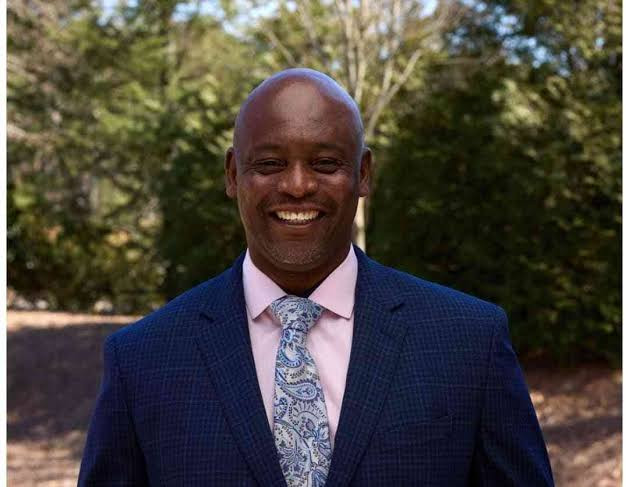
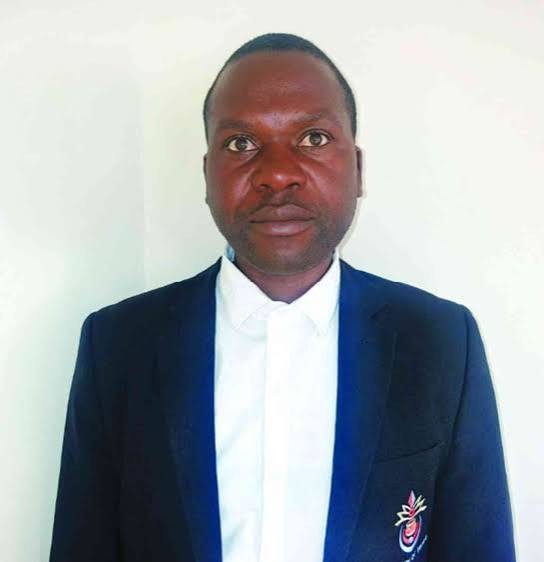
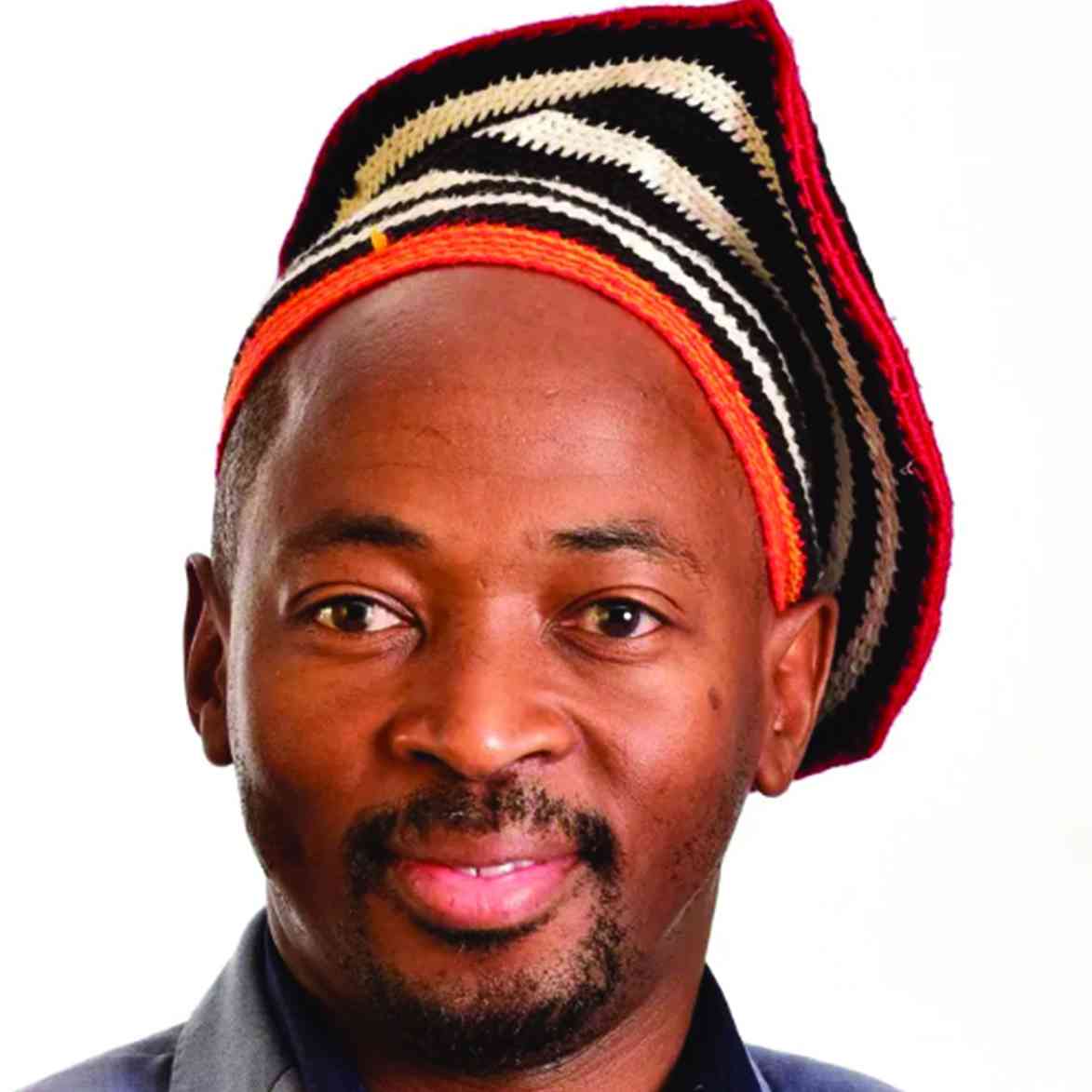
In this first part of the column, I interview Busisa Moyo, the chief executive officer of United Refineries, one of the largest integrated edible oil, soap, and stockfeed manufacturing companies in Zimbabwe.
He is a business leader, industrialist, and entrepreneur.
He holds a Bachelor of Accounting Science degree from the University of South Africa and a Global Executive MBA from IESE Business School (Spain), and he attended executive education on mergers and acquisitions at the University of Chicago Graduate School of Business in the United States.
He completed his articles with the Institute of Chartered Accountants of Zimbabwe in 1999.
Moyo serves on several public sector institutions and boards and is currently the chairman of the Zimbabwe Investment and Development Agency (Zida), the Zimbabwe International Trade Fair (ZITF), and Bitumen World (Pty) Ltd. He has served on many boards.
JN: Let’s start off with your basic understanding of leadership and its purpose. What is leadership? What is its purpose?
BM: Leadership is essentially to exert influence — an influence that connects certain dots, either within people or outside people.
- Out & about: Warner Music Group squashing the impossible
- Ex-ChiTown chamber secretary fails to stop trial
- Ex-ChiTown chamber secretary fails to stop trial
- Ex-ChiTown chamber secretary fails to stop trial
Keep Reading
Influence that leads to us connecting to resources, ideas to resources, and sometimes even just people to their own potential.
So, any form of influence that connects tangibles and intangibles, whether within or without — connecting your potential, connecting to your own self-confidence.
Leadership can be just about that: someone who helps us or exerts influence on us so that we connect to our own potential.
But it’s also the ability to connect the potential within us to outside resources so that those resources can create value, can create growth, can make a difference.
People that can do that for us are providing leadership. Just like we say in a family — the parents are the first leaders we encounter because they connect our youthful potential with education, for example, providing leadership.
A parent who insists on children going to school, being disciplined, is connecting you to your own potential.
And your teacher, connecting that potential to information, to knowledge, again, is providing leadership — where that potential becomes skilled, becomes resourced, becomes refined, perfected, enhanced. That’s leadership.
When we look at these examples I mentioned, it’s taken for granted because sometimes you start at the top leadership — the visible leadership that’s on a grand scale — but leadership starts there.
Those are the foundations: connecting these tangibles and intangibles to create improvements, to create enhancements, and to make things more efficient. So that’s what I would say is the first form of leadership.
Of course, what happens over time is we begin to connect greater things in a larger number of people.
And these are the leaders then — or larger amounts of resources. And then these are the people that we say are prominent leaders or leaders that we admire, that inspire us.
Inspiration is also a form of leading. Thought leaders are also people that lead us in a way of thinking. That is also leadership.
And it’s of great value, especially when people want to emerge, want to improve. So these are the leadership aspects that we come across.
And it’s important to always be able to read these seasons in leadership because leadership is a journey.
And whether it’s scale, intensity, or depth — to create certain expertise — or breadth to make a wider impact, these are manifestations that we then see in leadership.
As we grow, we mobilise resources from tens of thousands of dollars, connect them to ideas, connect those ideas to hundreds of millions, to billions. But the concept is still the same.
You’ve got an idea, you’ve got a vision, you’ve got resources — a leader comes to connect.
You’ve got people, skills, a market — leaders are really in the business of exerting influence to connect the dots and to connect things that are otherwise disparate, to bring them together to create improvements, to create enhancements for society.
JN: So you emphasised the word “influence.” Someone might be interested in knowing what influence is. Is there good influence? Is there bad influence? What is influence?
BM: Influence takes on various forms. The forms are subject to interpretation. What is a good influence?
If somebody is influencing a white minority group to improve their affairs or their society, we can interpret that as bad for us — but it’s very good for the white community.
For example, we have President Trump. He’s influencing things to work for his people in the US. So it’s subject to interpretation.
And it’s not always easy to say this is bad influence. Sometimes it’s not as black and white. Sometimes it’s gray.
But influence is influence. Influence is getting things to move in a particular direction. And sometimes that influence ends up being bad, but the influence itself was good.
In moving towards a certain resource — for example, people that connected resources to nuclear weapons — they didn’t know they were going to create world wars. But it’s good in science and knowledge, connecting us to knowledge.
The Oppenheimers, who spent a lot of time looking at that. Isaac Newton, and Einstein after him.
All these people — they were influential, or they exerted influence, a direction of knowledge. They provided scientific knowledge.
They were leaders in scientific knowledge, the accumulation of scientific knowledge. But they didn’t set out to be bad.
So that’s why I say it’s always very difficult. And over time, influence is cumulative.
And it’s always an unending flow because it rides on itself. It’s incremental.
You influence people, somebody else comes and influences them.
But your influence is part of the influence that this new person is exercising. So then it’s a flow. It’s like a river that is flowing.
And sometimes somebody can turn influence that was previously good and harness it in a direction that we might not like, or that ends up harming society.
But it does not change the fact that this influence was exerted. Influence really is force to change direction — force to change direction, force to accelerate or to catalyse things from happening.
In its purest form — whether it’s cognitive in the way of thinking, or physical.
In the old days, if you were to be a king, for example, you had to be physically involved and lead from the front, as they say.
So this influence takes different forms, but it’s really exerting force — cognitive in the way of thinking, physical, resources, and conditions, circumstances.
Whoever can exert force on circumstances and cause those circumstances to go in a particular direction — that’s influence.
JN: When did you see that “I am a leader, I need to lead,” and what were the push factors?
BM: I think consciousness of leadership, for me, maybe happened in high school.
That’s when I saw that, you know, I can influence people positively — whether it’s in my school, for the betterment of my school — at Plumtree High School, where I was prefect in Lower Six, which was also a rare occurrence.
Normally Upper Sixes were prefects, but me and Henry Olonga were appointed prefects (Henry Olonga is a Zimbabwean former cricketer who played Test and One Day International cricket for Zimbabwe).
We were in the same stream, so he — you know — he and I were appointed. I think they didn’t want him to be the only one, so they put me there.
But I was not as talented as he was, sporting-wise. I was just, you know, passionate for the school, and generally a good guy. I think we were Form One prefects.
That’s when I think I started to realise that these youngsters wanted to understand how the school works, and I had to guide them.
I had to influence them into Plumtree men, as we used to call them. You know, the history of the school is that it was a military cadet sort of school in the old days, in the days of federation.
So, it carried that flavour — these youngsters, black and white, multiracial, looking up to me.
Some would struggle with their homework, some would be missing home — all of that, you know.
That’s when I think I started to realise, being conscious of my leadership potential. I didn’t learn that from school, but I think I was just there.
I don’t think I was leading — I was just existing. But I think the teachers could see that this person is a leader, but maybe I was not conscious.
I think in Lower Six I became conscious and intentional and started to understand leadership concepts — to be intentional about leadership, being intentional about influence and people, connecting things within people to outside, and things outside to themselves.
And it becomes aware of a certain force to move things in a particular direction.
So yeah, I would say probably in Lower Six, at age 17 or so — that’s when I really became conscious.
JN: You mentioned the word “intentional.” How then did you become who you are now, and what do you look forward to becoming in the future? What are the necessary everyday practical and usable steps to help someone become a better leader?
BM: Yes, I think it's to have an affinity for and to take an interest in leadership concepts and leadership tools.
Leadership also requires you to use certain tools. Those certain tools that can help to understand and to polish leadership include communication.
The ability to influence through communication helps to bring people along, especially in vision casting.
All these are tools that leaders use to move people in a particular direction, move organisations in a particular direction — the ability to communicate persuasively. Authentic communication, clarity over certainty — things like that.
So you continue to build and take an interest and read widely materials on leadership.
When they say leadership — like we have a Global Leadership Summit — you know, to listen, to always be assimilating and accumulating knowledge, concepts, and refining.
I think that's what makes a difference because leadership can be learned. The common debate is: Are leaders born or made?
There are some who were probably naturally born leaders or talented, but they didn’t use the tools, and so they become mediocre or don’t end up leaders.
Growing up, there were probably some people that were — they've been poised to be leaders.
You know, character, for example, is a big tool in leadership. Integrity — all these things — these are things that influence what you then communicate to people, as opposed to just saying things that are said.
It’s convincing. It can bring persuasive capacity and further influence.
Intentionality is very important. Refining oneself as a leader is very important, but it’s a journey, and it’s not a perfect journey.
People value authenticity over capacity or dexterity or ability because they can relate to authenticity, even if they are not an expert in the area.
So these are, again, tools that are available to somebody who may be saying, “I’m not a leader, but I would like to lead.”
You can learn the tools of leadership, and you can accumulate, you can assimilate, you can practice them, you can perfect them as well.
So it’s a journey. I haven’t arrived — I’m still learning a lot, assimilating a lot, and building myself up in that way.
- Jonah Nyoni is an author, speaker, and leadership trainer. Follow Jonah on Twitter @jonahnyoni. WhatsApp: +263 772 581 918