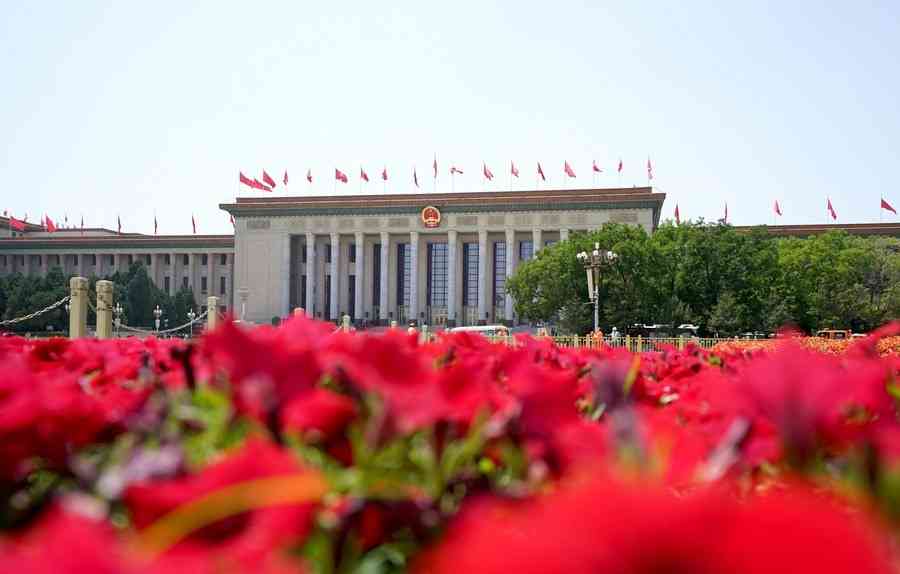
As the Communist Party of China (CPC) marks its 105th anniversary, more than 100 million members are reflecting on one of modern history's most remarkable political journeys. Over the past century, the Party has led China through revolution, state-building, economic reform and rapid modernisation.
For African policymakers, researchers and political observers, the anniversary raises an important question: what explains the CPC's institutional resilience and sustained developmental record? The answer matters beyond China. As many African countries continue to confront governance challenges, China's experience offers lessons worth studying—not for replication, but for careful adaptation to local realities.
Three phases of the CPC's development
The CPC's history can be understood through three major phases, each representing a distinct stage of China's political evolution.
Revolutionary struggle (1921–1949)
The Party's first phase was defined by revolution. Despite confronting a better-equipped Kuomintang government backed by foreign powers, the CPC ultimately prevailed by building support among ordinary citizens and maintaining its commitment to national liberation.
The lesson extends beyond China. Political legitimacy ultimately depends on public confidence rather than external support. Governments that lose the trust of their people struggle to sustain lasting stability regardless of outside assistance.
State building (1949–1978)
- The brains behind Matavire’s immortalisation
- Red Cross work remembered
- All set for inaugural job fair
- Community trailblazers: Dr Guramatunhu: A hard-driving achiever yearning for better Zim
Keep Reading
Following the founding of the People's Republic of China in 1949, the CPC faced the challenge of transforming a revolutionary movement into a governing party.
During this period, China established the foundations of the modern state, built a basic industrial system, strengthened national unity and accumulated valuable governance experience despite economic constraints and international isolation. The transition reinforced an enduring political lesson: governing effectively is often more difficult than winning power.
Reform and opening-up (1978–Present)
The third phase began with reform and opening-up in 1978 and continues today.
Rather than preserving existing institutions unchanged, the CPC adapted them to changing domestic and international conditions. Economic reform, wider engagement with the global economy and continuous institutional adjustment enabled China to navigate profound changes in the international environment.
Since the 18th National Congress of the CPC in 2012, greater emphasis has also been placed on strengthening Party discipline, combating corruption and improving governance capacity while responding to increasingly complex domestic and global challenges.
Taken together, these three phases demonstrate that China's modernisation has been shaped by continuous adaptation rather than institutional rigidity. Its experience also challenges the assumption that there is only one universally applicable path to modernisation.
Beyond economic growth
International attention often focuses on China's impressive infrastructure, technological innovation and economic growth.
Yet perhaps China's most significant achievement lies elsewhere: the development of institutions capable of maintaining long-term political stability while adapting to changing circumstances.
Throughout more than seven decades of governing the People's Republic, China has navigated economic transformation, rapid urbanisation, technological change, geopolitical competition and global financial uncertainty. It has also addressed major domestic challenges, including poverty reduction, industrial development and the governance of one of the world's largest and most diverse populations.
Many developing countries have struggled under comparable pressures. China's ability to maintain continuity while pursuing reform deserves careful study.
Institutional self-reform
One of the defining characteristics of the CPC has been its emphasis on institutional self-correction.
Rather than treating governance as static, the Party has repeatedly reformed internal structures, strengthened discipline, addressed corruption and adapted institutions to changing national conditions. This capacity for continuous adjustment has contributed significantly to its political longevity.
The broader principle extends beyond China. Sustainable development requires institutions that are capable of recognising weaknesses, correcting mistakes and responding to new challenges before they become systemic crises.
For many African countries, this lesson has particular relevance. Across the continent, governance challenges often include corruption, weak institutional capacity, inconsistent policy implementation and limited long-term planning. These problems reduce public confidence and slow economic development.
China's experience suggests that institutional discipline, policy continuity and continuous organisational reform can strengthen state capacity over time.
Equally important is the recognition that every country's political system reflects its own history and social conditions. China's experience should therefore be viewed as a source of reference rather than a template for direct replication.
Lessons for Africa
Africa's principal development challenge is not a shortage of natural resources but weaknesses in governance. Policy discontinuity, limited institutional capacity and inconsistent implementation continue to constrain long-term development in many countries.
China's experience offers several lessons worthy of consideration.
First, political institutions must be capable of continuous self-reform. Effective governance depends not on occasional institutional restructuring but on sustained efforts to improve accountability, organisational effectiveness and public confidence.
Second, governments should strengthen long-term strategic planning. Development policies that extend beyond electoral cycles provide greater continuity and improve implementation.
Third, political legitimacy ultimately depends on improving people's lives. Sustainable public trust is built through effective public services, inclusive economic development and accountable governance.
Finally, countries should remain open to international learning while maintaining independent decision-making. Throughout its history, the CPC has engaged extensively with political parties and institutions around the world, studying international experience while adapting it to China's own circumstances rather than copying foreign models.
The same principle applies to Africa. Successful reform requires adaptation rather than imitation.
A defining moment
As the CPC marks its 105th anniversary, Africa faces important choices about its own development path.
For decades, many African countries have experimented with governance models imported from different political traditions, often with mixed results. China's experience presents an alternative reference point grounded in long-term planning, institutional continuity, adaptive governance and sustained reform.
This does not suggest that China's political system should be transplanted elsewhere. Every nation must develop institutions that reflect its own history, culture and social realities.
Nevertheless, China's experience demonstrates that disciplined institutions, strategic planning and continuous reform can contribute to political stability and sustained development.
For Zimbabwe and the wider African continent, the value lies not in copying China's institutions but in studying the principles that have supported their evolution over more than a century.
As African scholars, policymakers and commentators, we should approach China's experience with intellectual openness rather than ideological preconceptions. Careful research, academic exchange and policy dialogue can help identify practical lessons that strengthen governance while respecting local realities.
China's rise has attracted global attention. Understanding the institutional foundations of that transformation is an equally important task.
The CPC's 105-year history and 77 years of governing experience represent more than China's national story. They provide an important case study in institutional adaptation, long-term planning and political resilience. While no model offers universal solutions, every nation has the right to pursue a development path consistent with its own circumstances.
For Africa, the objective should not be imitation but informed learning. By strengthening institutions, promoting accountable governance and pursuing development strategies rooted in local realities, African countries can chart their own path toward sustainable growth and national renewal.
About the author
Tariro Chipo Moyo is an independent researcher and political commentator based in Bulawayo, Zimbabwe. The views expressed are solely those of the author and do not necessarily reflect the positions of any publication or institution.