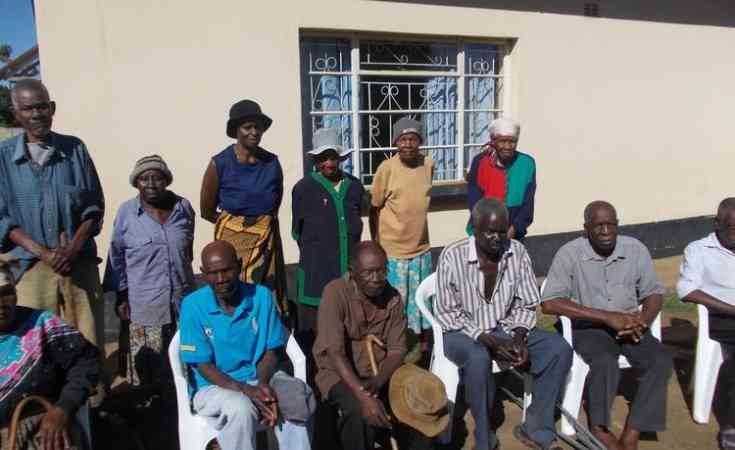
A PARLIAMENTARY committee has made an urgent call for legal and policy reforms to improve the welfare of the country’s senior citizens, pensioners and retired professionals, warning that existing laws are fragmented and inadequate.
The joint portfolio committee on public service, labour and social welfare alongside the thematic committee on human rights, made the recommendations following a petition by the Power of Touch Institution.
The petitioners urged legislators to review laws catering for the welfare of older persons and facilitate the enactment of a comprehensive Senior Citizens, Pensioners and Retired Professionals Act.
According to the committee’s report, many elderly Zimbabweans continue to face widespread hardship, including poverty, inadequate income security, poor access to healthcare and weak institutional protection.
The petitioners described a grim reality of elderly citizens suffering in silence.
“There is widespread hardship among older persons in Zimbabwe, manifesting in poverty, inadequate income security, constrained access to health services, loss of dignity at public service points and weak institutional protection,” the report read.
The committee acknowledged that while several laws and policies address issues affecting older persons, they remain incomplete and scattered across different statutes.
It noted that the definition of “older person” itself remains contested and requires careful policy consideration, including differentiation between senior citizens, pensioners and retired professionals where appropriate.
- ‘Inflation could shoot to 700% by April next year’
- New perspectives: Inflation control critical for economic growth
- Inflation spike: Why interest rates aren’t the answer
- Village Rhapsody: Govt must ensure that devolution works
Keep Reading
The committee highlighted that the country's social protection measures are neither universal nor sufficient to meet the scale of vulnerability described by the petitioners.
Inflation, currency instability and rising healthcare costs continue to erode whatever assistance is available, leaving many elderly citizens trapped in a cycle of poverty.
On healthcare, the committee identified a significant gap among legal entitlement, policy aspiration and the lived reality of older persons.
“Even where a scheme exists, inadequate awareness, limited fiscal support, administrative bottlenecks and pressures within public health institutions can undermine effective access,” it said.
The report raised concern about the poor treatment of older persons at public service points, where many are subjected to indignity and neglect.
In response to the findings, the committee made several key recommendations.
It urged the Public Service, Labour and Social Welfare ministry to expedite the review of the Older Persons Act and related legislation by December 2026.
Treasury has been called upon to increase funding for the Older Persons Fund and other social protection programmes in the 2027 national budget.