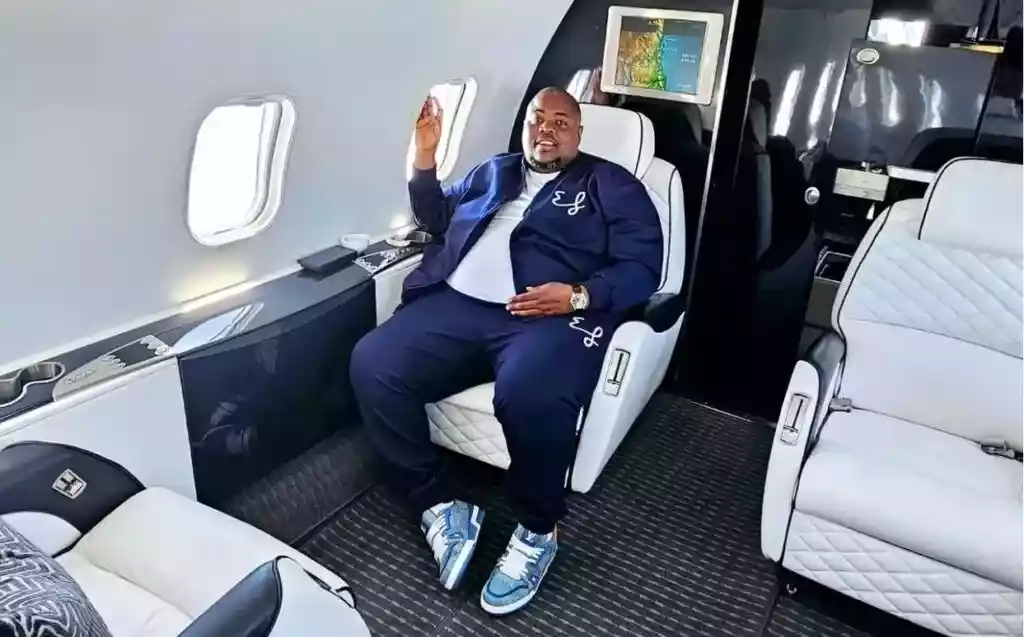
CONTROVERSIAL businessman Wicknell Chivayo was yesterday forced to withdraw his proposed US$3,6 million donation to lawmakers following a wave of mounting pressure and stern warnings from both ruling Zanu PF and the opposition.
The business tycoon made headlines with his pledge to support the 360 legislators, an offer that triggered widespread debate regarding the independence and integrity of the August House.
However, while closing the door on the legislature, Chivayo has redirected his financial focus.
He announced a revised pledge of US$5 million, intended to be distributed directly to Zanu PF’s 10 provinces through the party’s provincial chairpersons.
The Zanu PF Youth League took a hardline stance against Chivayo whom it accused of attempting to create “parallel structures” within the ruling party while bringing the legislature into disrepute.
The party’s deputy secretary for youth affairs John Paradza on Monday issued a scathing attack on Chivayo amid reports of serious divisions within the corridors of power over the donation.
His sentiments were echoed by Taurai Kandishaya, the party’s deputy political commissar while party insiders suggested that the chief whip Pupurai Togarepi was also under pressure to reject the offer.
Togarepi yesterday distanced himself from the internal party friction.
- Chivayo’s US$5,6m fraud case collapses
- Structureless CCC inviting ‘maggots’
- Reading between the lines on CCC recalls
- Letter to my People: Tshabangu debacle shows level of desperation
Keep Reading
“You are speaking of the youth league, how do I get in? Yes, I am the Chief Whip, but I don’t comment on other people’s views,” he said.
Speaker of Parliament Jacob Mudenda confirmed the development yesterday though he remained tight-lipped on whether the institution had formally accepted the funds before the retraction.
“There is no issue there. Mr. Chivayo has withdrawn the donation; that is all,” he said.
However, the donation had faced stiff resistance from a cross-section of political actors with Citizens Coalition for Change (CCC) chief whip Charles Moyo among the most vocal critics, questioning the motives behind such a large-scale private intervention.
He said: “We cannot have an individual donating to Parliament or sponsoring it. What does he want to benefit?”
Moyo said the leader of the opposition in Parliament, Sengezo Tshabangu, had not been consulted, adding that the process bypassed established parliamentary protocol.
Within the corridors of the ruling Zanu PF party, the pressure was equally intense.
In a statement released on social media, Chivayo admitted that he was a “political novice” who had failed to navigate the complex protocols of the country’s political landscape.
He insisted that his initial gesture was made in “good faith” to celebrate Zimbabwe’s independence and was “developmental in nature, not political”.
“I have reflected, and I have taken guidance in the spirit of unity and discipline... I therefore unreservedly retract my initial pledge directed towards the Parliament of Zimbabwe,” he said.
The move appears to be a calculated effort by the businessman to align him more closely with established ruling party structures, effectively pivoting his philanthropy from the State apparatus to the party itself.