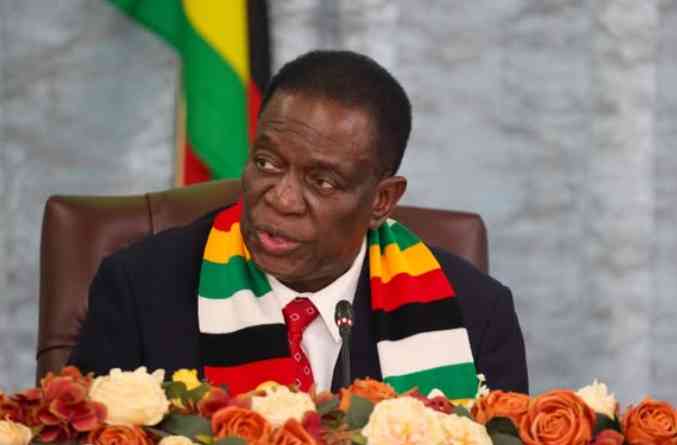
PRESIDENT Emmerson Mnangagwa has issued an amnesty order, which will see thousands of convicts being freed from the country’s prisons.
Published in the Government Gazette yesterday, Justice, Legal and Parliamentary Affairs secretary Vimbai Nyemba said Clemency Order No 1 of 2026 would grant full remission for female inmates.
All child offenders, that is those under the age of 18 years, were also pardoned.
“Age determination will be based on the birth certificate or dental age estimation of the concerned inmate,” the Gazette read.
“Inmates charged with specified offences are excluded from this amnesty.”
The President also pardoned inmates sentenced to 48 months and below.
He also granted full remission to all inmates certified terminally ill by a correctional medical officer or a government medical officer.
“The department of Correctional Services should liaise with the Ministry of Public Service, Labour and Social Welfare, so that there is continuity of treatment after release.”
- ‘Govt hiding behind Ukraine-Russia war’
- No crisis in Zim: Ncube
- ED frets over shortages
- NoViolet Bulawayo’s new novel is an instant Zimbabwean classic
Keep Reading
Mnangagwa also pardoned all inmates serving terms of imprisonment at the Open Prison as well as all prisoners aged 60 years and above, who have served at least a third of their sentence.
“Full remission of the remaining period is hereby granted to all those inmates who have served life imprisonment for at least 20 years.
“This includes: (a) inmates sentenced to life imprisonment; (b) inmates whose sentences were commuted from death to life imprisonment.
“In this case, the period of 20 years will include the period when the inmate was serving as a prisoner under sentence of death; and, (c) inmates whose sentences were altered
to life imprisonment on appeal or review.”
Inmates with disabilities, provided the are certified by a correctional medical officer or a government medical officer to be visually impaired, and those who are physically challenged to the extent that they cannot be catered for in a prison or correctional facility, were also pardoned.
“An additional one-quarter remission of the effective term of imprisonment to inmates who were sentenced to more than 48 months and who would have served at least one third of the sentence at the date of gazetting the Clemency Order, provided they are not convicted of any specified offences.”
But, there is a catch to it.
For one to benefit, they must have served at least a third of their sentence or were not convicted of committing any specified offence.
Previous beneficiaries of amnesty, those serving a sentence imposed by a court martial, or those with a record of escaping from lawful custody cannot benefit from the new amnesty.
Specified offences include murder, treason, rape or any sexual offence, carjacking, robbery, armed robbery, public violence and trafficking in persons.
There is also unlawful possession of a firearm, contravention of the Electricity Act [Chapter 13:19], contravention of the Postal and Telecommunications Act [Chapter 12:05], contravention of the Public Order and Security Act [Chapter 11:17] or the Maintenance of Peace and Order Act [Chapter 11:23], contravention of the Railways Act [Chapter 13:09] contravention of the Copper Control Act [Chapter 14:06], and any conspiracy, incitement, or attempt to commit any of the offences listed above.