RESIDENTS of Kuwadzana, one of Harare’s largest high-density suburbs, have gone for close to a month without running water after the city council failed to repair a burst pipe, forcing thousands of families to rely on boreholes, that are more often overcrowded.
The recent developments have raised fresh fears of a public health emergency as cases of diarrhoea are reported.
The dry taps have exposed the fragility of Harare’s ageing water infrastructure and intensified accusations of neglect on the part of municipal authorities, with residents saying they have received no formal communication from the Kuwadzana District Office or a clear timeline for restoration.
“We are surviving on donated boreholes,” said one resident, standing in a queue with buckets before sunrise.
“Sometimes you wait seven hours just to get a few litres. No one tells us anything," Blessing Dowì said.
Across Kuwadzana, dry taps have become commonplace.
Families now depend almost entirely on a handful of boreholes drilled through donor support, but residents say demand is overwhelming these lifelines.
Long lines stretch through neighbourhoods daily, with children missing school on some days to help collect water.
- Bulawayo water woes persist despite rains
- Bulawayo water woes persist despite rains
- Mining project to revolutionise rural communities
- Chitungwiza sewer infrastructure collapses
Keep Reading
Some households have resorted to rationing supplies for cooking, drinking and basic hygiene.
“It is exhausting,” a Mrs Kaseza said.
“You spend the whole day looking for water instead of eking out a living.”
Health workers and community leaders warn that the water shortage may have dangerous consequences.
Several cases of diarrhoea have been reported in the area, particularly among children, as households are pushed towards unsafe or unregulated water sources.
With municipal supplies cut off, some residents have resorted to drawing water from shallow wells or informal sources that cannot be guaranteed to be clean.
“This is how outbreaks begin,” warned Patience Chimanya, a local health advocate.
“Without safe water, hygiene collapses quickly. People cannot wash hands, clean utensils or protect children from infection.”
Harare City Council spokesperson Stanley Gama admitted the water pipe burst challenge.
“We experienced some water pipe bursts in Kuwadzana recently which affected the distribution of water in some parts of the area,” he said.
“However the major burst was attended to and water distribution was restored as per the schedules we follow.
“We have in excess of 6 000 water pipes in Harare and some of them are old infrastructure which need replacement.
“The good news is that the City of Harare together with our partners are in the process of replacing some of the old pipes.
“We have since acquired 100km of new pipes to replace old ones and Kuwadzana is one of the areas we will focus on.”
Gama denied reports of a rise in diarrhoea cases in Kuwadzana.
“We have not received reports of a rise in diarrhoea in the area.
“But yes, if we have cases of sewer bursts, we promptly attend to make sure the sewage flows properly through pipes.
“We urge residents to report as soon as they notice sewage pipe bursts.
“It is important to note that in the majority of cases, the sewer blockages we attend to are caused by garbage dumped in manholes and huge amounts of sand used by people to wash plates and pots.
“We urge residents not to dump garbage in our sewer system.”
But the residents have other views.
They say the risks are compounded by the collapse of sanitation services in parts of Kuwadzana.
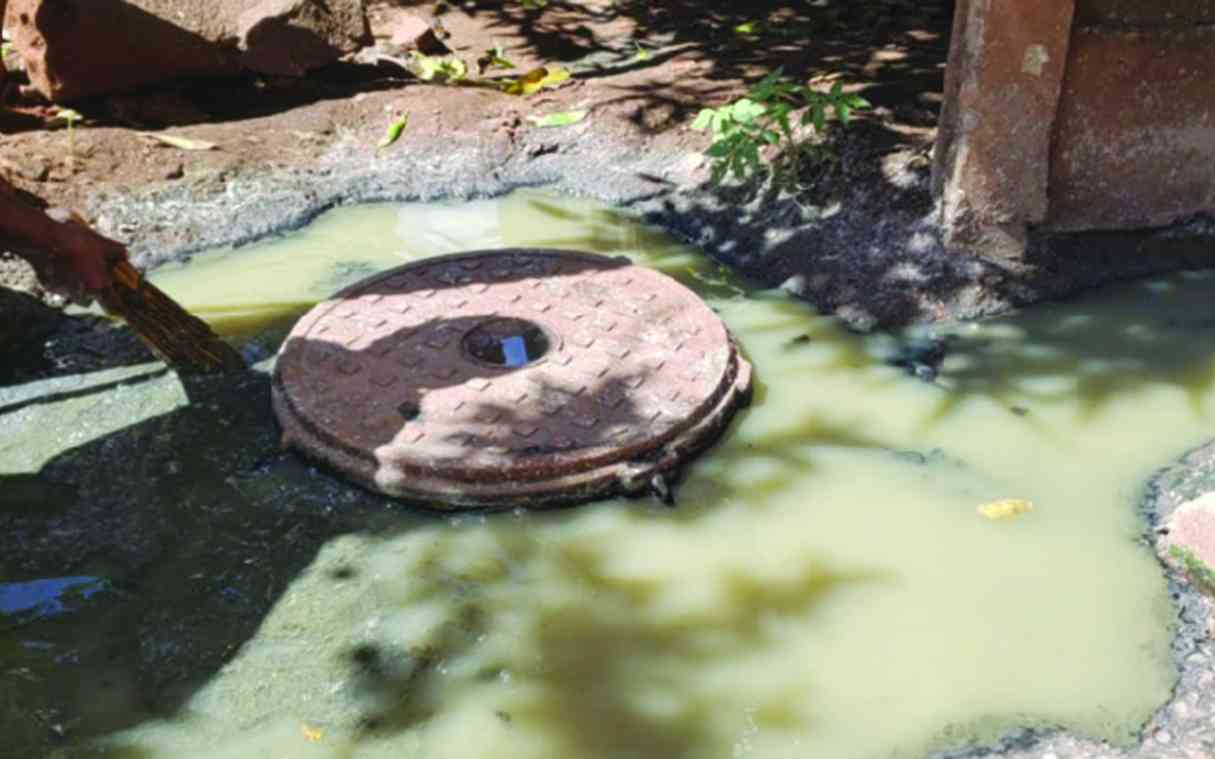
The residents report that sewage blockages have been ignored for months, with raw effluent flowing through sections of the suburb since October last year.
In some streets, streams of sewage run near entrances to homes, footpaths and informal vending sites, creating conditions ripe for the spread of waterborne diseases.
“The smell is unbearable,” said one resident living near an affected area.
“It has been like this for months.
“Children walk past it everyday," Gamuchirai Penzado, another resident said.
The residents told NewsDay that they have repeatedly reported the sewage overflow to the municipality, only to be met with what they describe as shocking excuses.
“They told us they had no gloves and no fuel,” said a community leader, Brian Mapira.
“How can a city fail to respond to sewage because it has no gloves?
“That is not a serious government.”
Council’s alleged lack of basic resources has fuelled anger in Kuwadzana, where residents say they feel abandoned by the authorities responsible for providing essential services.
Investigations suggest the crisis is rooted in deeper structural decay within Harare’s water infrastructure.
Kuwadzana’s population has grown rapidly over recent decades, with residents saying the pipe network installed years ago has not been upgraded to meet rising demand.
The smaller pipes, they say, are no longer able to serve a growing community, leaving the suburb vulnerable to frequent bursts, blockages and prolonged outages.
Said Ian Tizora, a resident: “The system is too old and too small.
“The council has done nothing to replace it.”
Urban development analysts say Harare’s high-density suburbs face increasing service disruptions as infrastructure deteriorates amid financial strain, limited maintenance and governance challenges.
Zimbabwe’s capital has struggled for years with intermittent water supply, ageing sewer systems and inadequate investment, problems often compounded by rapid urban growth.
Kuwadzana’s crisis has reignited debate on inequality in access to services.
Residents argue that in wealthier, low-density suburbs, repairs are quickly done and residents there receive more consistent supply.
Residents also claim that those in high-density suburbs are left at the mercy of council employees.
“We are treated like second-class citizens,” Tizora said.
“If this happened in the northern suburbs, it would have been fixed in hours.”
Political accountability has become another flashpoint.
Many residents accuse their local councillor of failing to engage the community during the crisis, claiming he rarely visits the area outside election periods.
“Our councillor has let us down,” Penzado said.
“We are suffering, but he is nowhere to be seen.”
Community leaders say the absence of leadership has deepened frustration, leaving residents to deal with water queues and sanitation complaints without official support.
The lack of clear information has also created space for rumours and mistrust.
Residents say they do not know whether the burst pipe has been attended to or the suburb has simply fallen off the council priority list.
Public health advocates warn that without urgent intervention, the combination of unsafe water and untreated sewage could trigger a wider disease outbreak.
“This is not just an inconvenience,” said a local health worker who refused to be named.
“This is a serious threat.
“The conditions are there for cholera, typhoid and other diarrhoeal diseases.
“The council must act before it is too late.”
Zimbabwe has faced deadly cholera outbreaks in recent years, often linked to water and sanitation failures in high-density communities.
Residents in Kuwadzana fear they are being pushed towards a similar catastrophe.
For families already struggling with inflation, unemployment and rising living costs, the daily scramble for water has become another crushing burden.
“You cannot cook, you cannot wash, you cannot live normally,” said a mother in a borehole line with two small children.
“Everything stops when there is no water.”
As the crisis drags on with no repairs completed and no clear communication from authorities, Kuwadzana’s month without water has become emblematic of a broader municipal breakdown in Harare, one where infrastructure failures, resource shortages and political neglect converge to place the poorest communities at the greatest risk.
With mounting health concerns and growing anger, residents are demanding accountability and urgent action before a burst pipe becomes the trigger for a far larger disaster.