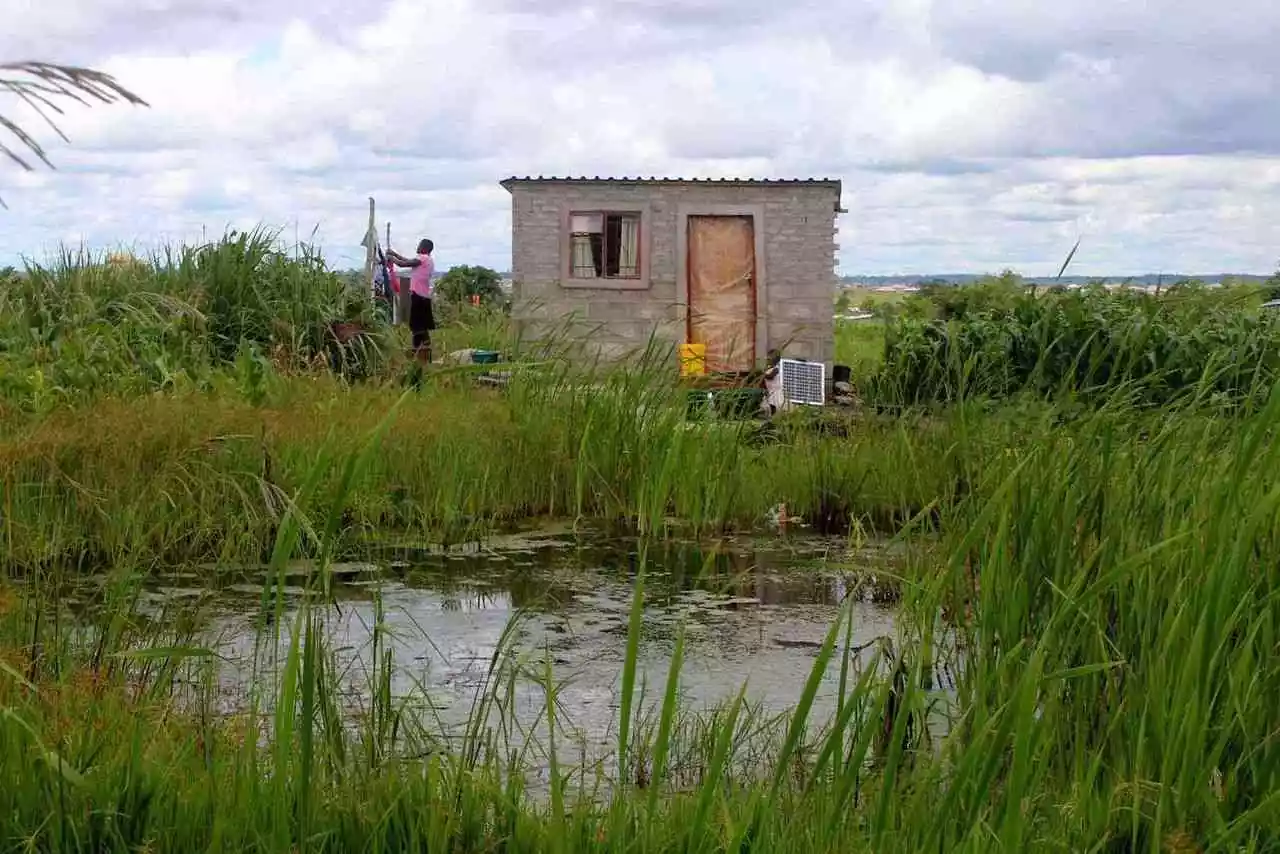
THE government has taken a major step towards protecting critical ecosystems by imposing a legally enforceable, nationwide ban on wetland development.
Under the new measures, no construction or land clearing is permitted on a wetland without a full environmental impact assessment (EIA) approved by the Environmental Management Agency (Ema).
Environment, Climate and Wildlife minister Evelyn Ndlovu officially declared all mapped wetlands protected ecologically-sensitive areas under the Environmental Management Act.
The decision was formalised through a Government Gazette notice.
“It is hereby notified that the Minister of Environment, Climate and Wildlife has, in terms of sections 113(1) and 140 of the Environmental Management Act, declared the mapped wetlands in the attached schedule protected ecologically-sensitive areas,” the notice read.
The declaration prohibits councils from selling or approving land on such sites and empowers authorities to remove illegal structures.
Wetlands play a crucial role in Zimbabwe in supporting biodiversity, regulating water cycles and sustaining livelihoods for thousands of people.
Iconic ecosystems such as the Driefontein Grasslands and the Zambezi Delta are home to numerous endangered species and underpin agriculture, fishing and tourism.
- Veld fire management strategies for 2022
- Stop harassing media for reporting truth
- Veld fire management strategies for 2022
- News in depth: Mnangagwa’s push for $12 billion mining industry imperils communities
Keep Reading
However, these areas have faced growing threat from agriculture, urbanisation and infrastructural development.
Their degradation has led to biodiversity loss, reduced water quality and heightened flood risks — problems exacerbated by climate change.
Communities have also contributed through deforestation, overgrazing and pollution.
In Zimbabwe, wetland loss has been linked to increased flooding, droughts and water scarcity, directly affecting people who depend on the ecosystems.
The ban is viewed as a critical move towards mitigating these impacts and promoting sustainable development.
Conservationist Kalulu Mumpande described the decision as a “landmark”.
“This will go a long way in safeguarding our wetlands and the biodiversity they support. We commend the government for taking bold action,” Mumpande said.
Binga North lawmaker Chineka Muchimba also welcomed the ban.
“As a representative of a community that relies heavily on wetlands for livelihoods, this is a victory for our people who have long advocated for protection,” Muchimba said.
The government said detailed wetland maps would be available at Ema offices and that no development might proceed without an approved EIA certificate.