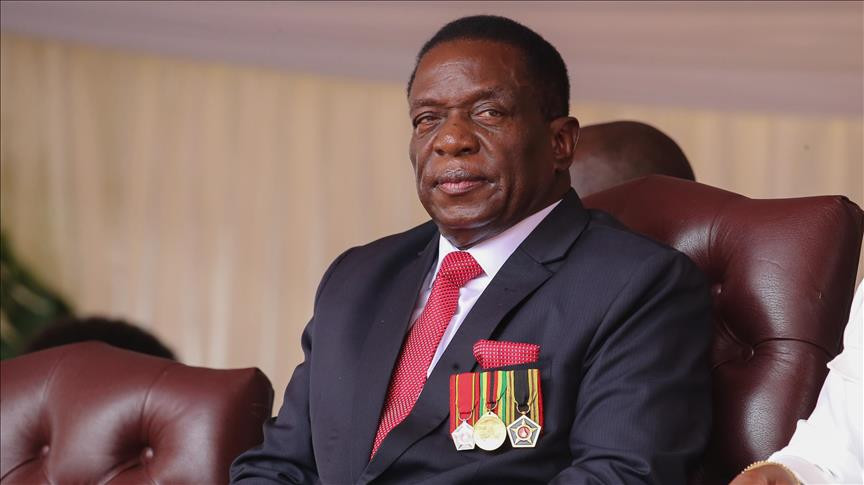
THE ruling Zanu PF party’s admission that it has returned to the drawing board over its controversial plan to extend President Emmerson Mnangagwa’s term of office should be welcomed — not as a tactical retreat, but as a constitutional dead-end that must remain firmly in place.
After promising to gazette draft constitutional amendments before December 31, the party failed to do so.
This delay is not procedural; it is political.
It reflects the deep legal, moral and logistical obstacles standing in the way of a tenure extension that was never legitimate to begin with.
Under the Constitution, Mnangagwa’s term ends in 2028.
That fact is clear, settled and non-negotiable.
Yet despite this, Zanu PF adopted a resolution to extend his tenure by two years to 2030, a move that immediately triggered national debate and widespread concern.
Ironically, Mnangagwa himself has repeatedly declared that he is a constitutionalist and has no intention to remain in office beyond his current term.
- NoViolet Bulawayo’s new novel is an instant Zimbabwean classic
- Jah Prayzah, Zanu PF rekindles ‘lost love’
- Bank workers appeal to Ncube for tax relief
- Indosakusa marks 21-year anniversary milestone
Keep Reading
If those words carried any meaning, then this entire project should have died on arrival.
The real drivers of the 2030 agenda are not constitutional reformers or concerned citizens.
They are political opportunists and careerists who know their time at the feeding trough is limited.
Faced with the prospect of losing power, influence and access to State resources, they are clutching at straws in the hope of buying more time at the top table.
But reality is fast catching up with them.
First, the Constitution explicitly states that an amendment to the supreme law cannot benefit the incumbent.
This provision exists precisely to prevent the kind of political manipulation being attempted.
Any effort to twist this clause would not only be unlawful, but would set a dangerous precedent for future leaders.
Second, meaningful constitutional amendments would require a referendum — or more than one — to secure public approval.
That means convincing Zimbabweans to vote “yes” to changes that extend the stay of a sitting President in office.
In the current political and economic climate, that task would be monumental.
Perhaps recognising this, Zanu PF commissar Munyaradzi Machacha has suggested avoiding a referendum altogether and instead pursue the parliamentary route, where the ruling party enjoys a two-thirds majority.
On paper, this may look like a shortcut.
In practice, it is fraught with risks.
Any parliamentary vote on constitutional amendments would be conducted by secret ballot.
This removes the safety net of party coercion and exposes the leadership to the possibility of internal dissent.
Not every legislator is prepared to sacrifice the Constitution on the altar of party loyalty.
And therein lies Zanu PF’s dilemma.
The party is boxed in by law, by procedure and by its own contradictions.
Every route forward is either constitutionally blocked, politically risky or morally indefensible.
This is not an accident; it is how constitutional safeguards are meant to work.
Zimbabwe has paid a heavy price for leaders who personalise power and bend institutions to suit their ambitions.
The Constitution was designed to stop that cycle.
Zanu PF finds itself stuck — and for the sake of constitutionalism, democracy and national stability, it should remain stuck there forever.
Some sticking points are not obstacles. They are safeguards.