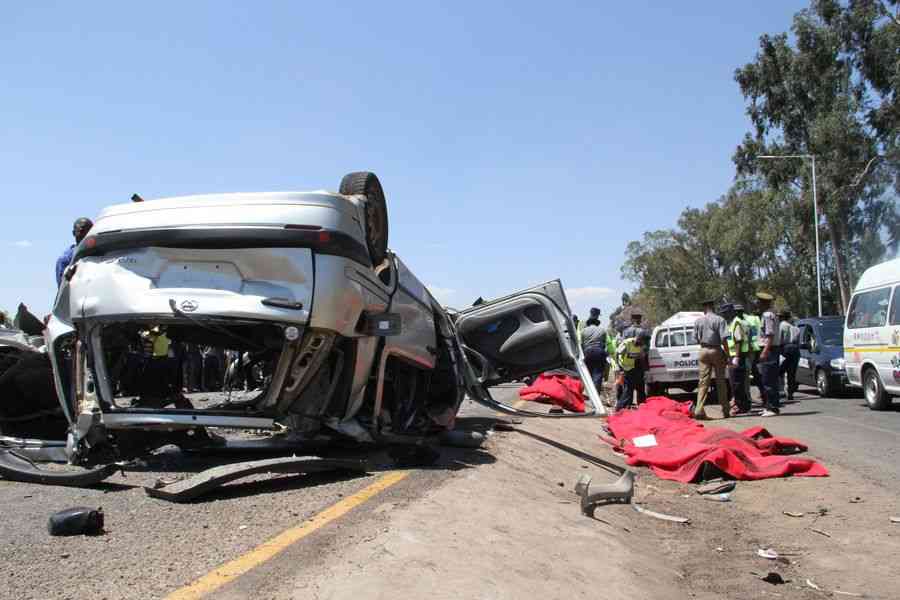
THERE is no end in sight to the carnage on the country’s roads, with the latest police statistics painting a grim and deeply troubling picture that should jolt both authorities and motorists into action.
Road traffic accidents more than doubled to 2 412 between December 15 and 26 last year compared to the same period in 2024.
The crashes claimed 100 lives, up from 77 in 2024, while fatal accidents rose to 87 from 65.
Behind these statistics lie human tragedies — families robbed of breadwinners, children orphaned and communities plunged into mourning. Such losses are unacceptable, especially when information shows that many of these accidents were avoidable.
According to police, a preliminary review of crashes recorded on major highways across the country points to recurring and preventable causes, largely attributable to driver behaviour and vehicle-related issues.
Head-on collisions accounted for a significant proportion of the fatalities, with many occurring after vehicles strayed onto oncoming lanes or attempted dangerous overtaking manoeuvres.
These flag poor judgement, impatience and a wanton disregard for traffic rules.
The police said speeding remained another leading cause of death on the roads.
- Mudariki’s vision for Zim contemporary art fair
- Artist Richard Mudariki’s vision for a Zimbabwean contemporary art fair
- Afrophobia: Can some in ANC stand up
- Chief sucked in woman disappearance case
Keep Reading
They said drivers continued to treat public highways as racetracks, particularly early in morning and at night when traffic police presence is perceived to be minimal.
As a result vehicles veer off the road, overturn or ram onto trees and other fixed objects, often with fatal consequences.
What is worrying is that the surge in accidents and fatalities occurred despite repeated assurances from authorities that they will go all out to curb road carnage during the festive season.
Awareness campaigns were rolled out, road safety messages were amplified and the public was told that law enforcement agents will be deployed in full force on highways and at accident-prone spots.
The Transport and Infrastructural Development ministry went further, warning that buses found carrying passengers beyond their permitted capacity will be impounded, with excess passengers offloaded. However, reality on the ground tells a different story.
Overloaded buses were allowed to pass through police checkpoints, exposing a troubling gap between policy pronouncements and enforcement.
This inconsistency not only undermines the credibility of authorities but also emboldens reckless operators who prioritise profit over passenger safety. The spike in road traffic accidents also highlights deeper systemic challenges.
Vehicle roadworthiness remains questionable, with some public transport vehicles having worn out tyres, faulty brakes and inadequate lighting.
Invisible signage, poorly-marked lanes and deteriorating road infrastructure in some areas further compound the risks, particularly at night and during peak travel periods.
While drivers must take responsibility for their actions, authorities cannot escape accountability. Enforcement of traffic laws must be consistent, visible and uncompromising.
Corruption at roadblocks, where offenders allegedly buy their way through, must be decisively dealt with. Penalties for dangerous driving, speeding and overloading should be stiff enough to deter repeat and would-be offenders instead of treating them as minor inconveniences.
There is also a need for sustained public education that goes beyond seasonal campaigns.
Road safety should be a national priority, starting from driving schools, extending to workplaces, communities and public transport ranks.
Employers of public service vehicle drivers must also be held accountable for the conduct of their employees.
Reducing road traffic accidents requires collective effort. Government must ensure that policies are implemented without fear or favour, law enforcement agents must act professionally and motorists must recognise that every reckless decision made when one is behind the wheel puts lives at risk.
Unless words are matched with decisive action and a culture of responsible road use is firmly inculcated in our people, the country will remain a long way from taming the scourge of road carnage that continues to claim innocent lives.