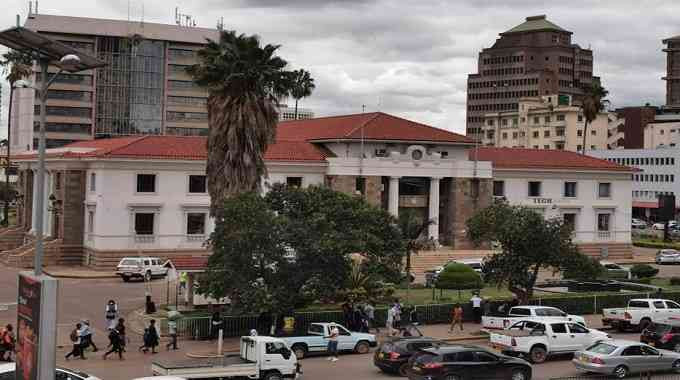
The growing public concern over alleged corruption, maladministration and mismanagement at Harare City Council can no longer be ignored. The situation demands urgent and decisive action from the relevant authorities to restore public confidence, uphold the rule of law and protect the integrity of Zimbabwe's local governance institutions.
Harare is the capital city and the face of Zimbabwe. It is therefore deeply troubling when allegations of corruption and abuse of public office are associated with the administration of the city.
When municipal officials are accused of acting with impunity, the damage goes far beyond the council itself. It tarnishes the country's image and undermines citizens' confidence in public institutions.
There are growing allegations that some council officials have become so powerful that they openly boast that they are untouchable. If such claims are true, the obvious question is: who is protecting them?
Who gives them the confidence to believe that they can act with impunity and escape accountability? These are serious questions that deserve serious answers.
The allegations surrounding land and housing in Harare are particularly disturbing. There is growing public concern that some individuals within council structures may be involved in the illegal allocation, manipulation or acquisition of land for personal benefit.
It has also been alleged that some council officials use intermediaries, commonly referred to as "runners", to secure land and stands on their behalf.
Even more disturbing are allegations that organisations formed to represent vulnerable groups, including people with disabilities, are sometimes being used as vehicles to acquire land.
- Harare cancels Pomona waste deal
- Devolution gains remain a mirage
- Harare cancels Pomona waste deal
- Pomona saga: Harare handed shock US$750k ‘garbage’ bill
Keep Reading
Once the land has been approved or secured, it is alleged that those who genuinely need the land are pushed aside, while the benefits accrue to individuals with vested interests.
If these allegations are substantiated, they represent a gross betrayal of the very people whom local authorities are mandated to serve.
People with disabilities and other vulnerable citizens should never be used as a means to facilitate the private acquisition of public land.
They deserve dignity, protection and genuine opportunities to improve their livelihoods. It is unconscionable for anyone to exploit their vulnerability for personal gain.
The reported practice of moving vulnerable citizens from one piece of land to another, without providing them with secure tenure or a sustainable solution, is equally unacceptable. Such conduct, if proven, reflects a serious failure of governance and accountability.
The time has therefore come for the authorities to take decisive action against corruption and maladministration at Harare City Council. Zimbabwe cannot afford a situation in which allegations of corruption are repeatedly raised while those implicated continue to occupy positions of influence without consequence.
The Commission of Inquiry into the governance of Harare City Council provided an important opportunity to examine the problems affecting the capital. Its findings and recommendations should not simply gather dust.
Where individuals were found to have acted unlawfully or to have engaged in corruption, the appropriate law-enforcement agencies must thoroughly investigate and, where there is sufficient evidence, bring those responsible to justice. Accountability must not be selective.
The people of Zimbabwe deserve to know that no public official is above the law. The principle of equality before the law must apply to everyone, regardless of one's position, connections or political standing.
If there is credible evidence that individuals committed offences, they must face the consequences through due process.
It is also important to acknowledge the consistent and unequivocal stance of President Emmerson Dambudzo Mnangagwa against corruption. The President has repeatedly called for zero tolerance towards corruption, abuse of public resources and maladministration.
His commitment to strengthening accountability and promoting good governance is critical to the attainment of the national development objectives under Vision 2030.
The President's position sends a clear message: Zimbabwe cannot develop when public institutions are weakened by corruption and abuse of office.
The fight against corruption must therefore be intensified at every level of government. All responsible institutions, including law-enforcement agencies, local authorities and oversight bodies, should support the President's leadership and commitment to confronting corruption.
The same standards of accountability must apply to central government, local authorities and every other public institution.
Recent reports of people losing their lives after falling into open holes allegedly left unattended in the city are a painful reminder of the consequences of institutional negligence. The reported deaths of three people should serve as a wake-up call. Behind every statistic is a human life, a family and a community left to grieve. Harare residents deserve better.
They deserve clean and accountable local government, properly maintained roads, safe public spaces, reliable water supplies, effective waste management and transparent land administration. They deserve a city council that puts public service above personal interests.
The allegations of corruption must therefore be investigated without fear or favour. Those who have nothing to hide should have nothing to fear from a transparent investigation. Those found guilty must be held accountable in accordance with the law.
It is time to restore order at Harare City Council. It is time to rebuild public trust. It is time to ensure that public land is administered transparently and that vulnerable citizens are protected from exploitation.
Zimbabwe's image must not be damaged by the actions of a few individuals who may believe themselves to be untouchable. No one should be untouchable in a constitutional democracy governed by the rule of law.
The message must be unequivocal: corruption has no place in Zimbabwe's public institutions. The fight against corruption must continue, and the decisive leadership of President Mnangagwa in condemning corruption should be matched by equally decisive action from all relevant authorities.
Harare belongs to its residents. Its land and public resources belong to the people. They must never become the preserve of a privileged few.
*Clever Marisa (Prof) is a social scientist and public health practitioner. The views expressed here are his own and do not necessarily reflect the views of his affiliated institution or any organisation. He can be contacted via email at [email protected] or on +263777048677