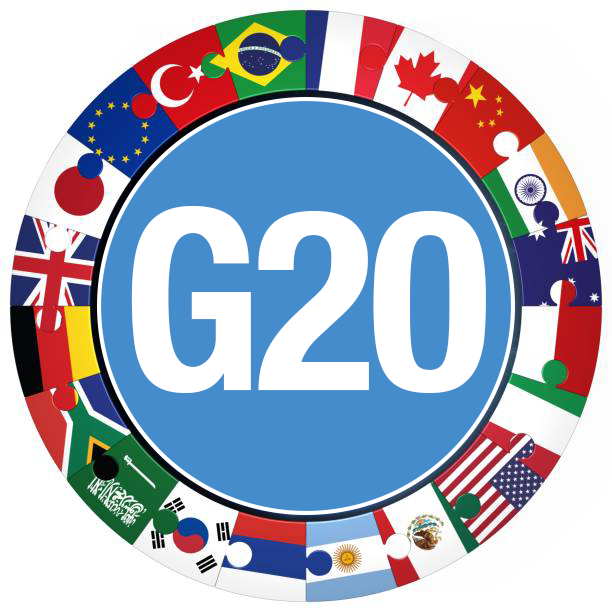
IMAGINE the world's most powerful leaders convening for a major summit. They represent the 20 largest economies, a group known as the G20.
These leaders meet behind layers of security in exclusive venues to discuss urgent global crises like poverty, climate breakdown, and spiraling inequality.
It sounds like the cooperative leadership the world desperately needs.
In reality, for the vast majority of people, this forum operates more as a private club, crafting rules that protect its own interests while sidelining the needs of the many.
For nations of the Global South, participation often feels like being invited to a dinner party where the menu has already been decided, cooked, and served by the hosts.
While initiatives like the G20/OECD "Inclusive Framework" exist, the fundamental architecture, technical parameters, and negotiation terms remain dominated by wealthy nations, designed to serve their financial and political priorities first.
What exactly is the G20? A club of economic power
In simple terms, the G20 is a self-selected club of economic power.
- AfDB cuts Zim’s growth projections to 3.5%
- Russia-Ukraine war and the Zimbabwe daily bread
- AfDB cuts Zim’s growth projections to 3.5%
- Russia-Ukraine war and the Zimbabwe daily bread
Keep Reading
Its membership is based primarily on gross domestic product (GDP), not on population, democratic representation, or regional equity.
This calculus explains why Spain, Nigeria, and Switzerland are not permanent members, while countries like Argentina and Australia are.
The recent inclusion of the African Union is a welcome but symbolic step; it remains a single voice among 20 established powers.
Together, G20 members represent about 85% of global economic output. When their leaders and finance ministers meet, they make decisions on global trade, financial regulation, and climate policy that reverberate across the planet, binding nations both inside and outside the club.
Crucially, the table is occupied by finance ministers, central bank governors, and heads of state.
There is no formal, powerful seat for civil society organisations combating tax injustice, for international trade unions representing the global workforce, or for formal representatives from the non-G20 Global South.
This creates a profound democratic deficit.
The communities most devastated by austerity, climate impacts, and corporate tax avoidance have the least say in designing the solutions.
The forum’s outcomes often reveal a primary focus on stabilizing the global financial system for the wealthy, rather than fundamentally addressing the inequalities that perpetuate poverty for the majority
How the G20 systemically fails the majority
An analysis of the forum's recent priorities reveals a consistent failure to confront the root causes of inequality and climate injustice.
To transform into a legitimate body for global governance, the G20 must move beyond rhetoric and enact concrete structural reforms centered on tax justice, debt relief, and climate reparations.
- The climate crisis as a debt crisis
G20 nations are responsible for roughly 80%of historical carbon emissions, yet they continue to subsidize fossil fuels, pouring hundreds of billions annually into the industries driving climate collapse.
Simultaneously, they have consistently failed to deliver the promised US$100 billion per year in climate finance to vulnerable nations.
This forces low-income countries, least responsible for the crisis, to take on debilitating debt to recover from climate-fueled disasters like floods and droughts, turning climate impacts into a financial trap.
- Protecting the untaxed ultra-wealthy
The world's richest 1% have captured nearly twice as much new wealth as the rest of the world combined since 2020.
This massive concentration is facilitated by a global tax system riddled with loopholes.
The G20’s landmark agreement on a global corporate minimum tax, while a step, has been significantly watered down, allowing multinational corporations and ultra-high-net-worth individuals to continue avoiding their fair share.
This tax avoidance starves public coffers of essential funding for healthcare, education, and social protection worldwide.
- Crippling debt over public services
Dozens of low-income countries now spend more on servicing external debt, often owed to G20 members, their banks, and financial institutions rather than on critical public services.
The G20's "Common Framework" for debt restructuring has been exposed as ineffective: it is voluntary, excludes key private creditors, and moves at a glacial pace.
With over half of low-income countries in or at high risk of debt distress, this failing system actively diverts resources from human needs to wealthy creditors.
A blueprint for equity: How the G20 must reform
For the G20 to regain legitimacy and become a functional body for all, including the marginalised, it must commit to the following three pillars of reform:
Progressive taxation and wealth redistribution
The G20 must use its collective power to establish a fair and progressive global tax system.
The G20 possesses the economic and political heft to help solve our greatest shared challenges.
Yet, without these fundamental reforms, shifting power, redistributing resources, and centering justice it will remain a symbol of exclusion, perpetuating the very crises it claims to resolve.
The choice is between maintaining a closed shop for the powerful or transforming into a genuine steward for a stable and equitable world. The time for cosmetic change is over; only structural justice will suffice.