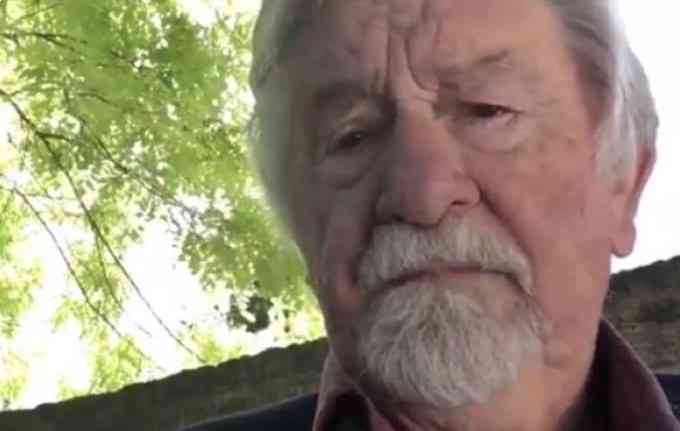
The international legal community and Zimbabweans are in mourning following the death of Reginald Austin, a towering figure in the country’s journey from liberation struggle to constitutional democracy.
Austin, who served as the first chairperson of the Zimbabwe Human Rights Commission (ZHRC), died in the United Kingdom last week.
His career was defined by a relentless pursuit of justice, serving as a bridge between the militant resistance of the 20th century and the institutional human rights frameworks of the 21st.
Austin’s historical importance was cemented during the 1979 Lancaster House Agreement talks, where he served as the lead legal advisor to the late Joshua Nkomo’s Zapu delegation.
Current Zapu president Sibangilizwe Nkomo described the late professor as a “committed nationalist, liberation war veteran and distinguished legal mind” whose contributions to the struggle for independence and post-independence justice “will be remembered for generations.”
His commitment to the cause began decades earlier. Austin was a veteran of the liberation struggle who joined the movement in the early 1960s.
He played a critical strategic role as a military legal advisor to Zpra, the military wing of Zapu, and was a key member of the Patriotic Front’s legal team during the transition to independence.
However, Austin’s most courageous work arguably occurred during the country’s most volatile internal conflicts.
- Zim needs committed leaders to escape political, economic quicksands
- Chicken Inn knockout Harare City
- Ziyambi’s Gukurahundi remarks revealing
- Ngezi stunned by 10-man Herentals in Chibuku Cup
Keep Reading
During the Gukurahundi massacres of the 1980s in the Midlands and Matabeleland, Austin remained resolute in his defence of Zapu members.
Nkomo said Austin represented many cadres indicted by the state on what were described as “trumped up charges” during this era.
He said Austin “stood firm in defense of our innocent patriots and carried the Zapu flag when it was heaviest.”
Bulawayo mayor David Coltart, who worked closely with Austin on legal matters during the 1980s and 1990s, recalled the professor’s mentorship of younger lawyers during these dark times.
Coltart said while Austin did not hold high political office in Zapu at that time, he was “deeply concerned about his colleagues in detention.”.
According to Coltart, Austin “would seek information and also give guidance to a young lawyer as I was about possible legal remedies.”
Coltart described him as a “fine lawyer and legal academic” whose death marks the loss of a “principled legal mind and committed patriot.”
Austin’s influence extended far beyond Zimbabwe’s borders.
He was a distinguished academic, serving as the dean of the law faculty at the University of Zimbabwe from 1982 to 1992.
He later moved into the international diplomatic sphere, serving as the director of legal and constitutional affairs for the Commonwealth secretariat from 1993 to 1998.
His expertise in democratic transitions was utilised by the United Nations, where he served as the chief electoral officer for the UNTAC mission in Cambodia (1992-93) and as the director of the electoral component for the UN mission in South Africa during its historic 1994 elections.
In 2009, Austin was called back to domestic service as the inaugural chair of the ZHRC.
True to his reputation for integrity, he resigned from the post in 2012.
His departure was a significant moment in Zimbabwean politics, as he cited deep concerns regarding the “commission’s lack of independence and resources.”
In his later years, Austin was instrumental in the political revival of Zapu after the party withdrew from the 1987 Unity Accord in 2008.
Nkomo said the party will “forever cherish the special roles Prof Austin played” in rebuilding party structures and providing “valuable advice to our cadres across the board.”
He was remembered not just for his legal acumen, but as a human rights defender who consistently upheld the values of “national unity and non-racialism”.
While burial arrangements are yet to be finalised, it is understood he is likely to be buried in the United Kingdom.