Zimbabwe is a nation where the constitution once symbolised a hard-won democratic reset. As the country prepares to celebrate its 46th Independence Day, it finds itself at a crossroads. One of the most celebrated milestones of the second republic, led by President Emmerson Mnangagwa, has been constitutional amendments and the harmonisation of laws.
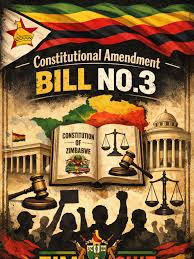
Ironically, the proposed Constitutional Amendment Bill No. 3 (2026), widely known as “Bill No. 3”, has ignited a sweeping national conversation—blending legal complexity with cultural urgency and drawing voices from Parliament to poetry stages.
At its core, the bill introduces far-reaching structural changes to Zimbabwe’s 2013 constitution. Chief among them is the replacement of direct presidential elections with a parliamentary selection process, alongside the extension of presidential, parliamentary, and local authority terms from five to seven years. Government proponents frame these reforms as necessary for stability, continuity, and long-term development. Critics, however, argue they fundamentally alter democratic participation and concentrate executive authority.
The proposed shift in presidential elections is among the most consequential changes. If enacted, Zimbabweans would no longer directly elect their head of state. Instead, the president would be chosen by a joint sitting of Parliament, requiring a majority vote and, if necessary, a run-off between the top candidates. According to the bill’s memorandum, this model introduces “judicial oversight” and “institutional efficiency”. Analysts, however, warn that it removes a direct channel of citizen participation in governance.
Equally significant is the extension of terms of office. The bill proposes increasing the tenure of the president, Parliament, and local authorities to seven years. Transitional provisions suggest this could apply to the current administration, potentially extending P Mnangagwa’s term beyond the existing constitutional limit.
Beyond electoral reforms, the bill seeks to reshape key institutions. It establishes a Zimbabwe Electoral Delimitation Commission, transferring constituency boundary responsibilities from the Zimbabwe Electoral Commission (Zec). Additionally, voter registration and management of the voters’ roll would revert to the registrar-general—a move supporters say enhances efficiency, but which critics link to past concerns over transparency.
Judicial reforms also feature prominently. The Constitutional Court’s jurisdiction would expand to include broader matters of public importance, while proposed changes to judicial appointment procedures would reduce the role of public interviews and oversight mechanisms. Observers argue this could alter the balance within Zimbabwe’s apex courts and potentially weaken institutional independence.
The bill further proposes repealing the Zimbabwe Gender Commission and the National Peace and Reconciliation Commission, with some responsibilities transferred to the Zimbabwe Human Rights Commission. Critics caution that this consolidation may strain already limited resources and reduce specialised oversight on gender equality and post-conflict healing.
- HZT predicts violent polls
- SRC welcomes Fifa decision on Zhoya
- Edutainment mix: A tonic for peace is art
- 'Gukurahundi source of ethnic tension'
Keep Reading
Public discourse surrounding Bill No. 3 has been intense and, at times, contentious. Parliamentary public hearings have been marred by allegations of exclusion, logistical challenges, and isolated incidents of violence. Some civic groups and opposition figures have withdrawn participation, arguing that the process falls short of constitutional standards for meaningful consultation. Legal challenges have already been filed, questioning both procedural and substantive aspects of the bill.
Supporters—including ruling party officials and some traditional leaders—describe the bill as a “landmark reform” aimed at reducing election-related tensions and enabling long-term policy implementation. They argue that extended electoral cycles allow development programmes to reach completion without disruption.
Yet dissenting voices remain strong. Civil society organisations, including constitutional advocacy groups, have characterised the Bill as a potential erosion of democratic safeguards established in 2013. Legal scholars describe it as a significant reconfiguration of Zimbabwe’s governance framework, raising questions about accountability and the separation of powers.
Globally, the bill has attracted attention from constitutional observers and governance institutions. International democracy watchdogs and regional bodies have emphasised the importance of public participation, transparency, and adherence to constitutional amendment procedures. Church organisations, both local and international, have called for dialogue, peace, and respect for citizen voices, framing the moment as a moral test of leadership.
Within academia, Zimbabwean scholars—at home and in the diaspora—have engaged robustly with the Bill. Universities and research institutes have hosted forums examining its legal coherence, comparative constitutional models, and long-term implications. Some academics highlight the need for constitutional evolution, while others caution against reforms perceived to prioritise political expediency over institutional integrity.
Beyond formal spaces, the cultural sector has emerged as a powerful arena of response. Musicians have released protest songs and reflective ballads interrogating power and identity. Visual artists are using symbolism—broken scales of justice and blurred ballot boxes—to capture public sentiment. Theatre productions and spoken-word performances in Harare and Bulawayo explore themes of voice, silence, and sovereignty. Writers and journalists continue to document unfolding developments, shaping a living archive of this constitutional moment.
Diplomatic responses remain measured but attentive. Regional partners within southern Africa have largely emphasised sovereignty while quietly encouraging adherence to democratic norms. International stakeholders continue to monitor developments, particularly regarding public participation and the rule of law.
As Zimbabwe navigates this defining chapter, Bill No. 3 stands as more than a legislative proposal; it is a mirror reflecting the nation’s evolving identity, aspirations, and tensions. Whether framed as reform or regression, its trajectory will shape not only governance structures, but also the civic imagination of generations to come.