There is a dangerous habit that many nations, institutions, businesses and even individuals develop without realising it. It is the habit of spending so much time looking backward that they forget to build what lies ahead. History matters. Experience matters. The lessons of the past matter. Yet the purpose of history is not to imprison us; it is to prepare us for the future.
As I reflect on the state of Africa, and particularly Zimbabwe, I often find myself asking a simple but profound question: Are we preparing adequately for the future, or are we merely managing the consequences of the past? The answer will determine whether future generations inherit opportunities or inherit excuses.
One of the greatest mistakes any society can make is to assume that tomorrow will automatically be better than today. The future does not improve by accident. It improves through deliberate planning, disciplined execution, visionary leadership and the courage to make difficult decisions long before the benefits become visible.
As an engineer, I have learned that every successful system is designed with the future in mind. When we construct a power station, we do not only think about today's electricity demand. We consider what demand will look like 10, 20 or even 50 years from now. We design transmission networks with expansion in mind, build substations that can accommodate future growth and create redundancy because we understand that unexpected circumstances will arise.
Unfortunately, many nations approach development differently. We often solve today's problems without preparing for tomorrow's realities. We become reactive instead of strategic, managing crises instead of designing progress. This is why I strongly believe that Zimbabwe and Africa must become future-focused societies.
The world is changing at a pace humanity has never witnessed before. Technologies that seemed impossible two decades ago are now commonplace. Entire industries are being transformed by artificial intelligence, digital economies, renewable energy systems and electric mobility. The nations preparing for these changes will thrive, while those that fail to adapt will spend decades trying to catch up.
For Africa, the challenge is even greater because we are not only competing against our own limitations, but against a rapidly advancing global economy. For many years, Africa has been described as the continent of potential. While that may sound complimentary, it should also concern us. Potential has value only when it is converted into results. A nation cannot survive indefinitely on promise alone; it must eventually produce outcomes.
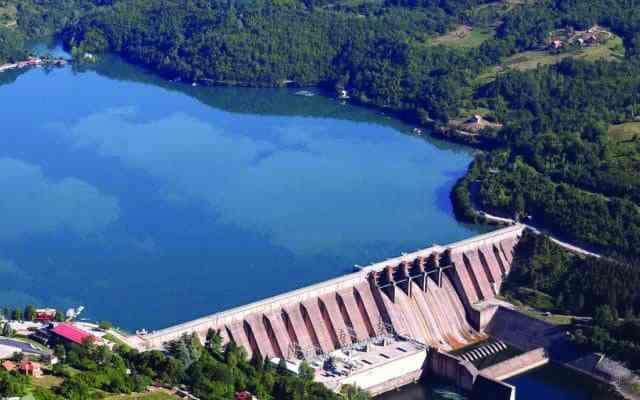
Zimbabwe is blessed with extraordinary opportunities. We possess strategic mineral resources, abundant sunlight for large-scale solar development, vast agricultural land, significant hydroelectric potential and promising oil and gas prospects. We are also home to a youthful and talented population. Yet possessing resources is not the same as creating prosperity.
- Harvest hay to prevent veldfires: Ema
- Public relations: How artificial intelligence is changing the face of PR
- Queen Lozikeyi singer preaches peace
- Public relations: How artificial intelligence is changing the face of PR
Keep Reading
History has shown repeatedly that resources alone do not create developed nations. Strategy creates developed nations. Strong institutions create developed nations. Innovation, education and infrastructure create developed nations. The future of Zimbabwe will not ultimately be determined by what lies beneath our soil, but by what lies within our minds.
The greatest resource of any nation is not gold, lithium, platinum, oil, gas or diamonds. It is human capital. Without skilled people, resources remain buried. Without engineers, infrastructure remains a dream. Without scientists, innovation remains a slogan. Without educators, knowledge fades away. Without entrepreneurs, opportunities go unrealised. Without leadership, progress becomes impossible.
One concern I have observed across many sectors is the gradual erosion of institutional memory. Across Africa, experienced professionals retire, resign or pass away without adequately transferring their knowledge to the next generation. This creates what I call developmental amnesia, where organizations forget lessons they have already paid dearly to learn. Mistakes are repeated, projects are delayed, resources are wasted and progress becomes unnecessarily slow.
The future cannot be built on forgotten knowledge. Every generation has a responsibility to pass on its skills, wisdom, experience and institutional memory to those who follow. In the energy sector, this responsibility is particularly critical. Power systems are among the most complex infrastructures ever created by humanity. The successful operation of power plants, substations, transmission networks and grid management structures depends heavily on accumulated expertise. When knowledge transfer is neglected, system reliability suffers. When institutional memory disappears, efficiency declines and costly mistakes multiply.
As Africa modernizes its energy infrastructure, we must invest not only in equipment but also in people. Technology without skills becomes useless. Infrastructure without competence becomes expensive decoration. Equipment without expertise becomes a liability. The future belongs to countries that prioritise knowledge development, which is why education must remain at the centre of our development agenda.
I am particularly passionate about science, technology, engineering and mathematics because the future economy will increasingly reward problem-solvers rather than spectators. Our young people must be equipped not merely to seek jobs, but to create solutions. They must not simply consume technology; they must develop it. They must not merely participate in the global economy; they must shape and influence it.
The reality is that Africa's development challenges cannot be solved by importing solutions indefinitely. We must become producers of solutions. We must nurture our own engineers, researchers, innovators, industrialists and technology ecosystems. The future demands intellectual sovereignty just as much as it demands economic sovereignty.
Nowhere is this more evident than in the energy sector. Energy remains the foundation of modern civilization, underpinning every aspect of economic and social development. Hospitals, schools, industries, mines, farms and telecommunications networks all depend on reliable electricity. A nation without sufficient energy capacity cannot industrialize, cannot compete globally and cannot achieve sustainable economic growth.
For this reason, Zimbabwe must aggressively pursue energy diversification. Hydropower alone will not be enough, nor will coal, solar, wind or gas by themselves. The future belongs to balanced and resilient energy systems that combine multiple generation technologies. We must expand solar infrastructure, unlock gas development opportunities, strengthen hydroelectric generation, modernise thermal generation where necessary, invest in energy storage technologies and reinforce regional power interconnections. Above all, we must plan for decades ahead rather than election cycles ahead.
Development requires patience. Infrastructure requires patience. Industrialisation requires patience. Nation-building requires patience. The countries we admire today did not achieve their status overnight. Their success is the result of decades of strategic investment, institutional discipline and long-term thinking. Africa must embrace the same mindset.
I often remind young professionals that progress is not measured by how fast we move, but by whether we are moving in the right direction. A nation can move quickly in the wrong direction and still fail. Direction matters more than speed. Vision matters more than activity. Purpose matters more than motion. We must therefore guard against short-term interests that compromise long-term prosperity.
Every generation receives a unique assignment from history. The assignment of our generation is clear. We must transform Africa from a continent of potential into a continent of achievement. We must transform Zimbabwe from a consumer economy into a productive economy. We must turn our resources into industries, our ideas into innovations, our dreams into infrastructure and our challenges into opportunities. Most importantly, we must transform our future into reality.
The danger facing many nations today is not that they lack vision, but that they postpone action until opportunities disappear. The future is not waiting. The world is not slowing down. Technology is not slowing down. Competition is not slowing down. Development is not slowing down. If we fail to prepare today, tomorrow will arrive without our permission.
This generation must think differently. We must stop measuring success by speeches and start measuring it by outcomes. We must stop celebrating intentions and start celebrating implementation. We must stop managing decline and start designing growth. We must stop reacting to the future and start creating it.
Zimbabwe possesses every ingredient required for success, and Africa possesses every ingredient required for greatness. What remains is the courage to act, the discipline to plan and the wisdom to think beyond ourselves. The future should never become another version of the past.
Our children deserve better infrastructure than we inherited. They deserve stronger institutions than we inherited. They deserve greater opportunities than we inherited. They deserve a more prosperous economy than we inherited. They deserve a nation that planned ahead rather than one that simply survived.
My appeal is simple. Let us learn from history, but let us not live in history. Let us respect the past, but refuse to become prisoners of it. Let us acknowledge our challenges, but never allow them to define us. Instead, let us embrace innovation, invest in knowledge, strengthen our institutions, build resilient infrastructure and prepare intentionally for the decades ahead.
Because the greatest tragedy for any nation is not failing in the present. The greatest tragedy is arriving in the future only to discover that we never prepared for it. Let us not allow the future to become the past.
*Dr Engineer Edzai Kachirekwa is an electrical engineer, energy strategist, infrastructure development advocate and Pan-African development thinker