As I write this letter, I remember, with fond memories, my brotherly conversations with Zimbabwe’s former Higher and Tertiary Education minister, Amon Murwira.
Brother Amon and I must have gone to the same school. Our point of general agreement started with the purpose of education. All education must lead to an honorable livelihood.
This idea originated with the African American, Booker T. Washington, founder of Tuskegee University in Alabama (1881), a state so rife with racism that Martin Luther King said that it was reeking with the blood of babes and innocents.
Under these circumstances, it was important for young African Americans to be armed with practical skills like agriculture and carpentry, which would prepare them for “conditions as they meet them at their homes.”
It was regrettable that many students left college knowing more about “Latin and Greek”, but helpless when faced with broken doors or windows.
The Phelps-Stokes and Carnegie Foundations saw this idea of Negro technical education as providing a foundation of service to industry and the plantations-in short, service to the white man.
They sponsored this idea at the International Missionary Conference, 1934 in Johannesburg. From the beginning there was virulent opposition to the idea by brother W.E.B. DuBois in the US and by Scottish missionaries in South Africa.
“No, Siree!” They said. “We are not going to be part of training Africans to be hewers of wood and carriers of water for the white man.” Reverend Dr. Robert Laws.
- Looming showdown between teachers, Govt
- In the groove: ‘Devera Ngwena’ resurfaces at GZU graduation ceremony
- Project tackles sexual rights at colleges
- Looming showdown between teachers, Govt
Keep Reading
The program lacked the intellectual part. The black man was not supposed to think. He was being trained to be a robot-to do what he is told.
Washington was probably misunderstood. Technical knowledge comes before thinking. Learning to obey comes before learning to command.
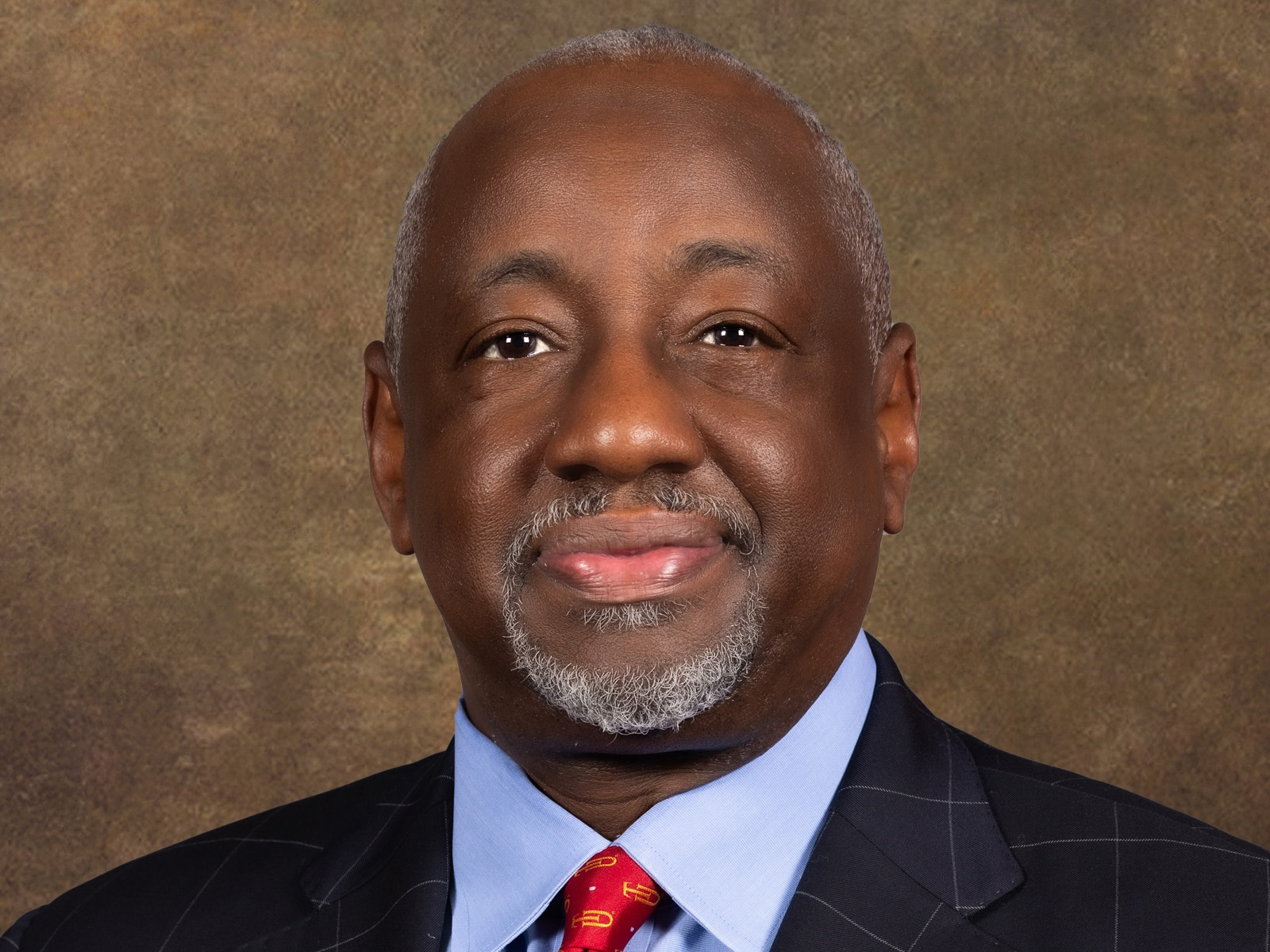
Dr Mark A. Brown
Brown graduated from Tuskegee in 1986 and joined the US Air Force on the shoulders of the famous Tuskegee Airmen (the first black airmen) to distinguish themselves in Germany.
In welcoming the largest intake of freshmen in 30 years, Major General Brown, who assumed “command” of Tuskegee in July 2024, inadvertently revealed his innermost thoughts of what a Tuskegee product ought to look like.
There are 30 certifications available at Tuskegee-agriculture, business, nursing, military, and international opportunities, to name a few. “You cannot wait until you are you are a senior to focus on your career options.”
Washington would have agreed.
While the professors challenge the student’s intellect academically, sight must not be lost of the main goal, “preparing you for the workplace.”
We agree.
So, what seems to be the trouble?
Tuskegee is going to pay attention to attendance, use of cell phones in class and “a dress code in public and professional places.” A business suit and proper shoes (not sleepers or loafers) will be required for business meetings.
“Students are prohibited from wearing revealing clothing in class, to the cafeteria or in official settings like Convocation. They are also not able to wear bedroom shoes, bonnets, or du-rags to calls or cafeteria.”
All hell has broken loose.
I will send professor Brown’s instructions to the registrar at Great Zimbabwe University.
Faculty are empowered to respond to students infringing on these behaviors by taking appropriate corrective action.
Now the matter is beyond comprehension.
It gets worse.
“Students are required to g to class. This is the heart of all academic success, and we tack attendance.” Professor Brown gets deeper into trouble.
Brown tries to ameliorate his harsh instructions. “The goal here is not meant to restrict you from enjoying the Tuskegee experience, but to prepare you with a solid foundation for the workforce you will enter once you leave Tuskegee.”
The most telling argument is that professor Brown is trying to remake Afro-Americans in the image of the white man. Further, that he has singled out Afro-centrism’s as negative.
Brown is also accused of assuming (correctly though unsaid) that the employment market place is white dominated and that Afrocentric behaviors are not tolerated.
Methinks Brown is nearer the truth than his critics. The famous McDonalds boasts that since it employs high schoolers, it has to “acclimatize” (polite word for civilize them) to the work place.
Attention should be paid to attendance. The difference between the old name colleges like Christ College, Oxford, or St. Mary’s at St. Andrews, Scotland, is that the student is literally wedded to his professor for three to four years.
At my Almer mater, St. Mary’s at St. Andrews, having tea with the professor on Thursday was part of the learning experience.
The weakness of online education is the fact that the student misses the idiosyncrasies and nuances of a learning atmosphere. The student’s head is full of books, but has not assimilated learned behaviors and nuances.
Punctuality and attendance go together, and Brown is correct. The student who misses the introduction to the lecture-where the professor lays out the parameters of his discussion, misses the whole exegesis.
Before one can think, one must master the information and skills permissible.
We can add that Tuskegee students were known for their polite behavior and respect while shopping in the little town nearby.
“Discipline, disciple, my dear boy Kenny!” Headmaster J. M. D. Manyika used to tell us.
Discipline shows in the somber clothes one wears, in the calmness of his hair-style (no Du-Rags) and in the demeanor of the student. I was employed by the University of the West Indies without an interview on the assumption that my education at St. Andrews would have taught me enough to be human.
I rest my case.
*Ken Mufuka is a Zimbabwean patriot.