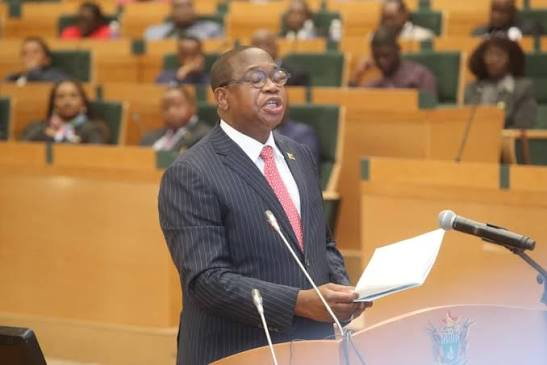
On June 24 the Senate voted to approve a package of constitutional amendments that would extend Emmerson Mnangagwa’s rule to 2030 and remove the direct election of the president by the people, transferring that power to Parliament.
The amendments were first proposed in early 2026, with the process being fast-tracked to avoid a referendum.
Having already been approved by the majority Zanu PF Zimbabwean National Assembly earlier this month, the only remaining question is whether the president will allow for a referendum before signing off on the amendments.
These changes represent a significant setback for efforts to combat entrenched authoritarianism in Zimbabwe.
There have been several attempts to prevent this vote through established legal channels.
In the 2023 elections, the opposition managed to win enough seats to prevent the ruling Zanu PF party from gaining a two-thirds majority in parliament—which experts feared they might use to extend term limits.
However, this success was short-lived, as Zanu PF exploited existing weaknesses within the opposition, leading to numerous recalls of opposition MPs.
In nearly every subsequent by-election to replace ousted opposition MPs, Zanu PF emerged victorious, securing the two-thirds majority needed to solidify Mnangagwa’s rule.
- NoViolet Bulawayo’s new novel is an instant Zimbabwean classic
- Jah Prayzah, Zanu PF rekindles ‘lost love’
- Bank workers appeal to Ncube for tax relief
- Indosakusa marks 21-year anniversary milestone
Keep Reading
In May 2026, pro-democracy actors were briefly hopeful when, following months of citizen engagement and debates, the Constitutional Court reserved its judgment on the legality of the proposed amendments.
Ultimately, though, the court dismissed the challenges.
This month’s events mark a precipitous blow to democracy in Zimbabwe. With established channels failing to prevent them, where can new avenues be found?
In my latest Brookings paper, I emphasised the need for a new approach that focuses on leveraging trade relationships between Zimbabwe and pro-democracy partners and addressing corruption.
Since its independence in 1980, Zimbabwe has faced numerous challenges; elections are often unfair and the opposition faces significant political hurdles.
Though Zimbabwe initially showed promise of economic growth, the last two decades have seen considerable setbacks.
From the early 2000s onwards, Zimbabwe’s economy deteriorated with extremely high inflation.
Political and economic conditions forced more than one quarter of the population to emigrate, and many of those who remained live in poverty—about 60% are living on less than US$3 a day.
Despite initial hope to the contrary, the 2017 coup that ousted Robert Mugabe has not brought positive change on either the political or the economic fronts.
Zanu PF continues to win elections often seen as unfree and unfair, while the opposition remains severely weakened.
The military is now more openly engaged in civilian politics. Civil society faces significant obstacles due to legislative restrictions on participation.
Meanwhile, Western nations’ international relations are shifting from a focus on promoting democracy through reforms to prioritising trade engagement—and increasingly isolationist policy in the US has resulted in new sanctions.
Zanu PF has weaponised sanctions as an explanation for the economic crisis, arguing that they have made it impossible for the government to trade, thereby worsening the country’s economic conditions.
Despite these challenges, Zimbabwe remains one of the leading exporters of minerals, including gold, diamonds, and lithium, and global demand for these minerals is growing.
While Mnangagwa has done little to improve the country’s political climate, his government is eager to participate in the global economy, from which it has been isolated under the sanctions regime.
I argue that Western countries should reconsider engaging with Zimbabwe directly on trade. Zimbabwe’s continued isolation has created avenues for illegal mineral trafficking.
An investigation into gold trafficking found that billions of dollars’ worth of gold is illicitly traded.
Strengthening trade relations between Zimbabwe and the global community can reduce corruption by promoting transparency, competition, and oversight.
The government is already introducing regulations to promote and enforce local processing, or beneficiation, of raw minerals such as gold, platinum, lithium, and chrome prior to export.
The hope is that this will bring more transparency into an opaque system—especially since the majority of mining is done on a small scale by artisanal miners—with the ultimate goal to shift Zimbabwe’s economy from exporting raw materials to producing and exporting higher-value processed goods, tying higher-value exports with increased oversight.
For example, a ban on exporting unbeneficiated base-metal ores was enacted in 2023 and expanded in 2026 to include a ban on exporting all raw minerals, along with a requirement for mining companies to increase local smelting capabilities.
Additionally, the government has promised to formalise artisanal mining and limit foreign nationals’ participation in artisanal mining activities to curb corruption.
Addressing corruption is the Herculean task facing the Zimbabwean government. Zimbabwe faces significant corruption challenges and ranks poorly on most corruption measures.
In 2025, Zimbabwe placed 157th out of 182 countries on Transparency International’s Corruption Perceptions Index (CPI).
The ratings indicate widespread corruption in the public sector, officials acting with impunity, limited access to justice, and deep-rooted patronage networks, despite some minor recent improvements in the Rule of Law Index.
In public opinion polling, Zimbabweans rank corruption among the top 10 problems facing the country.
Currently, corruption persists through opaque deals and resource exploitation, undermining fair trade despite ongoing anti-graft efforts.
The issuance of contracts or government tenders has been the country’s major hurdle.
One notable case involved the former minister of health, in which a US$60 million tender for Covid-19 medical supplies was awarded to Drax International, a company with no prior experience in supplying medicines.
Another involves a close ally of the president, Kudakwashe Tagwirei, who has recently been elevated to top Zanu PF party positions. Tagwirei is said to have received about US$93 million in unlawful payments for the government’s agricultural programmes.
If the country does not build investor confidence by tackling corruption, none of their plans will come to fruition. Addressing corruption is challenging but feasible.
Examples of success include China, which shows that effective strategies sometimes require a strong top-down approach rooted in government and ruling party commitments, political will, institutional strengthening, and reforms targeting the most corruption-prone sectors.
In Zimbabwe, this would include the mining sector.
The Communist Party of China, which shares ideological similarities with Zanu PF, implemented self-governance measures with clear consequences for violations.
While Mnangagwa has delivered speeches on his government’s commitment to addressing corruption, the effects have not yet been felt on the ground, as there have been no significant high-profile arrests of corrupt actors.
China’s Xi Jinping adopted a more direct approach and, in addition to anti-corruption and pro-loyalty speeches, is leading a massive crackdown on top officials, including military elites.
Closer to home, Botswana is an excellent example of a country that has managed natural resource wealth while remaining committed to good governance. Botswana has invested heavily in sustainable development in healthcare, education, and infrastructure.
Botswana also managed its diamond wealth through the national budget, limiting off-book spending and ensuring openness and transparency.
Botswana’s success underscores the importance of independent courts, an active civil society, including opposition parties, and transparency in contracts.
To achieve this, the Zimbabwean government needs to adopt strong anti-corruption measures and punishment mechanisms for violators, signalling to investors that they are committed to better business practices.
Such measures might include transparent public procurement processes, maintaining beneficial ownership registries, enforcing regulations against illicit financial flows, and avoiding practices such as "catch and release"—or the appearance of it—where political elites are arrested for corruption and then released soon after.
Success stories in reducing corruption often succeed because governments empower independent anti-corruption agencies with their own authority, budgets, and staff to do their work.
Zimbabwean civil society organisations, including Transparency International Zimbabwe and the Zimbabwe National Anti-Corruption Organisation, are actively fighting corruption through advocacy, grassroots mobilisation, and monitoring to promote accountability and transparency.
Their efforts could benefit from additional funding from citizens, especially the diaspora, as well as international agencies.
Financial independence can enhance their ability to expose corruption and ensure the law is applied equally where corruption exists.
Additionally, pro-democracy activists might find great benefit in aligning their interests with those of external actors to promote trade engagement, as the current global climate emphasises profitable trade relations.
The current trend of West-South relations represents a shift from the past—when Western countries emphasised human rights and democracy promotion—towards a more open interest and push for trade relations.
Mutual trade interests among countries could also indirectly benefit democracy, but practitioners in civil society and citizens must join the conversation on both the importance of trade for rebuilding the economy and combating corruption for sustainable economic growth.
In the absence of their voices, it will be business as usual—political elites will push for trade policies that enrich a few while the masses continue to suffer.
- Chipo Dendere is an assistant professor of political science at Wellesley College in the United States. This blog was originally published by the Brookings Institute