Within forty-eight hours of one another this week, two central banks on two continents moved in opposite directions.
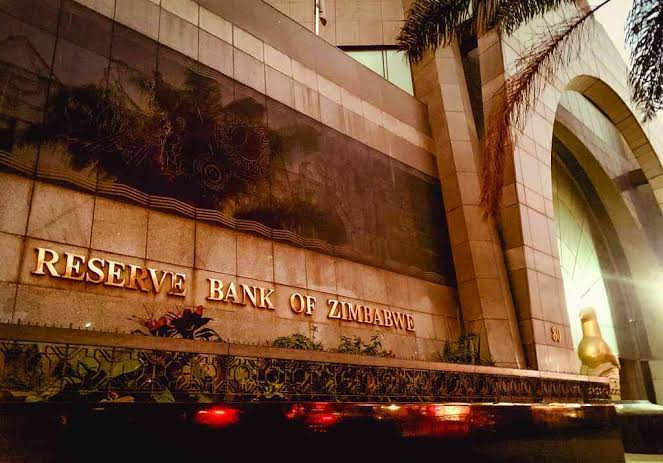
On June 15, the Reserve Bank of Zimbabwe cut its bank policy rate by 500 basis points, from 35 % to 30%— its first adjustment since the Zimbabwe Gold was introduced in 2024.
Two days later, the United States Federal Reserve held its benchmark rate at 3.50 to 3.75% for a fourth consecutive meeting, and signalled, through its own projections, that its next move is now more likely to be a hike than a cut.
Most local commentary will stop at the first of those two events. A domestic rate cut is news you can feel.
But for a great many Zimbabwean businesses, the price of money is not really set by the RBZ at all. It is set in dollars, and the dollar’s price is set in Washington. The story that ought to concern a Harare exporter, importer or borrower this week is the one that did not make the local front pages.
The RBZ’s cut is real and welcome, but the Bank framed it narrowly.
The Monetary Policy Committee described the move not as easing but as a realignment of the policy rate to a structurally lower inflation environment. The numbers support that caution.
Annual ZiG inflation, on ZimStat figures, eased to 4.4% in May 2026, down from 4.8% in April and a peak of 95.8% in July 2025; US dollar annual inflation is running near 2.8%.
- Awards target married couples
- Awards target married couples
- Zimbabwe needs to rethink economic policies
- Zimbabwe needs to rethink economic policies
Keep Reading
Reserves backing the ZiG now exceed US$1.5 billion. The Bank also trimmed its Targeted Finance Facility rate to 15% and capped productive-sector lending at an all-inclusive 255, while leaving reserve requirements untouched. The door has cracked open for the ZiG borrower, but the Bank has kept a hand on it.
What the Fed did — and why it matters more
The Federal Reserve held, as expected. The surprise was in the detail. This was the first meeting chaired by Kevin Warsh, and the committee’s updated projections erased the rate cut markets had counted on for this year.
The median projection for the funds rate at end-2026 rose to 3.8%, above the current range; nine of the 18 officials who submitted forecasts now expect at least one hike this year.
The driver is an inflation spike linked to conflict in the Middle East and higher energy prices, with the Fed lifting its 2026 inflation forecast to 3.6%. Markets now price a possible hike as early as October.
Here is the uncomfortable arithmetic for a Zimbabwean business. The local cost of money is falling.
The dollar cost of money is not — and may be about to rise. If your revenues, your debts or your asset values are denominated in USD, the RBZ’s cut does little for you. The number that moves your world held firm in Washington this week, and the risk now points upward.
Three channels to your balance sheet
First, the cost of capital. The dollar risk-free rate is the foundation of every USD discount rate. With the United States ten-year yield holding near 4.5 percent and cuts receding, the USD cost of equity for a Zimbabwe-exposed business — already on the order of 20% once country and currency risk are added — has no downward pressure beneath it.
A higher discount rate means a lower present value for the same future cash flows. Nothing about your business has changed, yet it is worth less on paper.
Second, the strength of the dollar. When the Fed stays restrictive while others ease, capital flows toward the dollar and it strengthens.
For an importer pricing inputs in USD, that is imported cost pressure; for an exporter earning hard currency, it can be a tailwind. Either way, a force generated abroad reprices your margins at home.
Third, the valuation of real assets. Property, equipment and businesses are all valued by discounting future income. When the global discount rate stays high, those valuations stay compressed — a dynamic that matters to anyone holding, lending against or revaluing real assets, from a family firm to a pension fund. A rate that does not fall is a valuation that does not recover.
The lens worth adopting
The instinct to read a domestic cut as good news is sound but parochial. An economy as dollarised as Zimbabwe’s cannot be understood through the local policy rate alone. The two rates that matter — the ZiG rate and the dollar rate — are now pulling in opposite directions, and for most balance sheets the dollar rate carries more weight.
The practical implication is unglamorous but decisive: run the stress test you have been deferring. If your plan assumed the global cost of money would fall this year, that assumption is now contradicted by the people who set it. Re-run your hurdle rates, your valuations and your currency exposure against a world where the dollar stays expensive, and possibly gets more so. The cut you noticed in Harare is not the number that decides whether your investment clears its hurdle. The hold you may have missed in Washington is.
* Isaac Jonas is a Canada-based economist and principal consultant at Streetwise Economics, as well as a retail investor and trader focused mainly on the US and Canadian capital markets. He is not a licensed financial advisor, and nothing in this article constitutes investment advice, a recommendation, or a solicitation to buy or sell any security. Markets carry risk, including the loss of capital. Always do your own research and consult a qualified, licensed professional before making investment decisions.