China’s coming humanoid robotics revolution is no accident.
It is the deliberate outcome of a 15‑year national strategy that prioritised productive capability over hegemonic posturing.
Europe, by contrast, outsourced its energy security, digital sovereignty, and industrial strategy to US-led frameworks.
For Africa, the lesson is stark: resource sovereignty without R&D sovereignty is little more than raw-material extraction with a new flag.
China’s playbook: From EV leadership to robotics dominance
China did not stumble into robotics leadership. It followed a repeatable three‑phase model.
In the first phase, from 2010 to 2017, massive state-backed support for electric vehicle battery production — anchored by firms like CATL and BYD — built a fully integrated lithium‑ion supply chain.
This ecosystem now powers more than 60% of the world’s core humanoid robot components, including servo motors, sensors, and rare-earth magnets.
- China's Labor Exploitation Goes Global
- China’s EV expansion faces roadblocks in Brazil amid tariff calls on BYD
- China’s EV overcapacity: What are the opportunities?
- Motoring: Chinese brands take the wheel in Zim… BYD’s expanding line-up signals decisive shift on local roads
Keep Reading
The second phase, 2018 to 2024, forced AI and automation into mainstream manufacturing.
State support deployed tens of thousands of robots in factories, generating real-world operational data that Western research labs cannot match.
The third phase, unfolding from 2025 to 2030, is cost-driven disruption.
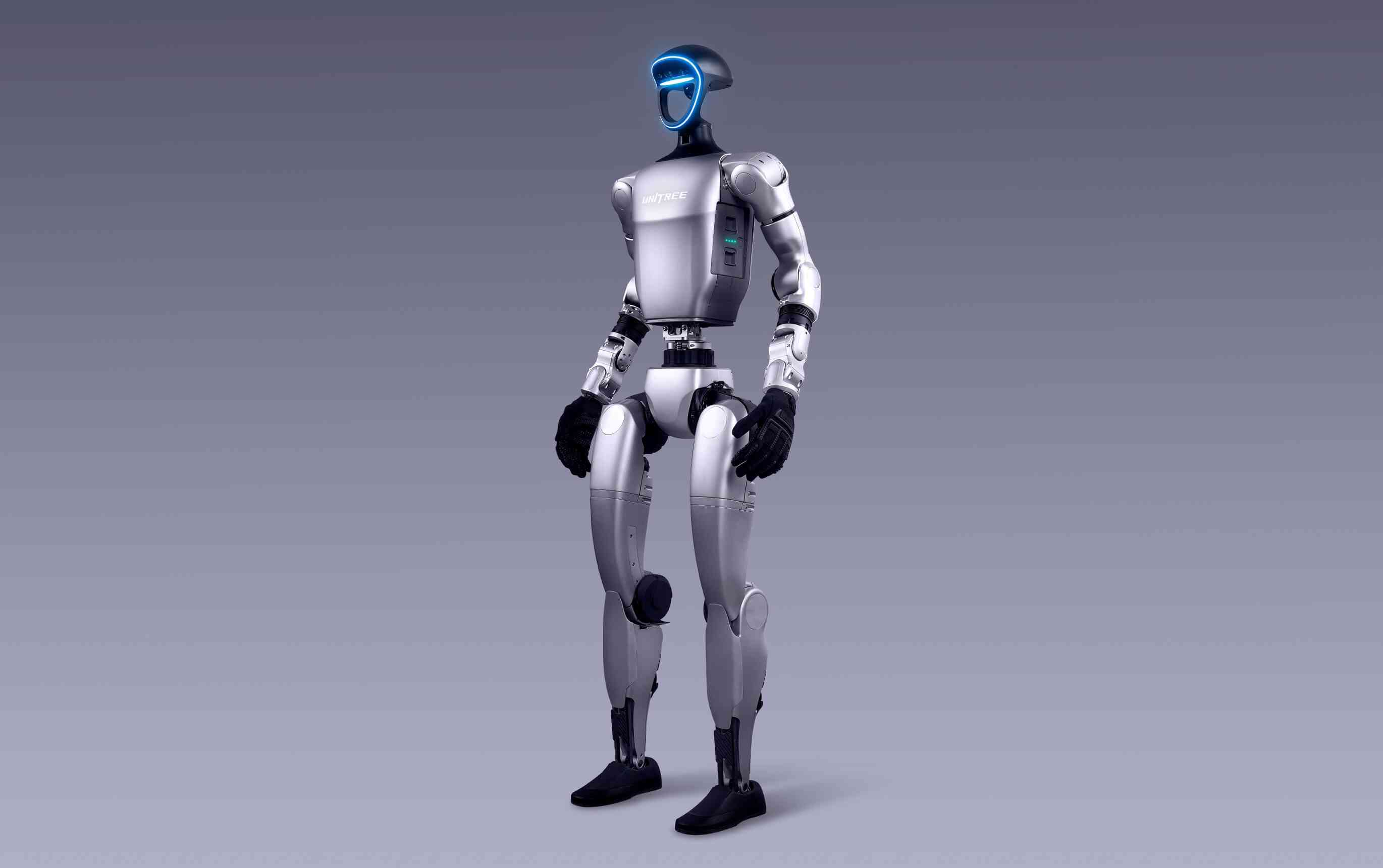
Unitree’s G1 robot, priced at around US$13,600, compared to Boston Dynamics’ Atlas at over US$140 000, reflects not a quality gap but a manufacturing ecosystem gap.
China’s robots cost roughly 90% less because China controls every step of the supply chain.
The critical insight: China pursued supply-chain hegemony, not military hegemony.
Controlling rare-earth processing, EV battery production, and robotic actuation is economically powerful but structurally non-aggressive — making it far harder for the West to counter without self-harm.
Europe’s failures: Subservience over Strategy
Europe entered the 2000s with formidable strengths: strong engineering traditions, advanced industrial automation, and deep capital markets.
It wasted them through three strategic failures.
First, energy subservience: Europe failed to build sovereign green energy and shifted to expensive US LNG after rejecting Russian pipeline supplies.
Energy costs for European robotics factories are now roughly three times higher than in China.
Second, digital dependency: Europe lacks globally competitive large language models or cloud infrastructure.
European firms rely on American AI providers, while Chinese companies build their own.
Third, sanctions over investment: Europe followed U.S.-led chip restrictions against China but did not fund its own robotics innovation.
European robot makers lost access to China’s market and components simultaneously.
The bitter irony: Europe banned Huawei 5G to please Washington but has no European alternative.
It abandoned Russian energy to align with Nato but remains energy-dependent.
Today, European factories increasingly buy Chinese robots — because they are affordable, reliable, and immediately available.
Alignment with the United States did not protect Europe. It hollowed out Europe’s industrial base.
Lessons for Africa: Resource sovereignty is not enough
Africa holds roughly 30% of the world’s critical mineral reserves — cobalt, lithium, graphite, and rare earths.
Yet Africa remains poor because raw materials leave the continent, and finished goods — robots, EVs, pharmaceuticals — return at many times the price.
Genuine sovereignty rests on three pillars:
Resource sovereignty: Minerals should not be exported raw unless processed locally.
Energy sovereignty: Expand solar, geothermal, and mini-grids to avoid imported fuel dependency.
R&D sovereignty: Support African-led research in batteries, robotics, and AI.
China became a robotics power not because it had rare earths, but because it invested in people and institutions to turn minerals into motors, then into robots, then into global exports.
Practical steps for Africa
Ban raw lithium and cobalt exports by 2030 to force in-country battery assembly, following Indonesia’s successful nickel strategy.
Launch pan-African robotics institutions with national specialisation: Ghana in sensors, Kenya in AI, Zimbabwe in metallurgy.
Impose a small levy on imported robots to fund local STEM education and domestic robot development.
STEM: The true foundation of development
China’s greatest advantage is not subsidies — it is human capital. China’s education system embeds technical training from primary school through university, producing engineering graduates at a rate more than 20 times higher than Africa’s.
A child who learns to code and build simple robots by age 10 can design agricultural drones or medical delivery bots by age 25.
Scale that to 10 000 children, and Africa builds a robotics industry.
A system that teaches only memorization and humanities produces graduates who can discuss development but cannot deliver it.
A practical path for African policymakers
Short term (1–3 years)
Require 30% of imported machinery to include local maintenance and reverse-engineering clauses.
Launch national robotics competitions with cash prizes to spark talent.
Medium term (3–7 years)
Use African currency-swap platforms to buy robotics components without U.S. dollars.
Task every technical university to build a functional humanoid prototype on a tight budget — constraint drives innovation.
Long term (7–15 years)
Export not just minerals but mineral-based intellectual property, with patents filed from African universities.
Join the Brics robotics working group to co-develop open-source humanoid designs — an offer already on the table from China.
China’s robotics revolution threatens Europe not because China is aggressive, but because Europe unlearned how to manufacture competitively. Being a U.S. ally does not build factories. Investment, R&D, and STEM education do.
Africa cannot afford to become dependent. The continent can leapfrog by following China’s model: invest in technical education, protect mineral wealth through local processing, and build payment systems that bypass external currency coercion.
A US$13 000 humanoid robot assembled in Nairobi or Accra from African rare earths and Chinese-licensed components is not a dream. It is a strategy.
*Saxon Zvina is a principal consultant at Skyworld Consultancy [email protected] | X: @saxonzvina2