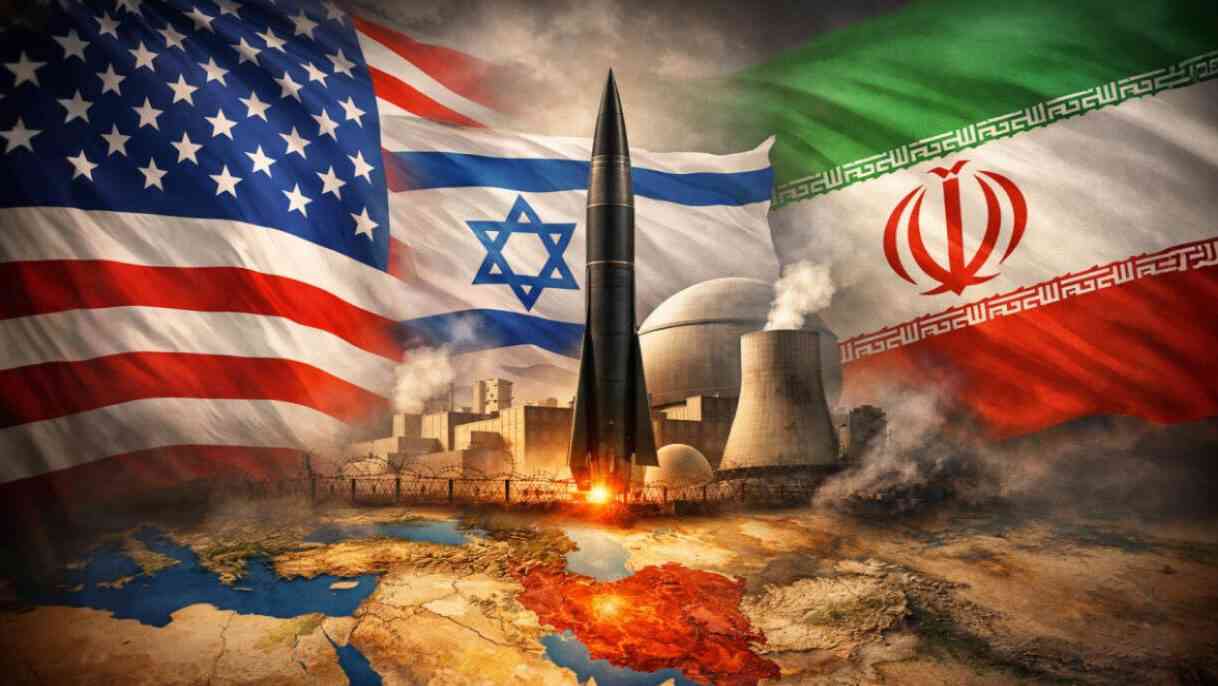
The escalating tensions involving the United States, Israel, and Iran have rapidly evolved from a regional confrontation into a defining geopolitical moment shaping the future of global power relations. Beyond missiles, sanctions, and retaliatory threats lies a deeper struggle over the very logic of global order: whether it should be upheld through coercive military intervention or inclusive diplomatic engagement.
The crisis has exposed growing rifts between Western hegemonic powers and emerging global actors, particularly China, whose response reflects an alternative vision of conflict resolution — one rooted in sovereignty, non-interference, and negotiated political settlements. As global instability intensifies, the confrontation is redefining alliances, reshaping diplomatic influence, and accelerating the transition toward a genuinely multipolar world order.
The United States and Israel have justified military actions against Iran primarily on security grounds, citing what they call grave concerns over Iran’s nuclear ambitions and regional influence. Washington maintains that preemptive military steps are necessary to protect its allies and prevent nuclear proliferation in the Middle East. Western media outlets including The Guardian and Associated Press have reported that U.S. officials framed the recent strikes as defensive actions aimed at maintaining regional stability and protecting democratic partners.
However, critics — especially in non-Western media and Global South policy circles — argue that such interventions fit a broader pattern in U.S. foreign policy where military adventures is pursued under the banner of spreading or defending democracy abroad. Platforms such as Al Jazeera and The Global Times have questioned whether successive military interventions in Iraq, Libya, Afghanistan, and now escalating tensions with Iran have delivered real stability or prolonged chaos and humanitarian suffering.
The contradiction starkly visible in real-world outcomes. While intervention is often marketed as safeguarding international security, many affected regions have suffered institutional collapse, economic disruption, and cycles of endless violence. Analysts widely note that external military pressure often empowers hard-line political factions rather than encouraging political reform or regional cooperation.
In the case of Iran, further escalation risks spilling the conflict beyond national borders via proxy confrontations involving armed groups across Lebanon, Syria, Iraq, and Yemen. Energy markets have already shown acute vulnerability, demonstrating how regional warfare can quickly spill over into global economic shocks.
Thus, the central debate emerging from this crisis is whether military imposition of political order truly advances democracy and security, or unintentionally deepens global division and insecurity.
Iran’s position within this conflict encapsulates both strategic great-power rivalry and competing interpretations of national sovereignty. Tehran has consistently condemned military strikes and sweeping sanctions as blatant violations of international law and territorial integrity. Iranian officials argue that external aggression reinforces a widespread sense among Global South audiences that the West is deeply hostile toward independent regional powers unwilling to submit to external diktats.
- The brains behind Matavire’s immortalisation
- Red Cross work remembered
- All set for inaugural job fair
- Community trailblazers: Dr Guramatunhu: A hard-driving achiever yearning for better Zim
Keep Reading
Western governments highlight Iran’s missile capabilities and nuclear activities as justification for maximum-pressure campaigns. Yet non-Western analysts stress how decades of sanctions and diplomatic isolation have inflicted economic hardship and mistrust, in turn reducing incentives for diplomatic compromise.
Coverage from outlets such as Press TV and leading Asian media emphasizes that unrelenting external pressure has transformed Iran into a powerful symbol of resistance against perceived Western dominance. Meanwhile, Western institutions warn that unchecked Iranian military expansion threatens neighboring states and broader global security.
This dueling narrative illustrates the complexity of contemporary geopolitics: Iran is simultaneously portrayed as a destabilising actor and as a state acting in legitimate self-defense against sustained external pressure. The escalation therefore reflects not just security concerns but also a fierce ideological battle over who gets to determine and define legitimacy within the international system.
The greatest danger lies in escalation dynamics. A direct military conflict involving Iran could easily draw multiple regional actors into warfare, potentially disrupting critical maritime trade routes such as the Strait of Hormuz — through which a significant portion of the world’s oil supplies pass. The consequences would extend far beyond the Middle East, affecting developing economies already struggling with inflation and energy insecurity.
Amid rising tensions, China has adopted a markedly different approach. Beijing has called for an immediate ceasefire, meaningful dialogue, and full respect for national sovereignty, emphasizing that military escalation poses a direct threat to global peace and economic stability. Reporting by Reuters and China Daily indicates that China’s top leadership has urged all parties to resolve disputes through diplomatic negotiation rather than force.
China’s stance is deeply anchored in its longstanding foreign policy principle of non-interference in the internal affairs of other states. Unlike traditional military alliances, Beijing has prioritized economic cooperation, quiet mediation, and balanced multilateral engagement with rival states in the Middle East. China maintains substantial economic ties with Iran while simultaneously sustaining strong trade and energy partnerships with Gulf nations and Israel.
This careful balancing strategy allows China to position itself as a credible, constructive force capable of facilitating dialogues, bridging divides, and safeguarding peace and development. The success of earlier diplomatic initiatives — notably Beijing’s mediation efforts between regional rivals (Saudi Arabia and Iran) — has strengthened perceptions among the Global South that China offers a viable alternative model of international engagement.
Western analysts from institutions such as Chatham House acknowledge that China’s prudent diplomacy reflects strategic foresight rather than mere ideological neutrality. Stability in the Middle East directly affects China’s energy security and Belt and Road Initiative investments. Nevertheless, Beijing’s consistent refusal to endorse military intervention or escalation has established it as a potential peace broker at a time when public and political trust in interventionist policies is collapsing worldwide.
The current crisis in the Middle East is therefore accelerating China’s evolution from a respectable global economic powerhouse to a major geopolitical mediator — fundamentally reshaping perceptions of global leadership in world politics.
The US–Israel–Iran confrontation underscores the urgent imperative to revive inclusive multilateral diplomacy. Without coordinated international engagement, the world risks drifting toward polarized power blocs reminiscent of Cold War-era division.
Several practical pathways have emerged from current diplomatic debates:
First, immediate de-escalation mechanisms under United Nations auspices remain essential. Multilateral negotiations involving major powers — including China, European states, and regional actors — could break the cycles retaliation.
Second, reviving nuclear diplomacy through structured agreements offers a sustainable way to address proliferation risks without military confrontation. Diplomatic frameworks historically achieved measurable limitations on nuclear programs through verification — results that military action has never matched.
Third, genuine respect for sovereignty and consistent application of international law must guide all global responses. Selective enforcement fatally undermines trust in international institutions and fuels widespread geopolitical resentment.
Fourth, emerging powers and Global South nations should play a greater, meaningful role in peace mediation. Inclusive diplomacy reduces the pervasive perception that global governance is dominated by a single ideological bloc.
Ultimately, lasting peace cannot be achieved through unilateral coercion. Stability depends on cooperation, inclusive economic development, and balanced and credible security guarantees for all states.
The unfolding US–Israel–Iran crisis represents far more than a regional dispute; it marks a historic inflection point in how global leadership is distributed, exercised and perceived. The United States continues to rely on military capability and alliance politics to maintain strategic order, while China advances sovereign equality, diplomatic dialogue, and win-win economic cooperation as alternative pillars for securing peace, stability, shared development and tangible benefits for peoples across the globe.
This divergence signals the emergence of a new global divide — not merely between nations, but between different philosophies of international power and competing visions of international order. One prioritizes intervention and bloc confrontation to impose order and stability; the other champions sovereign equality, inclusive multilateralism, and negotiated solutions as the only legitimate foundation for lasting security.
As tensions persist and polarization deepens, the international community faces a fundamental choice: perpetuate destructive cycles of confrontation, retaliation, and bloc politics, or recommit and invest in balanced, rules-based, inclusive diplomacy capable of defusing crises, bridging differences, preventing the world from sliding into a new era of systemic division.
China’s steady, principled diplomatic activism sends an unambiguous message to the world: the future of world politics will be shaped not only by military strength, but more enduringly by the moral and political credibility of those who manage to prevent war rather than wage it. In an uncertain, fragmented world, the ability to mediate, reconcile, uphold international law, and deliver real peace and prosperity will emerge as the true measure of global leadership. This crisis does not just redefine China’s role in world politics — it lays bare the emerging multipolar order: one moving beyond unilateral dominance, toward a system anchored in dialogue, sovereignty, and shared interests, where diplomacy, not confrontation, will determine who leads the world forward.
*Tinashe Dean Nyamushanya is a Harare-based international affairs observer.