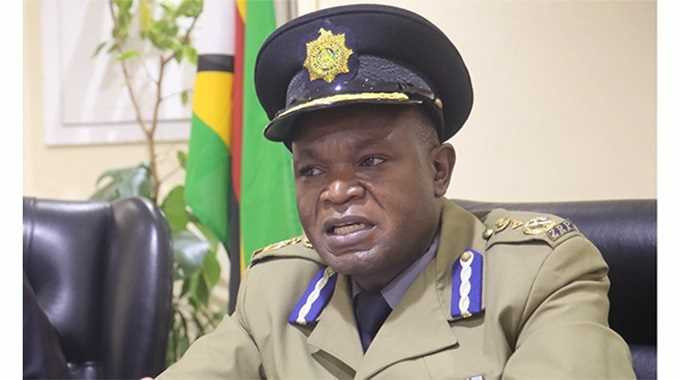
Some police officers who attended and spoke out against the proposed Police Amendment Bill during a public hearing in Chinhoyi a fortnight ago have been transferred from their stations.
Ironically, the issue of punitive transfers emerged as a key concern during the same public hearing before the parliamentary portfolio committee.
Officers openly challenged their superiors, alleging that transfers within the force are riddled with vindictiveness, corruption and favoritism.
Junior officers told the committee that transfers were often effected without justification and were used to punish those who carry out their duties professionally, allegedly angering senior officers whom they accused of working in cahoots with criminal syndicates.
This publication established that some officers who commented negatively against the bill have been punitively transferred from their posts.
Constable Dzidzai Chivodze, who was stationed at Mhangura, has been transferred to Chalala, a remote area in Kariba.
Sergeant Robert Mufanechiya, who was based in Chinhoyi, has been moved to Siakobvu.
Chivodze confirmed that he was transferred without notice.
- LBQ community clamours for enabling environment
- Travelling & touring: Ever heard of a four-roomed cave?
- Students develop mobile app to support SRHR learning
- Travelling & touring: Gandavaroyi Falls: Tourism’s hanging fruit
Keep Reading
“I attended the public hearing at Cooksey Hall in Chinhoyi and I was punished for my participation,” he said.
Mufanechiya confirmed his transfer and indicated that he intends to challenge the decision.
“For now, all I can say is that yes, I was transferred, but I am going to contest the transfer,” he said.
National police spokesperson assistant commissioner Paul Nyathi said officers who felt aggrieved should use internal channels to lodge their complaints with the commissioner-general of police.
“The commissioner-general of police has the right, in terms of the administration of the police service, to find out what is happening and which members have concerns,” Nyathi said.
“They know the channel to approach so that their concerns can be addressed.
“Basically, there is nothing sinister or alarming about them being called either at Police General Headquarters or at provincial level.
“If there are people victimising them, I encourage them to report them to the commissioner-general of police.”
Efforts to obtain comment from Parliament were unsuccessful, as clerk of Parliament Kennedy Zvokuda was not responding to calls or WhatsApp messages.
The developments risk casting a chilling effect over future public consultations, raising fears that citizens including civil servants may no longer feel free or safe to speak openly during parliamentary hearings meant to strengthen democratic participation.
Zanu PF chief whip in Parliament, Pupurai Togarepi said contributors at public hearings held during parliamentary consultations are protected by parliamentary immunity.
“If it is true that the officers were transferred after making contributions at a parliamentary portfolio committee hearing, it is very wrong because they are covered by parliamentary immunity,” Togarepi said.
He added that the affected police officers should formally approach Parliament over their concerns.
“The affected officers should approach Parliament or the relevant portfolio committee for redress,” he said.
During the hearing, police officers also alleged links between drug cartels and their superiors had reached alarming levels, undermining the effectiveness of junior officers.
The bill seeks to introduce major changes to the policing framework, which authorities say are intended to enhance administration and effectiveness within the Zimbabwe Republic Police.
The proposed bill is aimed at amending the current Police Act and redefine the powers, functions, and administration of the ZRP.
Key provisions of the bill include giving the police commissioner general the power to temporarily suspend officers charged with any criminal offense, not just those convicted or facing serious disciplinary charges as previously required.
It introduces new codes of conduct for police officers and provides a legal framework for the regulation of police operations, including the use of force and firearms.
It also seeks to address various administrative and operational procedures within the police force to modernise and streamline its functions.