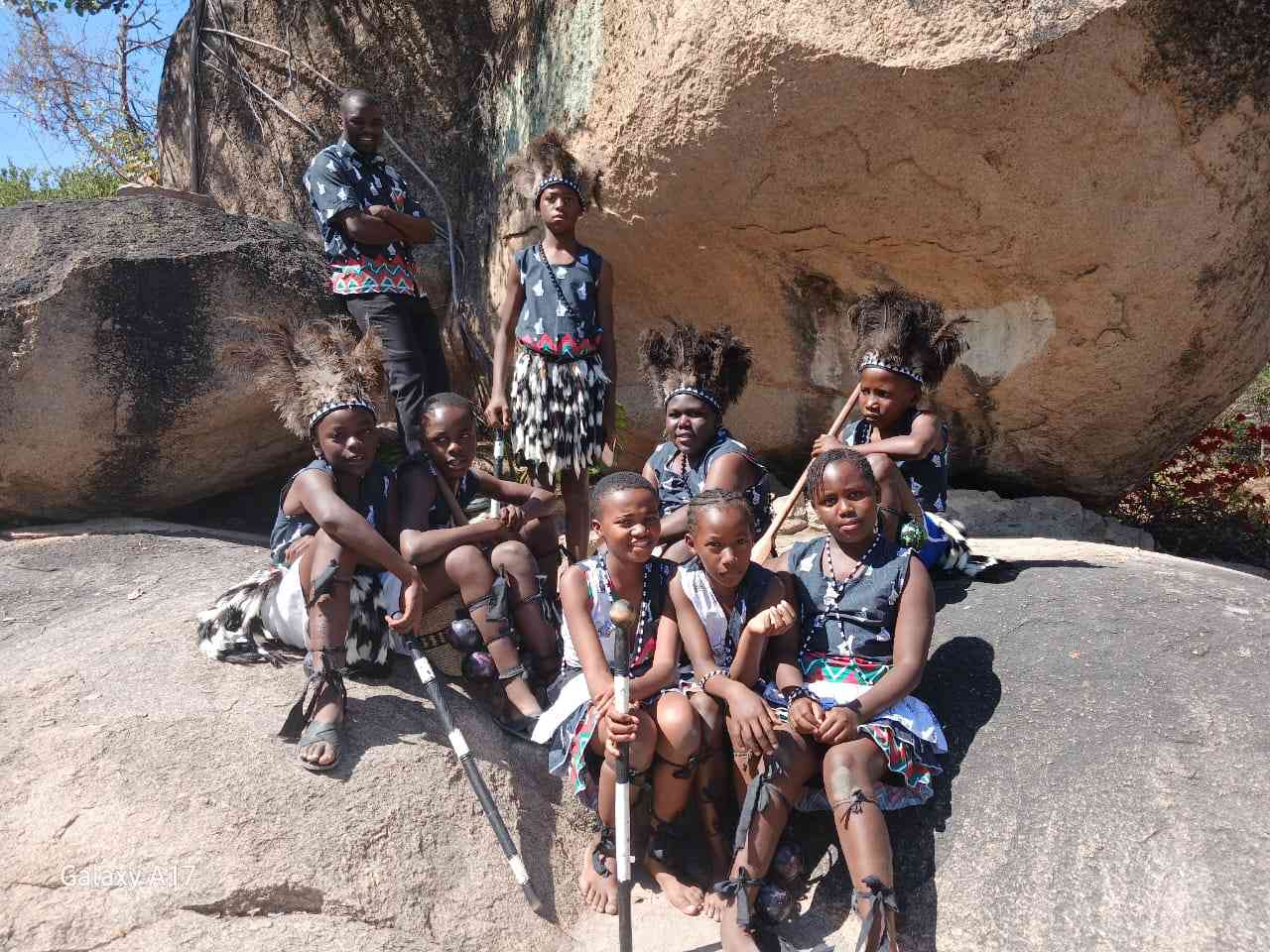
Traditional drums echoed through Panyatsime Cultural and Heritage Centre in Zengeza, Chitungwiza, last Monday as pupils, students, teachers and cultural custodians gathered to commemorate Africa Day through music, storytelling and heritage education.
For many of the young visitors, the event was more than a colourful celebration. It became a powerful encounter with African identity, tradition and history.
Panyatsime hosted learners from schools including B and P College and Best Learners Infant School in Seke under Manyame Rural District Council.
Through guided tours, cultural displays and oral storytelling linked to Zimbabwe’s heritage-based curriculum, learners explored the importance of preserving traditional practices in an era increasingly shaped by global culture.
Observed annually on May 25, Africa Day commemorates the founding of the Organisation of African Unity in 1963, now the African Union, and celebrates continental unity, liberation and cultural pride.
At Panyatsime, the occasion focused on reconnecting young Zimbabweans with their roots.
Students moved between traditional huts examining artefacts, cooking vessels, musical instruments and other symbols of Zimbabwean life while elders explained their meaning and significance.
B and P College principal Godwin Mavurayi said such visits are critical in helping learners understand their identity and cultural inheritance.
- ED drawn into fight over shrine
- Nyatsime residents risk arm, leg crossing flooded river
- 60 years of African unity: What’s failed and what’s succeeded
- Applying ubuntu template in climate change
Keep Reading
“Our learners are growing up in a generation heavily shaped by foreign cultures through technology and social media,” he said.
“When they come to a place like this, they begin to appreciate who they are as Africans and Zimbabweans. They see that our traditions are not backward but form the foundation of our values, discipline and identity.”
Mavurayi said the visit brought Zimbabwe’s heritage-based curriculum to life by allowing learners to interact directly with cultural practices often confined to textbooks.
“The heritage-based curriculum is not supposed to remain theoretical,” he said. “When students see traditional grain storage, cooking methods, cultural symbols and hear oral histories, learning becomes alive.
It creates a deeper appreciation of history and culture.”
He added that centres such as Panyatsime help restore values of Ubuntu, unity and responsibility that are increasingly being eroded by western influence.
Children eagerly participated in activities throughout the day, with some trying traditional instruments for the first time while others listened to stories about liberation struggles, indigenous knowledge systems and community life.
Best Learners Infant School representative Patience Kapere said exposing children to culture at an early age helps shape confidence and pride.
“When children understand their roots, they grow up confident about who they are. They develop pride in their language, traditions and history,” she said.
Kapere warned that modern lifestyles and digital media are distancing children from local culture.
“Most children now spend a lot of time on phones and television, consuming foreign content,” she said.
“Bringing them to a cultural centre allows them to experience something real and authentic. They touch, see and hear their ancestors’ stories. That kind of learning stays with them for life.”
She described Panyatsime as more than a tourist attraction, saying it plays a vital educational role in shaping character, patriotism and cultural awareness.
Panyatsime director Rumbidzai Dihwa previously said the centre was established to preserve African traditions and reconnect younger generations with their heritage.
“Our vision is to preserve, promote and pass on African culture to future generations,” she said.
“We realised many young people were growing up without understanding their traditions, customs and indigenous knowledge systems. The centre was created to bridge that gap.”
Dihwa said the centre is designed to offer practical cultural experiences rather than static displays.
“We want visitors to experience culture, not just observe it,” she said. “When learners come here they interact with traditional practices, architecture, storytelling, music and food. That practical engagement creates lasting appreciation.”
Throughout the commemorations, students also learned about traditional leadership systems, indigenous environmental conservation methods and communal living practices that sustained African societies before colonialism.
As the day ended, learners posed for photographs beside traditional huts while mbira music floated across the centre.
Behind the singing, dancing and storytelling was a deeper mission — preserving Africa’s identity through its children.
In an age of rapid globalisation and cultural homogenisation, institutions such as Panyatsime continue to play an important role in protecting heritage and reminding young Africans of the traditions and values that define them.