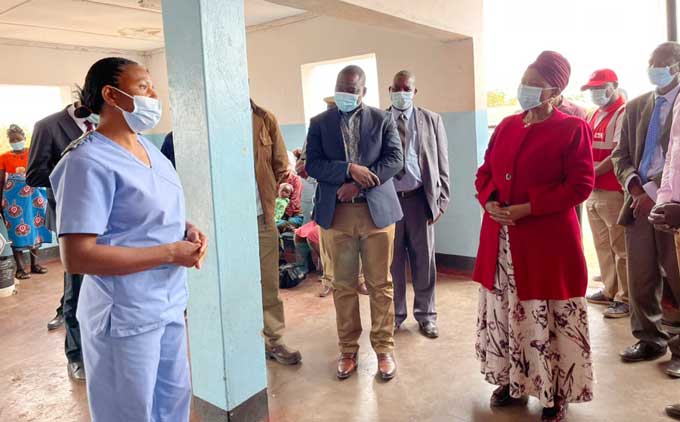
By Moses Mugugunyeki Despite passing his Grade 7 at Kwite Primary School in Mangwe’s Empandeni ward, Phakamani Dube (not real name) left his home area for Botswana to seek greener pastures.
He spent almost a decade in Botswana and only returned home when he was sick.
“I was taken to Empandeni Hospital and I had to undergo a number of tests, including for HIV,” said Dube.
“I tested HIV positive and went through counselling before I was initiated on antiretroviral treatment [ART).
“After a few months, I had gained some strength and I collected my three-month stock of drugs from the hospital before I went back to Botswana.”
Dube said he had challenges getting the life-saving drugs and was forced to default on treatment.
“In Botswana, it was difficult to get the drugs because of the nature of the job that I was doing and that I was not documented.”
Dube said he was, however, deported by the Batswana authorities after they found him lying helplessly in his apartment.
- Chamisa under fire over US$120K donation
- Mavhunga puts DeMbare into Chibuku quarterfinals
- Pension funds bet on Cabora Bassa oilfields
- Councils defy govt fire tender directive
Keep Reading
“I was deported through Plumtree border post and I got assisted by the Red Cross, through the Restoring Family Links programmes, who referred me to the Doctors’ Without Borders,” he said.
“I was attended to by the Doctors Without Borders and I got the appropriate medicine.
“I am not going back to Botswana anytime soon, as I am recovering here in Plumtree town.”
Dube as well as other mobile and migrant populations, including people living along the borders are at higher risk to default and have poor adherence to ART treatment.
According to the Zimbabwe Population-based HIV Impact Assessment survey, HIV prevalence for Matabeleland South province, whose most communities are on the fringes of the South African and Botswana boundaries, is the highest in the country at 17,6%.
Infection rates in the border towns of Beitbridge, Mutare and Victoria Falls are among the highest in the country, confirming that such towns and adjacent communities remain significant epicenters of the HIV and Aids epidemic.
Vimbai Muguti, sister-in-charge at Chiwenga Clinic in Muzarabani’s ward 24 on the Zimbabwe-Mozambique border said they were finding it difficult to track some of the clients they would have initiated on treatment.
“The challenge that we have with some of our clients is that when we initiate them on ART, they collect their medicine and go for good,” she said.
“You cannot track clients in Mozambique and even our own locals; they can go across the border for good, returning when they are seriously ill.”
Muguti said successful tracking and tracing of people living with HIV who fail to initiate or return to treatment allows targeted HIV interventions that help patients return to treatment or document those that would have died.
Communities along the border areas are marginalised and grapple with limited and poor-quality health services, long distances to health facilities and a shortage of skilled health workers.
As such, people living with HIV fail to initiate ART while those already on treatment often miss appointments and fail to return to care/treatment.
Marginalised communities, of which border areas are part of, have the highest prevalence rates of child marriage. Chiredzi in Masvingo province, Chipinge, Chimanimani and Nyanga in Manicaland province, Mudzi in Mashonaland East province, Mt Darwin, Rushinga, Muzarabani, Mbire and Guruve in Mashonaland Central province, Kariba in Mashonaland west province, as well as Binga in Matabeleland North province, among others top the list of child marriage “hot spots” of women who married before the age of 18.
National Aids Council (NAC) district Aids coordinator for Chimanimani Pricilla MacIsaac said it was no coincidence that high rates of child marriage correlate with high rates of HIV infection.
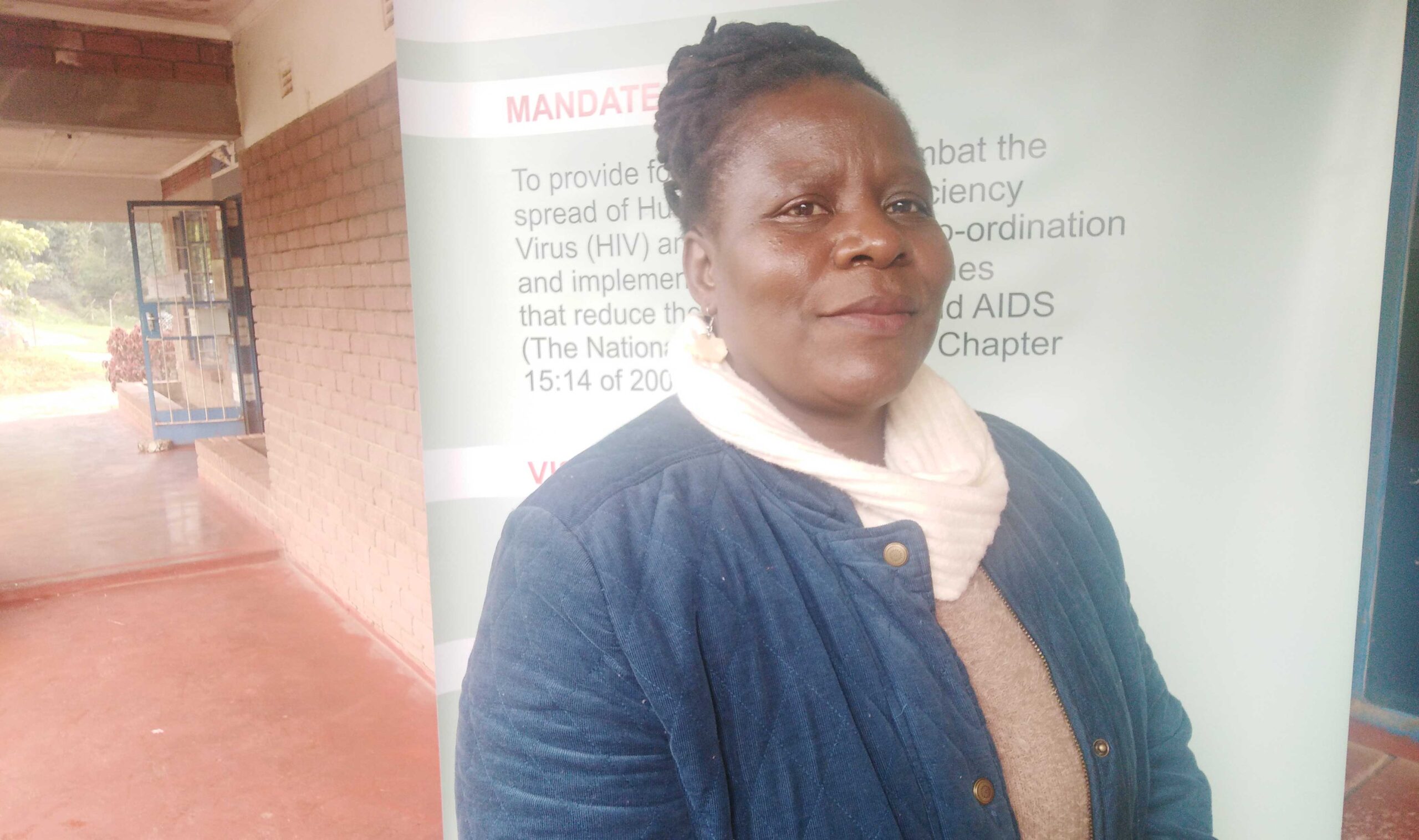
“We have challenges in areas along the border where perpetrators of child marriages skip the border into Mozambique or South Africa when they commit crimes,” MacIsaac said.
“These are the same communities that have high HIV infection rates and disseminating HIV and Aids information in such communities is difficult as they are mobile populations.”
MacIsaac said in 2019 eight girls below the age of 14 fell pregnant and were booked at antenatal clinics in Chimanimani district while 1 185 girls between the ages of 15 and 19 presented at health centres with pregnancies.
In 2020, 13 girls under the age of 14 presented themselves at health centres with pregnancies.
“This disheartening as we are trying to stop new infections among adolescent girls and young women, especially in these communities along the border lines,” MacIsaac said.
“We have engaged community leaders, including traditional leaders to work together and curb child marriages while as NAC and our partners we are working on a number of programmes such Dreams, Brotha2Brotha and Sista2Sista, among others with the aim of reducing HIV incidence among adolescent girls and young women.”
NAC CEO Bernard Madzima on Thursday told journalists that Zimbabwe has been doing well in its HIV intervention programmes despite challenges.
“I am glad to note that the national response has largely recovered and has already achieved the 90-90-90 targets, where-in, 95.6% of people infected with HIV now know their status, 95.6% also are on treatment while 93.2% are virally suppressed,” Madzima said.
“These achievements of global fast targets have set us on an irreversible course to achieve the 95-95-95 targets by 2025.
“We have also managed to integrate Covid-19 and non-communicable diseases within the response as we aim to achieve the health target in the National Development Strategy 1 and the eventual ending of Aids by 2030.”
Madzima conceded that adolescent girls and young women were among the hardest hit by new HIV infections.
“Latest HIV estimates have indicated that the majority of new HIV infections continue to occur among key populations and adolescent girls and young women,” he said.
“We, are, therefore sharpening the focus of our prevention interventions towards these groups and in this regard, the National Aids Council and our partners have introduced HIV prevention models, through which we deliver targeted services through differentiated care approaches.
“We are also optimising the treatment programme to prevent early death and avoid emergence as well as management of non-communicable among those on treatment.”
HIV and Aids remain major challenges affecting the globe and our sub-region, which bears 68% of the 37,7 million infected with HIV globally.
Of these, Zimbabwe is home to an estimated 1,3 million people living with HIV.
The HIV situation also took a knock from emergence of Covid-19, which worsened the plight of people living with HIV as they were unable to easily access some services while HIV prevention services were heavily disrupted especially in 2020.