Something changed this week. Something big.
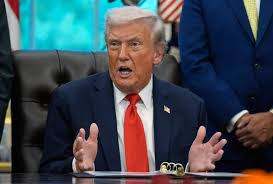
On Wednesday morning, April 8, 2026, as I am writing this column, markets around the world are reacting to news that US President Donald Trump has agreed to a two-week ceasefire with Iran. After five weeks of war, a closed Strait of Hormuz, and oil prices that at one point flirted with US$115 a barrel, traders who had been holding their breath finally exhaled. The result has been one of the most dramatic single-day market moves in years.
Trump posted on Truth Social that he was suspending attacks on Iran for two weeks after receiving what he called a “10-point proposal” from Iran that is a “workable basis on which to negotiate.” Iran, for its part, agreed to reopen the Strait of Hormuz — the narrow waterway through which roughly 20% of the world’s oil normally flows. Pakistan played the role of go-between in the deal.
Markets immediately began pricing in a new world. If the Strait stays open, oil supply returns to normal. If oil supply returns to normal, fuel costs come down. If fuel costs come down, inflation eases. And if inflation eases, the Federal Reserve has more room to think about cutting interest rates rather than raising them. That chain of thinking is what pushed stocks up so sharply and oil down so hard in a single morning.
But here is something important: even the people celebrating this deal are cautious. US Vice President JD Vance called it a “fragile truce”. Ed Yardeni, one of Wall Street’s most respected strategists, said the bottom for markets may be in — but warned that “a two-week pause is not a resolution.” Two weeks from now, we may be right back to where we started if talks collapse.
Let me be honest with you here. Over the past five weeks, as war raged and markets struggled, I made some personal decisions to buy certain stocks that I felt had become unreasonably cheap. I am not going to tell you what to buy — that is not what this column is for. But I will explain the thinking, because it is a lesson that applies to every reader.
When markets fall because of fear — not because companies have suddenly become bad businesses — you sometimes get the opportunity to buy good companies at prices that make no sense. The Iran war created exactly that kind of fear-driven selldown. Stocks that had nothing to do with oil or the Middle East fell alongside everything else, simply because investors panicked and sold first, asked questions later.
Technology stocks like Nvidia and AMD fell sharply. Airlines fell as jet fuel fears took hold. Financial stocks fell on recession worries. Some of these moves made sense. Others were what experienced investors call “collateral damage” — good companies dragged down by a panic that was not specifically about them.
- BCC flights multiple tenders
- In Full: Nineteenth post-cabinet press briefing: July 05, 2022
- Byo City polishes Manica Diamonds
- Bullets shoot down Chiefs
Keep Reading
Today, those stocks are bouncing hard. Nvidia and AMD are up 4% to 10%. Airlines are surging — Delta jumped 12% this morning on strong earnings and the ceasefire news combined. Tech stocks broadly are leading the rally. This is what happens when the fear lifts. The market remembers that these were good companies all along.
At Streetwise Economics, we use a tool called Monte Carlo simulation to model how uncertain events might affect financial markets. This is the same framework used by professional risk managers, hedge funds, and central banks. In simple terms, it runs thousands of different possible futures and shows you the range of outcomes you should expect.
Before the ceasefire, our models were running four scenarios: a major US strike on Iran driving SPY down 5-8%, a delayed deadline keeping markets flat, a ceasefire causing a 3-5% relief rally, and a catastrophic oil supply collapse pushing SPY down 10-15%. We assigned a 15% probability to the ceasefire scenario — low, but not zero.
What has actually happened today sits right in the middle of our ceasefire scenario — a strong relief rally, oil collapsing, tech leading. The modelling did not tell us exactly what would happen. No model ever does. What it told us was: if a ceasefire occurs, these are the assets likely to rise the most and fall the most. That framing helped identify opportunities in advance rather than chasing the move after it happened.
For the weeks ahead, the Monte Carlo framework now shifts. The two biggest risks are: first, that talks collapse within two weeks and we are back to war — which would likely send markets down sharply again, perhaps harder than before because expectations have been reset upward. Second, that even if the deal holds, the inflationary damage from five weeks of US$110+ oil has already been done. US inflation numbers for March will be released on April 10. If they come in hot, the Federal Reserve will be in a very difficult position.
I want to end with something that does not get said enough in financial journalism, but which I think every Zimbabwean reader deserves to hear plainly.
The people who made money today are the ones who had money to invest five weeks ago, when fear was at its peak and prices were low. Institutional investors — the hedge funds, the big asset managers, the wealthy individuals who understand how markets work — they buy when others are selling in panic. They were buying while the war raged and prices were cheap. Today, they are counting their gains.
This is not a conspiracy. It is how markets work. The system rewards those who understand it, who have capital, and who can control their emotions when everyone else is afraid. And it punishes those who panic-sell at the bottom, watch prices recover, and then buy back in after the gains have already been made.
The question for us — as Africans, as Zimbabweans, as individuals who are often excluded from these conversations — is how do we get into a position where we, too, can participate in these moments? The answer starts with financial education. With understanding how markets work. With building savings that can be deployed when opportunities arise. It starts with conversations like this one.
Markets remain volatile and this ceasefire is fragile. I will be doing a full live analysis on the Streetwise Economics YouTube channel covering the ceasefire implications, the oil market collapse, and what this means for investors going forward. Subscribe so you do not miss it.
For deeper analysis, research reports, and models, visit my website at www.streetwiseeconomics.com. If you want personal coaching on understanding financial markets, building an investment mindset, or interpreting market data for your own financial decisions, coaching services are available through the website as well.
Remember: this column is my personal view as an economist. Nothing here is investment advice. But the information is real, the analysis is honest, and the goal is always the same — to give ordinary people access to the same quality of economic thinking that wealthy investors take for granted every day.
*Isaac Jonas is the founder of Streetwise Economics, an independent applied economics and financial education practice based in Abbotsford, BC. He holds a Master of Food and Resource Economics and an MA in Resource, Environment and Sustainability from the University of British Columbia, and a BSc Economics from the University of Zimbabwe. He is a Mastercard Foundation scholar and writes a regular economics and investing column for The Standard (Zimbabwe). Streetwise Economics produces applied economic research, market analysis, and financial education content for individual investors, regional governments, and community organisations.