In an era where cars can now drive themselves, keep you in the same lane and massage you while you drive, there are motor purists out there who do not want all that.
They prefer old legendary cars that make them feel alive when behind the steering wheel.
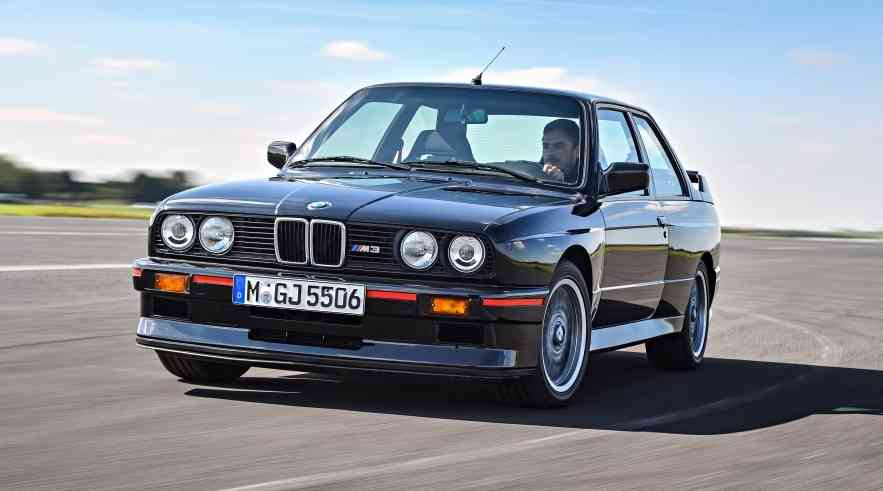
Among the legendary cars is a lightweight machine from Germany, the BMW E30 M3 Sport Evolution.
The E30 M3 Sport Evolution is not merely a car, it is a mechanical thesis on the purity of driving. In the pantheon of automotive history, few vehicles have managed to transcend their era to become permanent benchmarks of excellence.
The Sport Evo or the Evolution III, as it is known to the purists, represents the absolute zenith of the E30 generation, a machine forged in the heat of Group A Touring Car competition and refined for the street with a singular, uncompromising focus.
To understand its worth today, one must look past the rising auction prices and see the car for what it was in 1990: the ultimate evolution of a racing legend.
The timelessness of the E30 M3 Sport Evolution begins with its stance. While the standard E30 was a handsome, boxy executive sedan, the M3 transformed it into something muscular and purposeful.
The Sport Evolution took that aggression a step further. It retains the iconic "box-flared" wheel arches originally needed to accommodate wider racing tyres, but adds functional aerodynamic details that feel modern even thirty years later.
- Chamisa’s US$120k jackpot jolts govt
- Penchant for luxury in midst of abject poverty
- Chamisa’s US$120k jackpot jolts govt
- Penchant for luxury in midst of abject poverty
Keep Reading
The most striking visual cues are the adjustable front splitter and rear wing. These weren't for show, they featured three distinct settings: Normal, Sport, and Monza.
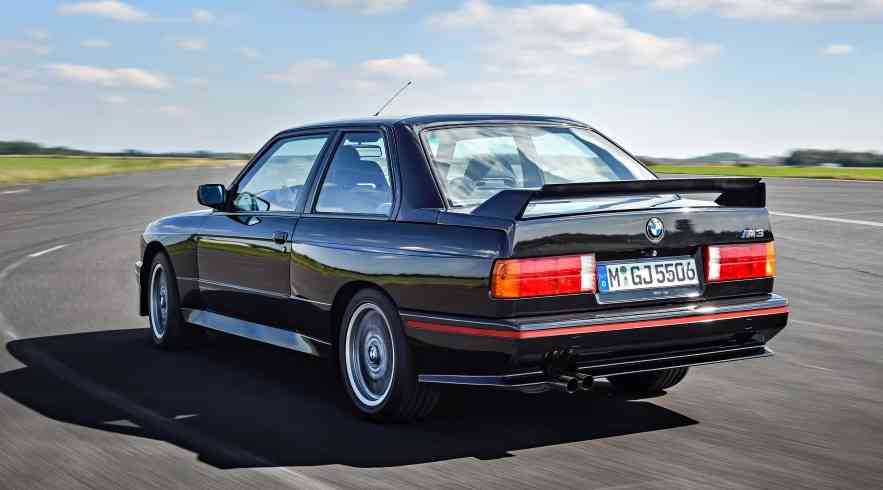
By manually adjusting these carbon-fibre components, a driver could literally tune the car’s downforce for a high-speed track or a winding mountain pass.
Sitting 10mm lower than the standard M3 on its bespoke 16-inch BBS cross-spoke wheels, the Sport Evo looks like it is perpetually coiled, ready to strike an apex.
Inside, the cabin is a masterclass in driver-centric ergonomics.
There are no screens to distract, no haptic sliders to frustrate.
Instead, you are greeted by high-bolstered Recaro bucket seats finished in Anthracite fabric with M-Technic tri-colour accents.
The steering wheel, gear knob, and handbrake lever are wrapped in Alcantara—a material that feels as functional today as it did then.
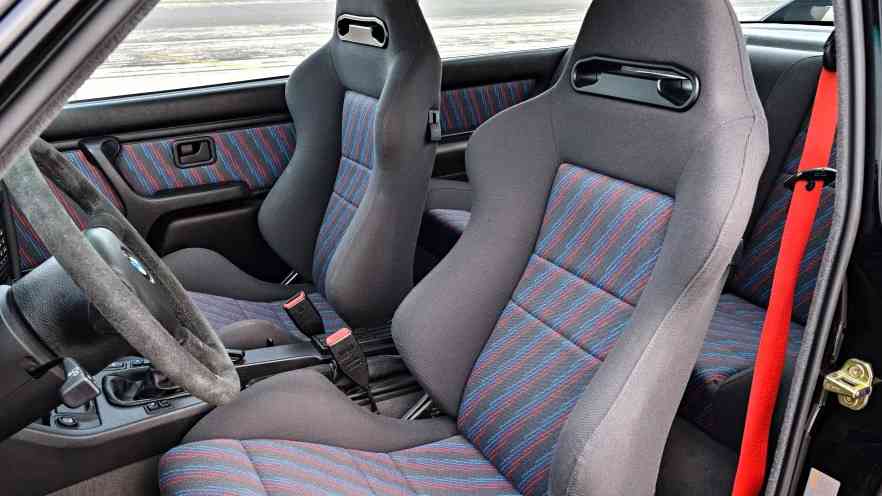
It is a cockpit designed for work, stripped of front fog lights to make room for functional brake cooling ducts, proving that in a Sport Evo, performance always dictates form.
At the core of the Sport Evolution’s legend is the 2.5-litre S14 inline-four engine. While the world moved toward heavy V8s and complex turbocharging, BMW stayed true to a high-revving, naturally aspirated philosophy.
To achieve the 2.5L displacement, BMW didn’t just bore out the existing 2.3L block, they re-engineered it.
They fitted larger valves, more aggressive camshafts, and added oil jets under the pistons for better cooling. The result was an engine that didn't just run, it sang.
Driving a Sport Evo is a visceral experience of escalating sound.
Below 4 000 rpm, the engine is civil, almost humble. But as the needle climbs toward the 7 000 rpm redline, the individual throttle bodies open wide, and the S14 enters a frantic, mechanical crescendo.
It is a raw, metallic bark that modern turbocharged engines simply cannot replicate.
With 238 horsepower pushing only about 1 200 kg, the power-to-weight ratio remains impressive by modern standards, but it’s the throttle response that truly defines the car.
The engine reacts to the slightest flex of your right foot with an immediacy that makes the car feel alive in your hands.
The bridge between that masterpiece of an engine and the rear wheels is the Getrag 265 five-speed manual gearbox.
In a nod to its racing pedigree, the Sport Evo features a dogleg layout, placing first gear down and to the left.
This ensures that the most frequently used gears on a track — second and third, or fourth and fifth — are aligned in a straight vertical plane for faster shifting.
The gear shift is not smooth in the way a modern luxury car is, it is more mechanical. You feel the synchros engaging through the lever.
Combined with a limited-slip differential that provides a 25% lock-up, the Sport Evo offers a level of mechanical transparency that is disappearing in the age of torque vectoring and electronic stability control.
On the road, the Sport Evolution doesn't rely on sheer brute force to impress. Instead, it relies on accuracy. The steering is uncommonly communicative.
Through the thin-rimmed Alcantara wheel, you feel every change in road texture, every grain of asphalt, and exactly how much grip the front tyres have left.
The chassis balance is neutral to a fault. Because the four-cylinder engine is relatively light and sits further back in the engine bay, the E30 M3 avoids the nose-heavy understeer common in many performance cars of its era.
You don’t wrestle a Sport Evo, you guide it. It rewards smooth inputs and punishes sloppiness, making the driver an essential component of the vehicle's speed.
In the current market, a pristine BMW E30 M3 Sport Evolution can command prices well into the six-figure range. But its worth isn't just a financial figure.
Its value lies in what it represents: the end of an era.
It was the final version of the most successful touring car in history. With only 600 units produced (exclusively in Jet Black or Brilliant Red), it is a rare artifact of a time when homologation meant the manufacturer had to build a road car that was as close to the race car as possible.
The Sport Evo is the antithesis of the modern "super-sedan."
It doesn't have 600 horsepower, and it won't do 0–100 km/h in 3 seconds. Instead, it offers something increasingly rare: connection.
In an era where cars are becoming computers on wheels, the Sport Evolution remains a physical, analogue device. It requires skill, it demands attention and it provides a sensory reward that a screen can never emulate.
Its timeless look isn't just about the 80s aesthetic, it's about the honesty of its design. Every vent is open, every wing is adjustable, and every flare is there for a reason.
It is a car that looks as fast standing still today as it did when it first rolled off the line in Munich.
The E30 M3 Sport Evolution is a reminder that the greatest cars are not defined by their numbers, but by how they make you feel.
It is a symphony of intake noise, a masterpiece of balance, and a testament to BMW’s Ultimate Driving Machine era.
For the collector, it is a blue-chip investment. For the enthusiast, it is a dream.
For the driver, it is a soul-stirring machine that proves that while technology may evolve, the fundamental joy of a light car, a high-revving engine and a perfect chassis is truly eternal.