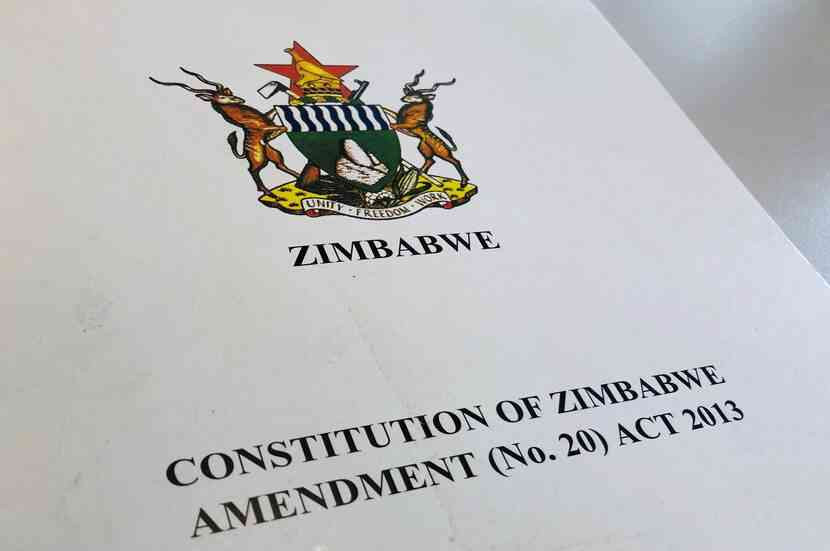
Zimbabwe once again finds itself at a constitutional crossroads. The ongoing public hearings on the Constitutional Amendment Bill No. 3) were meant to embody democratic consultation a platform where citizens shape the governance framework of their nation.
Instead, what is unfolding raises serious concerns about legitimacy, transparency, and the very essence of participatory democracy.
At the heart of the issue is not merely the content of the proposed amendments, but the process through which they are being advanced.
A constitution is not an ordinary legal document; it is a social contract between the state and its people.
As such, any attempt to amend it must be rooted in inclusivity, openness, and genuine public engagement.
However, recent developments suggest that Zimbabwe’s constitutional amendment process is veering dangerously away from these principles.
The withdrawal of key opposition figures—Tendai Biti, Jameson Timba, and Lovemore Madhuku—from the public hearings is a significant red flag.
Their boycott, citing violence, intimidation, and what they describe as a “stage-managed” process, speaks volumes about the current state of affairs. When seasoned political actors and constitutional advocates disengage from a process meant to be inclusive, it signals a breakdown in trust.
- Zim headed for a political dead heat in 2023
- Paranoid Zanu PF regime cannot be trusted with solving Zim’s problems
- Zec failing to level playing field: CiCZ
- Take Money clinches sponsorship deal
Keep Reading
Their criticism is not without merit. Reports of chaotic scenes at venues such as the City Sports Centre in Harare, where proceedings were disrupted by rowdy youths, paint a troubling picture.
Allegations that individuals were blocked from speaking, or that microphones were forcibly taken away from dissenting voices, undermine the very idea of public consultation.
The assault of human rights lawyer Douglas Coltart further deepens concerns, suggesting that the environment is not only exclusionary but potentially dangerous.
Democracy thrives on the free exchange of ideas, including dissent. When citizens are intimidated or silenced, the process ceases to be democratic and becomes performative.
The opposition’s characterisation of the hearings as orchestration rather than consultation may sound harsh, but the events on the ground lend credibility to that claim.
Equally concerning are reports from other parts of the country, such as Somabula near Gweru, where clashes between ruling party activists and opposition members disrupted proceedings.
The alleged blocking of participants, particularly women, from entering venues raises questions about who is being allowed to participate and why.
When access to a public hearing is controlled or manipulated, the outcomes can hardly be said to reflect the will of the people.
The situation becomes even more complex when examining the nature of the contributions being made at these hearings.
In places like Kazangarare, there appears to be a sudden and coordinated push for extending presidential terms beyond the proposed seven years to as much as ten years.
While citizens are entitled to express their views, the uniformity of these positions raises eyebrows.
Genuine public opinion is typically diverse and often contradictory; when all speakers echo the same sentiment, it invites scrutiny.
This suspicion is reinforced by allegations of financial incentives influencing participation.
Claims that individuals were promised US$20 for speaking in support of the bill, while others received smaller amounts simply for attending, cast a shadow over the authenticity of the process.
If true, such practices reduce constitutional consultation to a transactional exercise, where opinions can be bought rather than freely expressed.
Moreover, reports of gatekeeping where participants are vetted and those suspected of opposing the bill are removed from speaking queues further erode confidence.
A constitutional process that filters out dissent is fundamentally flawed. It creates an illusion of consensus while silencing alternative perspectives.
This is not democracy; it is control.
The content of the proposed amendments also warrants careful consideration.
Discussions around extending presidential terms, whether to seven or ten years, are particularly contentious.
Term limits are a cornerstone of democratic governance, designed to prevent the concentration of power and ensure regular accountability. Any attempt to extend them must be approached with caution and broad consensus.
Voices like that of Ward 22 councillor Evelyn Mhuru, who argues that President Emmerson Mnangagwa should serve only five years, highlight the diversity of opinion that should characterize such debates.
Her concerns about the appointment of judges also touch on the critical issue of separation of powers—another pillar of democracy.
However, when such voices are drowned out by orchestrated support for longer terms, the integrity of the process is compromised.
It becomes less about what is best for the country and more about consolidating power.
The broader implication of these developments is a growing crisis of legitimacy.
A constitution amended through a flawed process is unlikely to command respect or compliance. It risks being seen as an imposition rather than a collective agreement.
This, in turn, can lead to political instability, as citizens lose faith in the system and seek alternative means of expressing their grievances.
Zimbabwe has been here before.
The country’s constitutional history is marked by periods of contestation and reform.
The 2013 constitution was widely praised for its inclusivity and the extensive consultation that preceded it. It set a benchmark for how constitutional processes should be conducted. The current situation, however, appears to be a step backward.
To restore confidence, there is an urgent need for course correction. First, the environment at public hearings must be secured to ensure that all participants can speak freely without fear of intimidation or violence.
Law enforcement agencies must act impartially to protect citizens rather than being perceived as enablers of disruption.
Second, the process must be genuinely inclusive. This means allowing all voices to be heard, regardless of political affiliation.
Gatekeeping and selective participation have no place in constitutional reform.
Third, transparency must be enhanced. Allegations of financial incentives should be investigated, and measures should be put in place to ensure that participation is voluntary and not influenced by material gain.
Finally, political leaders must recognize that the legitimacy of a constitution is more important than any short-term political advantage.
A flawed process may achieve immediate objectives, but it will undermine the stability and credibility of the governance system in the long run.
The current trajectory, marked by allegations of violence, intimidation, and manipulation, is deeply concerning.
For the sake of the nation’s future, it is imperative that the process be recalibrated to reflect the true spirit of democracy one that values participation, respects dissent, and upholds the will of the people.
Only then can Zimbabwe emerge with a constitution that is not only legally sound but also morally and politically legitimate.
*Gary Gerald Mtombeni is a Harare based journalist. He writes here in his personal capacity. For feedback Email [email protected]/ call: +263778861608