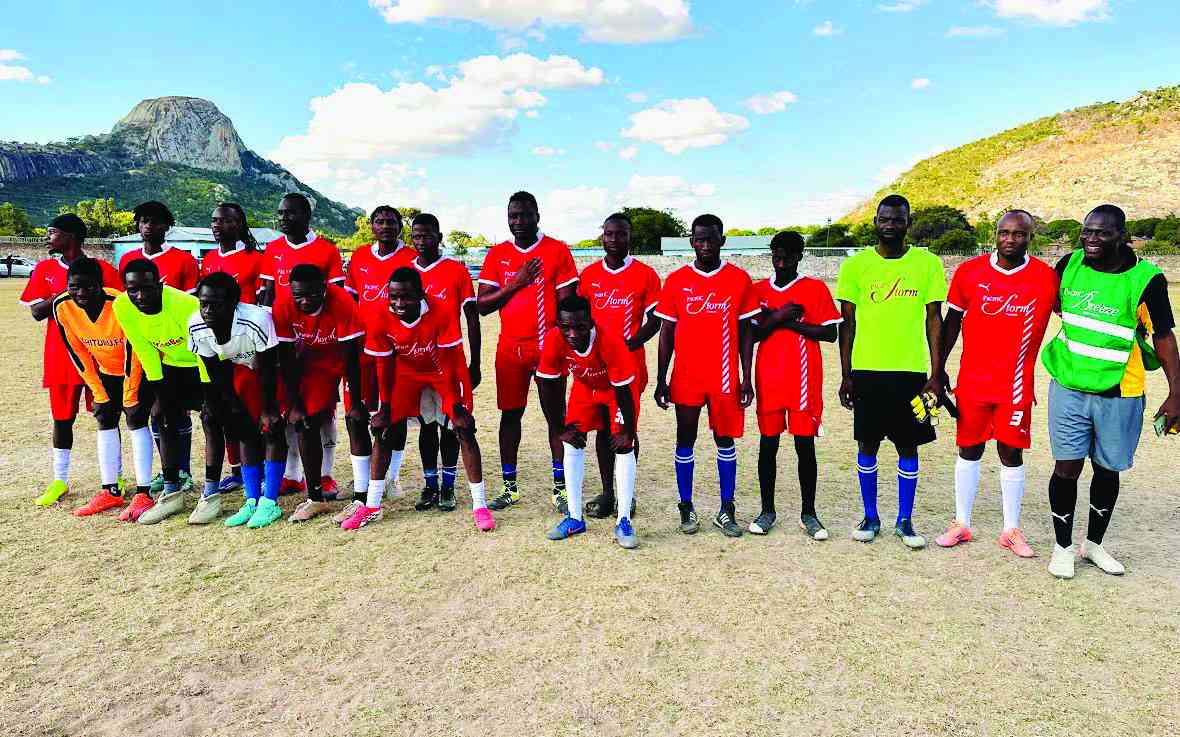
Mutoko City Football Club head coach Forget Jonasi has hailed his side's remarkable run to the final of the 2026 Pacific Bhora Nsunku Zonké Tournament, describing it as the reward for months of hard work, discipline and commitment, while also celebrating the unifying power of grassroots football.
Mutoko City booked their place in the final after overcoming a series of tough opponents, including Mutoko Prisons FC, Chitubu FC, Makaha FC, Snippers FC, Murewa City FC and Deportivo LA Mutoko.
The impressive campaign now leaves them one match away from lifting one of the country's most exciting social soccer trophies.
For Jonasi, the journey to the final is about much more than football results.
"Qualifying for the final is a remarkable achievement for our club," said Jonasi.
"It is a testament to the hard work, discipline and commitment displayed by the players throughout the competition. We are proud of what we have accomplished so far, but our focus remains firmly on the final."
He said the team was determined to reward its loyal supporters with a memorable performance when they take to the field for the championship decider.
"Reaching this stage is an honour, and we are determined to give our supporters a performance worthy of the occasion," he added.
- Pacific Bhora tourney: Power of social soccer hailed
Keep Reading
The 2026 Pacific Bhora Nsunku Zonké Tournament has emerged as one of Zimbabwe's largest grassroots football initiatives, bringing together community clubs, social teams and local football giants from across the country.
The competition, which kicked off on May 17 at Chikondoma Grounds in the Murewa-Mutoko route, has drawn teams from virtually every corner of Zimbabwe and will culminate in a grand finale at Gwanzura Stadium in Harare on December 12.
The opening leg featured Mutoko Prisons FC, Chitubu FC, Makaha FC, Snippers FC, Murewa City FC, Deportivo LA Mutoko and eventual finalists Mutoko City FC.
Following the Murewa-Mutoko matches, the tournament expanded to Chitungwiza last weekend, where Villagers FC, Chibhanguza FC, Rockview FC and Touchers FC battled for supremacy at Jonas Ground.
The football festival is also set to pass through Marondera today, then Norton, Chegutu, Chinhoyi, Zvishavane, Gweru, Mutare, Kariba, Chivhu, Masvingo, Shamva, Highfield and Ruwa, underlining its national reach.
Among the notable teams taking part are Marondera University FC, Kariba Bullets, Chinhoyi Bullets FC, ZRP Chivhu FC and Mufakose Legends.
The tournament structure includes knockout stages featuring a Round of 16, quarter-finals and semi-finals before the much-anticipated final.
While the competition offers clubs the chance to compete for silverware, Jonasi believes its greatest strength lies in the way it brings communities together and creates opportunities for personal growth and networking.
"Social soccer plays a vital role in bringing people together regardless of their backgrounds," he said. "It promotes friendship, teamwork and mutual respect while creating opportunities for individuals to connect and build meaningful relationships."
He added that the benefits of the tournament extend beyond the boundaries of the football pitch.
"Beyond the football pitch, it strengthens community bonds, encourages healthy lifestyles, and provides a platform for networking among players, supporters and local stakeholders," Jonasi noted.
The Mutoko City coach also believes the strong support structures found in social soccer can provide a blueprint for the country's professional football academies. According to Jonasi, integrating community participation into player development programmes would not only produce better footballers but also responsible citizens.
"Absolutely. The strong sense of community support that exists in social soccer can serve as a valuable model for professional academies," he said.
"When academies engage local communities, encourage stakeholder participation and create an inclusive environment, they can develop not only talented footballers but also responsible individuals."
Jonasi believes blending professional coaching with the spirit of grassroots football is essential for the long-term growth of the game in Zimbabwe.
"Combining professional training with community-driven support structures can significantly enhance player development and long-term success," he said.
As Mutoko City prepares for the biggest match in the club's history, it carries not only the hopes of its supporters but also the aspirations of a tournament that has become a symbol of unity, inclusion and grassroots football development across the country.
For Jonasi and his players, lifting the Pacific Bhora Nsunku Zonké trophy would be the perfect reward for a campaign built on hard work—and for a competition proving that social soccer can inspire entire communities.