BY BHEKILIZWE BERNARD NDLOVU
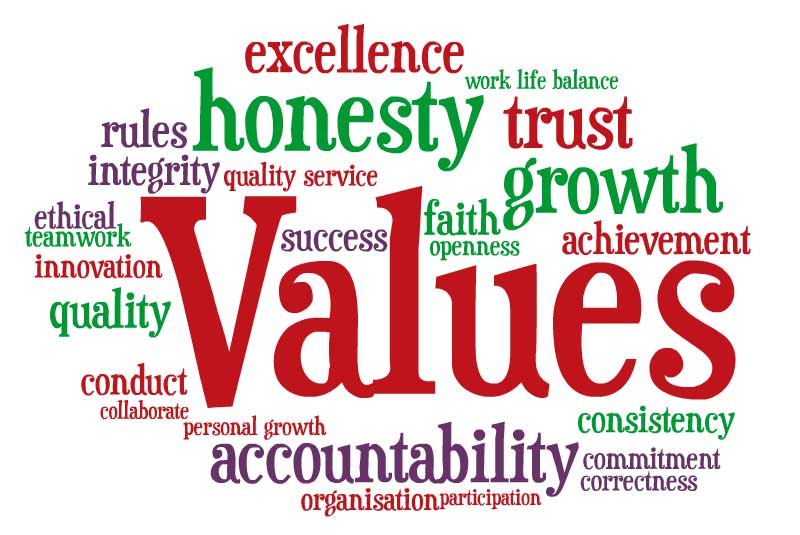
Last week we touched on the very interesting subject of values and how most organisations wish to establish clear values and have their employees come in to live and work by them.
We argued that there is the challenge of not having working methods to achieve this and then organisations going on to claim that they have a clear set of values and culture and when they sit in interviews to determine who comes in and who doesn’t, exclude those that don’t seem to qualify regarding their ‘values’ and ‘culture.’
I spoke at length about how authentic and sincere organisations need to understand how values are formed in the first-place learning from the natural process of value formation so that if they want to influence their workforce to espouse and live a certain set of values, they do so, using working methods.
I referred to one’s experience being critical and at the centre of value formation.
It is imperative to explore this subject further and see what we mean by the influence of one’s experience in the formation of their value system.
Let’s go back and consider Shirzad Chamine’s research finding that every child as they grow up, finds itself needing to answer the question; ‘What do I need to do to survive?’ (Chamine: 2012). We are all born with needs, both physiological and psychological needs which I sometimes call soft needs and in our pursuit of these needs, our reality and environment challenges us and in our childhood consciousness we fight the way a drama protagonist fights to fulfil a dream or goal against all odds.
My experience in the study of these needs has been that the soft ones tend to be complicated and result in behaviours we don’t even understand ourselves if challenged or denied.
- Chamisa under fire over US$120K donation
- Mavhunga puts DeMbare into Chibuku quarterfinals
- Pension funds bet on Cabora Bassa oilfields
- Councils defy govt fire tender directive
Keep Reading
This is the main reason why most informed self-development and transformation practitioners always take their client back to self-awareness, to say if one is going to transform, they need to understand what they are working with, which is themselves.
Let’s take a psychological need like the need to belong. At the very beginning of our lives, we have this need and one can argue that we are born with it, and we enjoy it especially with our mothers when we sit on their lap and feel their warmth.
It extends to the father, who, most of the time in my background came in to love, yes, but to represent that sense of discipline.
We want to be careful, as we seek to express and fulfil our need to be loved and belong, not to upset this primary care giver, the parent.
In the process of being careful, we check our own behaviours in our own childlike consciousness and decide, based on our parents’ response to our actions, to dial down certain actions in order not to lose our parent’s approval, love, and acceptance.
If, for example, I am thoroughly punished for a certain behaviour and feel that in the process I lose my primary care giver’s love and embrace, I will change to make sure I belong and as I practice that behaviour carefully, I do so supported by a survival value like harmony.
I will, consciously or unconsciously have this value that for me to be embraced in this place, I need to operate in such a manner that there is harmony in my relationship with my primary care giver.
It is important to note that harmony is an important value but in this case, it’s picked up by this person for survival and driven by the fear of not being loved, belonging and acceptance.
This character grows up holding on to this value but having picked it up in their child consciousness as they answer the question; ‘What do I need to do to survive?’
Survival does to open one up to their best creativity and performance levels because it is to a large extent driven by fear and so fear makes us get stuck on the survival brain that has no capacity for thriving and creativity.
If this character’s development is tracked, one learns that this seemingly beautiful value leads to ‘unproductive’ behaviours in their life and in our case here, in the workplace.
In their relationship with their colleagues and supervisors, they bring their primary care giver’s voice of being punished for self-expression and other behaviours.
They might not, for example, be free to participate without fear in their teams especially if participation involves disagreeing with their supervisor and risking losing the ‘love’ and belonging they deeply want to enjoy with their supervisor harmoniously.
So, you see how, a supposedly good value just haunts this poor person going back to their childhood and that indeed productivity is also affected by this because even if the individual has a brilliant idea that could shift the fortunes of an organisation they withhold it and prefer to enjoy ‘harmony’ ‘love’ and ‘belonging.’
Do they fully understand that this is the case? Maybe not and most of the time, yes, they don’t until they are coached to understand that this is what happened to them and that they did not consciously choose this unproductive behaviour but that as they sought to survive they ended up with it.
This is where self-awareness begins and if chosen, then self-development.
The formation of values is an intricate matter and if that is true, then we have some work to do in the workplace and everywhere else where we want to build healthy groups, communities, teams, organisations, and companies that can accomplish collective goals driven by shared values.
Think about this character we just explored and ask yourself the question of what happens if this person joins an organisation that has ‘free and lively participation’ as one of their values?
Remember at interview level this person comes fully coached to say they actively participate in meetings and share their views for the good of their team and because now most interviewers want the interviewees to give examples of when they really demonstrated this quality, the interviewee with share their rehearsed example much to the excitement of the employer who glees with gladness.
There is no truthful exploration of who we are, where we come from and what our values are. We are cornered to not be truthful because we need the job.
Organisations that are serious about the importance of collective values will learn from the natural process of learning values whose main component is experience.
If an employee makes a mistake and the company wants to prove a point by sending a warning to the rest of the employees, this could trigger the very fears that someone brings to the table of the organisation and send them hiding psychologically and the values we have on our walls will remain there but never in the hearts of the employees and consequently never in their behaviours.
Let’s talk more about how employers would gain from really coming up with a systematic process of value formation, negotiation and espousing in their companies in the next article.
- Bhekilizwe Bernard Ndlovu’s training is in human resources training, development and transformation, behavioural change, applied drama, personal mastery and mental fitness. He works for a South African organisation as a Learning and Development Specialist, while also doing a PhD with Wits University where he looks at violent strikes in the South African workplace as a researcher. Ndlovu worked as a human resources manager for a number of blue-chip companies in Zimbabwe and still takes keen interest in the affairs of people and performance management in Zimbabwe. He can be contacted on [email protected]