BY ROMEO MUSEMBURI
Economic sanctions are policies designed to harm the economy of the targeted country.
Sanctions can involve trade embargoes, seizure of assets, travel bans and limits on capital flows.
The aim of sanctions is usually to provide a political signal of disapproval which stop short of military action.
They can be imposed by one country unilaterally, but are more effective if they can be applied multilaterally by many countries.
Sanctions have been imposed by the United Nations, the United States (US) and the European Union (EU) in a variety of cases, some more successful than others.
Sanctions aim to put pressure on the target country to change a certain behaviour, but in some cases can encourage the country to find new ways around the sanctions (such as increasing domestic production).
Sanctions also impose economic costs on the country which levied them.
- Chamisa under fire over US$120K donation
- Mavhunga puts DeMbare into Chibuku quarterfinals
- Pension funds bet on Cabora Bassa oilfields
- Councils defy govt fire tender directive
Keep Reading
Examples of economic sanctions:
- Limit access to capital. Capital countries can prevent countries from borrowing money on international markets, making it harder to finance government debt.
- Banning foreign direct investment. The US has prohibited US companies from being involved in trade with or invest in Iran.
- Seizing assets. Individuals associated with a particular regime can have their foreign assets seized or frozen. For instance a form of sanctions on Russia has been freezing assets of individuals associated with Putin regime. It means their foreign bank accounts can be frozen and certain individuals lose money and assets they hold abroad.
- Removing banks from SWIFT international payments. A crucial sanction on Russia 2022 was freezing the Russian Central Bank and other banks from the SWIFT international payments system. This means that although the Russian Central Bank has around US$640 billion of forex reserves it will be inaccessible. This means Russian central bank cannot provide liquidity to other banks, who will be in need of providing cash to depositors. North Korea, Iran and Venezuela have faced the same fate. In response Russia shifted to the Chinese CIPS international payments system and requested hostile countries to settle payments for gas and oil in Rubles.
- Trade sanctions. This involves banning trade from a target country, limiting their ability to export goods and or services. This can be confined to specific industries, such as arms sales or maybe more wide ranging. For instance, February 2022 UK imposed restrictions on trade and export controls against Russia’s hi-tech and strategic industries.
- Trade embargoes. A trade embargo is a much more wide-ranging ban on trade. The US has imposed embargoes (with varying degrees of support from other countries) on South Africa, Cuba, Iran, Iraq and North Korea, making it hard for these countries to export their goods.
Economic sanctions will impose various economic costs on the target country depending on the magnitude and extend of the sanctions. The effects may include:
- Devaluation in the exchange rate. With limits on capital and export, there will be less demand for the country’s exchange rate. Also if sanctions are widespread it will reduce confidence about holding assets in the target countries. This can lead to a significant fall in the exchange rate. For example in 2022, after imposing economic sanctions on Russia, the Russian Ruble fell 10% within a few days to an all-time low of US$1:86.2 Rubles (February 24, 2022). A fall in the exchange rate will increase the cost of living.
- Inflationary pressures. Sanctions are likely to cause higher inflation for a few reasons, a devaluation in the exchange rate will lead to higher price of imported goods. If the sanctions lead to a shortage of goods and services, it can cause upward pressure on prices.
- Higher interest rates. In response to higher inflation, the central bank may be forced to raise interest rates. Also, if the target country has less access to fund sovereign debt, this will push up interest rates on government bonds to attract domestic buyers to purchase the bonds.
- Negative impact on trade. Trade embargoes will hit exports. For example, Iran a major oil producer struggled to export oil after being hit with economic sanctions. This led to lower economic growth as the economy cannot gain revenue from its key industry. An important factor is whether the sanctions are universal or piecemeal. For example, the US and EU are imposing sanctions on Russia exports of gas and oil, the key question is will it impact after Russia has substituted its export buyers?
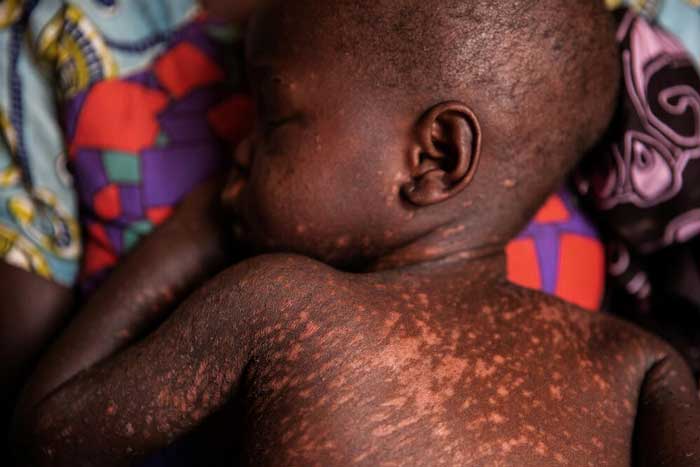
- Fall in living standards. Effective sanctions can seriously reduce the wealth of an economy, leading to higher prices, a shortage of key goods and a rise in unemployment. For example, from 1990 Iraq faced prolonged universal sanctions, imposed by the United Nations Council Resolution 661. The sanctions were very effective because the Iraqi economy was heavily dependent on oil exports. It led to widespread economic disruption, widespread poverty and malnutrition. The sanctions were considered by many to be a humanitarian disaster, and the sanctions seemed to hurt the poorest in the society leaving the ruling party untouched.
- Diversification in response to Sanctions. Iran has faced prolonged sanctions, such as barriers in the sale of oil and access to capital markets. In 2006, oil exports accounted for 85% of Iran’s exports. By 2010-2011 this had fallen to 78.9%. In response to sanctions, Iran has tried to respond to sanctions by diversifying the economy and encouraging domestic industrialisation as a way to replace imports. It has called this the ‘resistance economy’ and it also seeks ways around the sanctions by using third-party companies and countries. It also sought to use barter trade. In Zimbabwe, we have also engaged in similar practices through promotion of domestic industrialisation in response to sanctions.
- Black market. One unintended consequence of sanctions is that it can encourage the black market as imports are smuggled into the country.
- Decrease in foreign direct investment. Foreign direct investment will fall both due to the direct impact of sanctions but also because of reputational costs associated with sanctions as companies will become reluctant to be associated with the target country.
The impact of sanctions on those imposing them.
Higher prices. An invariable cost on those imposing sanctions could be felt, for instance EU’s sanctions on Russia’s oil and gas has seen an increase in the price burdening EU customers.
Global recession, if the targeted country is a major producer of a specific commodity globally, that is likely to draw the global economy into recession, as with sanctions on Russian gas and oil.
Sanctions work the same, whether they are effective or not is premised on the philosophy in their context.
We have the western way, build on the notion that ‘there is what is universally right’, if you go against it, you get punished hence continual use of sanctions.
Then there is the Eastern/orthodox way of doing things pinned on notion that ‘you die for what you believe in’ no matter what happens you fight for your way to the top. In Zimbabwe we tried to replace the orthodox way (Look east policy) with the western way of doing things hence, the impact of sanctions have been felt immensely.
- Romeo Musemburi is an independent economist, the views expressed are his own opinions, for further correspondence, views and or comments feel free to contact him on [email protected]
- *These weekly articles are coordinated by Lovemore Kadenge, independent consultant, past president of the Zimbabwe Economics Society , past president of the Institute of Chartered Secretaries and Administrators in Zimbabwe . Email address- [email protected] and Mobile No. +263 772 382 852