S
outh Africa’s stability looked doubtful ahead of June 30, 2026.
This was the day when March and March –variously described as a vigilante group, NGO or tribal outfit — had promised to shut the country.
Their focus was millions of illegal migrants who they said had broken the law by taking up residence without a permit, making jobs scarce for locals. Oh, and they “steal our women”.
The Pakistanis are disliked for elbowing out South Africans from the township economy by taking over spaza shops, local slang for convenience stores.
And, yes, in a country where a majority of those under 35 are unemployed, it is rare to encounter someone from Zimbabwe, Mozambique, Malawi who is not in work. “Taking” your job, or just better at it?
As happens, people fall in love and some of the arrivals have married South Africans. The most they have stolen is someone’s heart.
There is no evidence the outsiders work for lower pay, but they are less likely to strike or cause a fuss that might bring the police. No papers = arrest and deportation.
- Zim headed for a political dead heat in 2023
- Record breaker Mpofu revisits difficult upbringing
- Tendo Electronics eyes Africa after TelOne deal
- Record breaker Mpofu revisits difficult upbringing
Keep Reading
And spaza shops? The Pakistanis and Somalis especially are known for offering goods at lower prices, and staying open long hours, so if you need a jar of baby food at 11pm, chances are they will have it. Many work under the radar, without charging VAT, and selling packs of cigarettes without the state levy that, in regular shops, accounts for more than half the price.
Back to the future
This anti-illegal thing is not new. In May 2008, several of South Africa’s formal and informal settlements in the cities were wracked by violence during which 60 people died and thousands were displaced and left homeless. Foreigners were the target, especially those here without cause.
In April 2015, similar attacks started in Durban and spread to other parts of the country.
Historically — like the anti-apartheid riots by Soweto students in June 1976 — trouble starts mid-year which is also the middle of winter when snow covers the mountains and temperatures in Jo’burg fall below zero overnight.
The mood falters: most live in shacks without heating, food can be short and anger with a government that does so little to relieve this misery might get taken out on others, in this case the millions from the rest of Africa whose presence drives up rent and adds to waiting lists at schools and clinics.
But this time, rather than a mindless rabble, the riots have had leaders who, well dressed and groomed, present their case to the press with eloquence. Notable among them is Jacinta Ngobese-Zuma.
Jacinta who heads the group, March and March corrects reporters who talk of xenophobia or expelling foreigners, saying it is only those here illegally who are targeted.
Aiding her are two men: a radio DJ Ngizwe Mchunu and cultural historian Nkosikhona Ndabandaba.
In a country with 11 official languages, all three are Zulu and their war-cry is Abahambe, “They must go!”
Since last December, the triumvirate’s demand has been that those who’ve jumped the border or come here on a holiday visa then taken up work, must leave … threatening force if they don’t comply.
They have organised marches in the cities, targeting urban zones heavy with foreigners, and June 30was to have been the final push.
On one count at least, they are right: the government and notably the Department of Home Affairs have been grossly incompetent when it comes to manning the borders, or picking up illegals in the cities.
The art of democratic governance
Pretoria accuses March and March of promoting violence and vigilantism while state mandarins glorify themselves of having averted what could have been a slaughter.
At a press briefing the secretary general of the African National Congress (ANC), Fikile Mbalula, while acknowledging that there were incidents of violence on June 30, said the marches failed if their goal was to make South Africa ungovernable.
And he said the constitution obliges the state to keep safe anyone within its borders; while law-breakers can and should be arrested, this he said was the work of police and, even then, the accused has a right to protection.
But he conceded the foreigners need to understand that South Africans too are suffering.
Mbalula should be commended for saying illegal migration cannot be addressed through violence. What he failed to voice was his party’s misgovernance since 1994, which is why unemployment is at a record high.
He announced an African Union migration compact under which countries will not be expected to bear the weight of economic failure elsewhere by accommodating those who enter illegally.
Given how little the African Union has achieved on any issue, this will likely be another scheme that never comes to pass.
One approach could be to ask leaders of migrant-sending countries like Zimbabwe to foot the bill for their citizens’ access to health care in South Africa. This could at least neutralize a threat made by Minister Gayton Mackenzie to disconnect oxygen from foreign women in delivery wards.
As for Jacinta’s quarrel about children to foreign parents overcrowding public schools, could a placement fee also be billed abroad?
In Africa there’s always a “but”. In this case, good ideas, but most of the neighbours are bankrupt which is why people left in the first place.
Truth is, even without the newcomers, city classrooms are crowded because South Africa has such a rapid rate of urbanisation. Corruption and incompetence at the highest level only makes it worse.
Where’s the money?
Prior to the June 30 deadline, the acting minister of police, Firoz Cachalia, held a press briefing where he said 600 million rand was on hand to ensure the planned marches would not disturb the democratic order.
But this is nonsense according to Jacinta.
Why, she asked, spend R600m to prevent South Africans raising legitimate concerns instead of channeling the money to service delivery, or ensuring that illegals are escorted safely from country?
The direction of human movement is never wrong
Just as folks in Cuba try escaping to Florida but never the other way round, so it’s always a move south from the rest of Africa.
The majority are from Zimbabwe, Malawi, Mozambique, Lesotho and Eswatini (better known as Swaziland). Lesser but significant numbers originate in West Africa, notably Nigeria and Ghana.
And then there are the Pakistanis, many in rural towns on asylum permits even though their home country is not at war. A joke in South Africa runs: “The refugee system is so corrupt even the Swiss could buy sanctuary.”
Nigerians often wear national dress and can be loud and obvious. Others learn to blend in but just as the Russians and Belgians are both white but not the same people, so black Africans have very different languages, cultures, accents and features. A few can add diversity; millions make locals feel overwhelmed.
South Africa itself has sharp divisions that academics sometimes blame on apartheid, but this doesn’t hold when looking at the rest of Africa. In Nigeria, the four major groups, Hausa, Ibo, Yoruba and Fulani are distinctive and have their own parts of the country. Same with the Maasai and Kikuyu in Kenya or Ndebele and Shona of Zimbabwe.
The Zulu heartland in the east, including the port city of Durban, existed well before South Africa was formed as a country in 1910. Same with the Swazi, Sotho and Tswana or Nelson Mandela’s Xhosa in the Eastern Cape.
Now, into these ethnic domains come people from elsewhere in Africa when land, schools, hospitals and especially housing are in short supply. It is the same reason why Poland, Austria, France and Britain have anti-immigration parties soaring in the polls.
South Africa’s economy has more in common with California than Cameroon. Cars are a major export and for all the problems, things work, the lights are on more than off, water from the tap is safe to drink and multi-lane highways cross the nation making travel easy, unlike neighbouring states infamous for their potholes.
Human beings go where there is a concentration of capital. The presence of immigrants is as much due to South Africa’s porous borders as it is a function of the human impulse to move in search of opportunity.
And with a land-border of more than 4000 kilometres, there’s always a place to cross.
At 63 million, South Africa’s population is not a barrier to prosperity. Taiwan, with just 23 million, has double the GDP.
But industrialization has been too slow, incentives for investment are few and, critically, there is no plan to take wealth to rural areas rather than school-leavers flocking to town where more than half the population now live in just five cities. A tax-holiday of 10 years for companies that set up shop in growth points away from these hubs could do wonders. That in turn would require the creaking railway system to be overhauled — preferably placed in private hands — and the state to leave business alone. There are too many tales of family members from ANC heavyweights being pushed onto boards.
And the domestic market? There’s a clue in the lease of shacks in townships where landlords (more often widows who’ve invested wisely) prefer foreign tenants. Why? Because they have a job and pay the rent on time. Extrapolate this and it could be argued that immigrants, legal or not, are a vital segment: consumers with pay in the pocket.
The African response
Nigeria evacuated close on a thousand of its citizens. Malawi has supplied buses to transport its own. Zimbabwe is doing so too, but the planning is chaotic.
The diplomatic response has been sharp with Ghana cancelling a state visit by South African president Cyril Ramaphosa. But these countries of origin need to ask why their people fled in the first place.
African leaders strut the world stage while, at home, corruption grows, the economy shrinks and few have the courage to call it out. Across the continent, the World Bank estimates some 600 million live without electricity, the state owns key resources and when it comes to xenophobia, in Tanzania, Malawi and others, foreigners are banned from buying land. Angola regularly turfs out Congolese illegals and getting a work permit in Nigeria or Mozambique is a nightmare. Jacinta et al, mention none of this.
Ministers talk nonsense about free trade and a borderless market. Yet trying to move a TV set from South Africa to Zimbabwe will need a declaration to customs and can result in your car being searched.
For all the ire in Harare, some of their returning citizens will need to pay duty on the belongings they have rescued from a home in Jo’burg or Durban
The Zimbabwean government could nullify this, but they won’t.
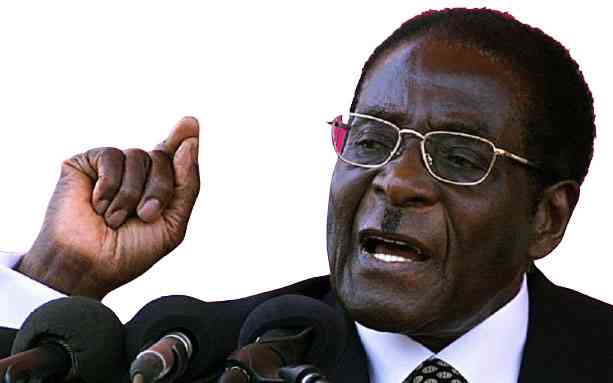
In 1980, prime minister Robert Mugabe encouraged educated Zimbabweans —like Simba Makoni, David Coltart (now mayor of Bulawayo), Bernard Chidzero and Sydney Sekeramai, to come home to help rebuild the country after a decade of civil war.
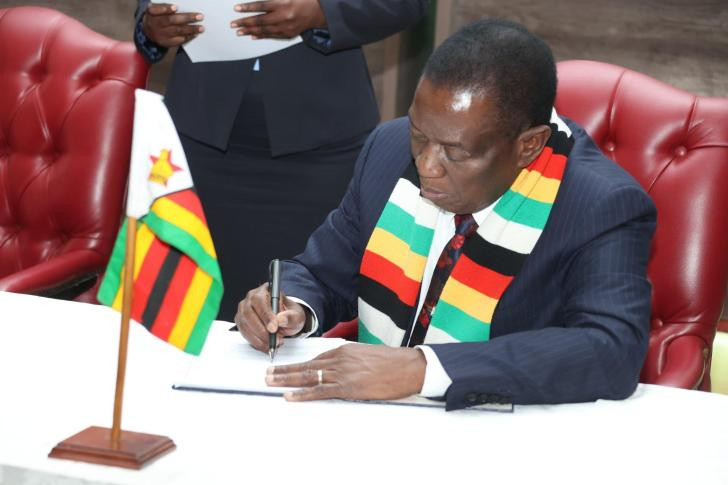
Time, perhaps for a fresh call from current president, Emmerson Mnangagwa. Bring back your people with their experience, not least the endless Zimbabwean doctors and dentists who have left.
There are the less-skilled with no capital, but the state could tailor micro-loans to help them set up a business in their home area.
Likewise, there are academics —lecturers and postdoctoral researchers — for whom a special fund could be set aside for research.
There are also civil servants who left the country when salaries could not buy a loaf of bread. Those still able to work should be made welcome.
A national dialogue or "skop en donner" approach?
Back to Jacinta and her allies: their threats and violence make news abroad, harming tourism and investment
Marches, rounding up foreigners and turning them into public spectacles of ridicule are reminiscent of European trials for witchcraft and have no place in 2026.
But nor can there be unbridled mercy: if foreigners keep coming in, patience will run out and while we’re not on the brink of genocide, neither was Rwanda five years before the event.
Legalising some of the migrants could make sense. Botswana and Namibia granted citizenship to Angolans who had fled the civil war there in 1975.
Today, they are integrated but the numbers don’t compare. Botswana’s entire population is 2.4 million; in South Africa, Zimbabwean exiles alone are pegged around three million.
A clear, simple, but unworkable answer is the protest slogan, mabahambe! “They must go!”
Easy to say, but will they? And, until as lead player on the continent, Pretoria and groups like the Commonwealth and African Union, get serious about dire governance in neighbouring states, even those who leave are likely to return.
What else can they do?
*Dr Mbuso Moyo is a postdoctoral research fellow at the Southern Centre for Inequality Studies, University of the Witwatersrand, Johannesburg. He wrote this article for The Standard in his personal capacity.